
Apr . 01, 2024 17:55 Back to list
china best price high pressure hydraulic hose Performance Analysis

Introduction
High-pressure hydraulic hoses are critical components in fluid power systems, facilitating the transmission of hydraulic fluid to operate machinery across diverse industries including construction, agriculture, manufacturing, and automotive. Characterized by their ability to withstand extremely high pressures and maintain flexibility, these hoses are essential for reliable system performance. “China best price high pressure hydraulic hose” typically refers to hydraulic hoses manufactured in China, often offering a competitive cost structure without necessarily compromising performance, though careful consideration of material quality and manufacturing standards is paramount. This guide provides a comprehensive technical overview of these hoses, encompassing material science, manufacturing processes, performance characteristics, potential failure modes, and relevant industry standards.
Material Science & Manufacturing
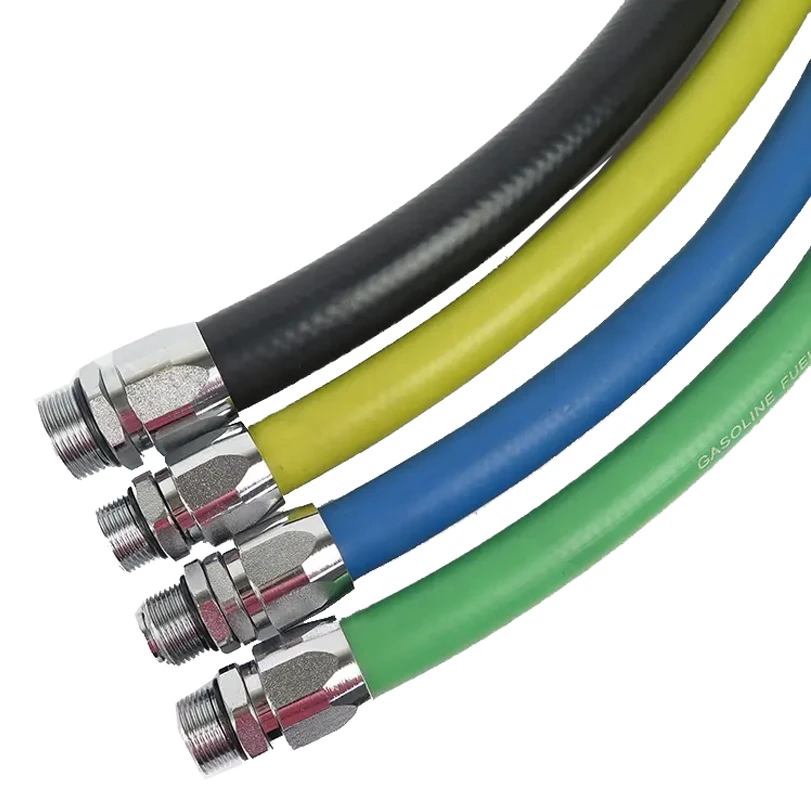
The construction of a high-pressure hydraulic hose involves multiple layers, each contributing to its overall performance. The innermost layer, the tube, is typically made from synthetic rubbers such as Nitrile (NBR), Chloroprene (CR), or Ethylene Propylene Diene Monomer (EPDM). NBR offers excellent resistance to petroleum-based hydraulic fluids, while CR provides superior resistance to heat and weathering. EPDM is often chosen for phosphate ester fluids. Reinforcement layers are crucial for pressure resistance and typically consist of multiple braids of high-tensile steel wire, or spiral-wound steel wire. The number of braids, wire diameter, and winding angle directly correlate to the hose’s maximum working pressure. An outer cover, usually a synthetic rubber like CR or polyurethane, provides protection against abrasion, oil, ozone, and UV degradation.
Manufacturing processes vary based on hose type. Braided hoses involve helically winding steel wire around the inner tube, followed by vulcanization – a process of heating the rubber compounds under pressure to create cross-linking between polymer chains, enhancing strength, elasticity, and resistance to degradation. Spiral-wound hoses use a single, continuous strand of steel wire wound at a precise angle. Key parameters during manufacturing include maintaining consistent rubber compound ratios, precise wire tension during winding, accurate vulcanization temperature and duration, and rigorous quality control checks for dimensional accuracy and pressure testing. Mixing of rubber compounds requires tight control of fillers (carbon black, silica) and plasticizers to achieve desired flexibility, tensile strength, and fluid resistance. The curing process must be carefully monitored to avoid under-curing (resulting in low strength) or over-curing (leading to brittleness).
Performance & Engineering
The performance of a hydraulic hose is characterized by its maximum working pressure (MWP), burst pressure, and bend radius. MWP is the maximum pressure the hose can safely withstand during continuous operation. Burst pressure is typically four times the MWP and represents the pressure at which the hose will rupture. The bend radius is the minimum radius to which the hose can be bent without kinking or damaging the reinforcement layers. Force analysis during operation must consider internal pressure, external bending forces, and potential axial loads. Environmental resistance is also critical; prolonged exposure to extreme temperatures, UV radiation, ozone, and corrosive fluids can degrade the rubber compounds, leading to premature failure.
Compliance requirements vary by region and application. Hoses used in critical applications, such as aerospace or mining, often require adherence to stringent standards like SAE J517 (for pressure ratings and performance) and ISO 6897 (for impulse testing). Engineering design must account for hose assembly practices. Incorrect fitting installation (over-tightening, improper skiving) can significantly reduce hose life and create potential leak paths. Impulse testing, simulating pressure pulsations, is essential to evaluate hose durability under dynamic loading conditions. Furthermore, consideration must be given to fluid compatibility. Incompatible fluids can cause swelling, softening, or degradation of the hose materials.
Technical Specifications
| Parameter | Unit | Typical Value (China Best Price Hose) | Test Standard |
|---|---|---|---|
| Maximum Working Pressure (MWP) | MPa | 20 - 35 | SAE J517 / ISO 6897 |
| Burst Pressure | MPa | 80 - 140 | SAE J517 / ISO 6897 |
| Minimum Bend Radius | mm | 4D - 6D (D = Hose ID) | Manufacturer Specification |
| Temperature Range | °C | -40 to +100 | SAE J517 / ISO 6897 |
| Reinforcement Type | - | 2 Wire Braid / 4 Wire Braid / Spiral Wire | Manufacturer Specification |
| Inner Tube Material | - | NBR / CR / EPDM | Manufacturer Specification |
Failure Mode & Maintenance
Common failure modes in high-pressure hydraulic hoses include fatigue cracking, pinholes, burst failures, and leakage at connections. Fatigue cracking typically occurs due to repeated bending and flexing, leading to stress concentrations and eventual crack propagation in the reinforcement layers. Pinholes can result from localized defects in the tube or cover, often exacerbated by corrosion or abrasion. Burst failures occur when the MWP is exceeded or the hose is damaged. Leakage at connections is usually caused by improper fitting installation, damaged threads, or deterioration of the sealing surfaces.
Preventative maintenance is crucial for extending hose life. Regular visual inspections should be conducted to identify signs of damage such as cracks, abrasions, bulges, or kinks. Hoses should be replaced if any damage is detected. Proper routing and support are essential to prevent excessive bending and abrasion. Fluid contamination can significantly accelerate hose degradation, so regular fluid filtration is recommended. When replacing hoses, ensure the correct hose type and size are used for the application. Fittings should be properly installed and torqued to the manufacturer’s specifications. Avoid twisting the hose during installation. If a hose fails catastrophically, a detailed failure analysis should be performed to determine the root cause and prevent recurrence. Examination of the fracture surfaces can reveal information about the stress state and contributing factors to the failure.
Industry FAQ
Q: What is the significance of the 'dash size' designation (e.g., -6, -8, -10) in hydraulic hose sizing?
A: The dash size refers to the inner diameter (ID) of the hose in sixteenths of an inch. For example, a -6 hose has an ID of 6/16 inch (3/8 inch), a -8 hose has an ID of 8/16 inch (1/2 inch), and so on. This designation is crucial for ensuring compatibility with fittings and flow requirements within the hydraulic system.
Q: How does the wire braid construction (2-wire, 4-wire, spiral) impact the hose’s pressure rating and flexibility?
A: Increasing the number of wire braids generally increases the hose’s pressure rating. However, it also reduces flexibility. Spiral wire construction provides higher pressure ratings than braided hoses with comparable flexibility, because of the continuous winding pattern. The choice depends on the application's pressure and routing requirements.
Q: What are the key differences between NBR, CR, and EPDM inner tube materials?
A: NBR offers excellent resistance to petroleum-based hydraulic fluids but has limited resistance to ozone and weathering. CR (Chloroprene) provides good resistance to heat, oil, and weathering, making it a versatile option. EPDM is specifically designed for phosphate ester fluids and offers excellent resistance to heat, ozone, and weathering, but its oil resistance is generally lower than NBR or CR.
Q: What is ‘skiving,’ and why is it important in hose assembly?
A: Skiving is the process of removing the outer layer of the hose cover at the ends, exposing the reinforcement wires. This allows the fitting to grip the reinforcement, creating a secure and leak-proof connection. Proper skiving is critical for achieving the rated working pressure and preventing blow-offs.
Q: What are the implications of using a hose with a bend radius that is too small?
A: Bending a hose beyond its minimum specified bend radius can cause kinking, which restricts flow and creates stress concentrations in the reinforcement layers. This can lead to premature failure, either through fatigue cracking or burst failure. It also affects the hose’s volumetric efficiency.
Conclusion
High-pressure hydraulic hoses are sophisticated engineered products, and the ‘china best price’ offering necessitates a discerning approach to quality control and specification adherence. Understanding the interplay between material science, manufacturing processes, and performance characteristics is vital for selecting the appropriate hose for a given application. Proper installation, preventative maintenance, and awareness of potential failure modes are crucial for maximizing hose life and ensuring safe, reliable operation of hydraulic systems.
The ongoing development of hydraulic hose technology focuses on enhancing pressure ratings, improving flexibility, extending service life, and reducing weight. Future trends may include the integration of smart sensors for real-time monitoring of hose condition and the development of more sustainable materials. Thorough evaluation of technical specifications and a commitment to best practices are essential for leveraging the benefits of these advancements and mitigating the risks associated with hydraulic system failures.