
Apr . 01, 2024 17:55 Back to list
china air hose Performance Analysis
Introduction
China air hose, encompassing a range of pneumatic conveying solutions, represents a critical component in numerous industrial applications. Positioned within the broader fluid transfer equipment supply chain, these hoses facilitate the transmission of compressed air to power tools, automated machinery, and various pneumatic systems. Performance characteristics are primarily defined by working pressure, burst pressure, flexibility, and resistance to abrasion, temperature, and chemical exposure. The industry currently faces challenges related to consistent material quality, meeting stringent safety standards (particularly concerning hose failure), and optimizing performance for increasingly demanding applications like robotics and high-pulse pneumatic systems. This guide provides a comprehensive technical overview of China air hose, covering material science, manufacturing processes, performance parameters, failure modes, and relevant industry standards.
Material Science & Manufacturing
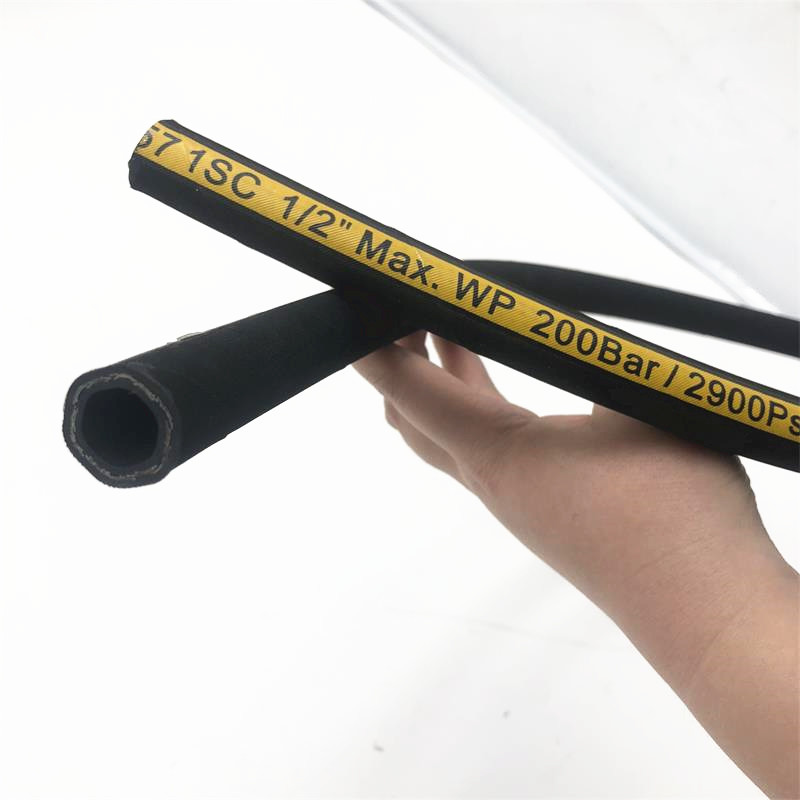
China air hose commonly utilizes a layered construction, typically consisting of an inner tube, reinforcement layers, and an outer cover. The inner tube is frequently composed of synthetic rubbers such as Nitrile Rubber (NBR), Styrene-Butadiene Rubber (SBR), or Polyurethane (PU), selected based on oil resistance, temperature range, and chemical compatibility. NBR provides excellent resistance to petroleum-based oils, while SBR offers good abrasion resistance at a lower cost. PU provides superior abrasion and chemical resistance, but at a higher price point. Reinforcement layers are critical for pressure containment and typically consist of high-tensile textile braids (polyester, nylon) or steel wire helices. The number of layers dictates the working and burst pressures. The outer cover, often made of Chloroprene Rubber (CR) or PVC, provides environmental protection, abrasion resistance, and flexibility. Manufacturing processes vary depending on hose type. Braided hoses are produced by extruding the inner and outer layers, followed by the application of textile braids under tension. Spiral-wound hoses involve continuously wrapping steel wire around a core, then extruding the inner and outer layers. Critical process parameters include extrusion temperature, braiding tension, curing time and temperature (for rubber components), and dimensional accuracy. Proper vulcanization is vital for achieving optimal rubber properties – hardness, tensile strength, and elongation at break. Variations in these parameters directly influence hose performance and longevity. Chemical compatibility testing of the inner tube material with intended media (compressed air, potential contaminants) is a crucial quality control step.
Performance & Engineering
Air hose performance is governed by several key engineering principles. Working pressure, the maximum sustained pressure during operation, is directly related to the reinforcement layer’s strength and the inner tube’s wall thickness. Burst pressure, the pressure at which the hose fails, is typically 3-4 times the working pressure. Flexibility, vital for maneuverability, is determined by the material’s elasticity and the hose’s construction (braid angle, helix pitch). Hose bend radius should adhere to manufacturer specifications to prevent kinking and stress concentration. Environmental resistance, including temperature range and UV exposure, impacts the outer cover’s degradation rate. Force analysis involves assessing hoop stress (pressure acting radially on the hose wall) and longitudinal stress (tension due to pressure and bending). Fatigue analysis is crucial for applications involving pulsating pressures, as repeated stress cycles can lead to premature failure. Compliance requirements often involve adherence to safety standards such as those set by the Globally Harmonized System of Classification and Labelling of Chemicals (GHS) for material safety and regulatory frameworks pertaining to workplace safety equipment. Proper fitting selection is paramount; incorrect fittings can create stress points and lead to leaks or failures. Static grounding may be necessary in applications handling flammable fluids to prevent static electricity buildup.
Technical Specifications
| Parameter | Unit | Typical Range (China Air Hose) | Test Method |
|---|---|---|---|
| Working Pressure | MPa | 0.6 - 3.5 | GB/T 3682.1 |
| Burst Pressure | MPa | 1.8 - 10.5 | GB/T 3682.1 |
| Tensile Strength (Inner Tube) | MPa | 10 - 30 | GB/T 528 |
| Elongation at Break (Inner Tube) | % | 200 - 500 | GB/T 528 |
| Hardness (Inner Tube) | Shore A | 60 - 90 | GB/T 531 |
| Minimum Bending Radius | mm | 5D - 10D (D = Outer Diameter) | Manufacturer’s Specification |
Failure Mode & Maintenance
Common failure modes for China air hose include burst failure due to exceeding the working pressure, kinking caused by excessive bending or improper bend radius, abrasion from contact with rough surfaces, and chemical degradation from exposure to incompatible fluids. Fatigue cracking can occur in pulsating pressure applications, initiating at stress concentrators (fittings, kinks). Delamination of the reinforcement layers can compromise pressure containment. Oxidation and UV degradation can embrittle the outer cover, leading to cracking. Preventative maintenance is crucial. Regular visual inspections should be conducted to identify cuts, abrasions, kinks, or signs of chemical attack. Hoses should be replaced immediately if any damage is detected. Proper storage is essential; hoses should be stored in a cool, dry, and dark environment, away from ozone sources and direct sunlight. Avoid storing hoses under tension or compression. Cleaning with mild soap and water is recommended to remove dirt and grime. Do not use abrasive cleaners or solvents. For braided hoses, check braid tightness and integrity. For spiral-wound hoses, inspect for wire exposure or corrosion. Record keeping of hose usage and maintenance history aids in identifying potential issues and optimizing replacement schedules.
Industry FAQ
Q: What is the impact of hose material on chemical compatibility, and how do I determine the appropriate inner tube material for my application?
A: The inner tube material is paramount for chemical compatibility. Exposure to incompatible chemicals can cause swelling, softening, or degradation of the rubber, leading to leaks or failure. Refer to chemical resistance charts provided by material manufacturers (e.g., for NBR, SBR, PU). Consider the specific chemicals the hose will encounter (compressed air contaminants, cleaning agents, process fluids). For unknown chemicals, conduct compatibility testing by exposing a sample of the inner tube material to the chemical for a specified period and observing any changes in properties (hardness, tensile strength, volume).
Q: How does the reinforcement layer affect the hose's pressure rating and flexibility?
A: The reinforcement layer directly determines the hose’s pressure rating. Higher tensile strength and a greater number of layers provide increased pressure resistance. However, increased reinforcement generally reduces flexibility. Textile braids (polyester, nylon) offer good flexibility but lower pressure ratings compared to steel wire helices. The braid angle also influences flexibility; a shallower angle provides greater flexibility. Engineering a balance between pressure requirements and desired flexibility is crucial.
Q: What are the key considerations when selecting fittings for China air hose?
A: Fittings must be compatible with the hose material, pressure rating, and temperature range. Ensure the fitting bore diameter matches the hose inner diameter to avoid turbulence and pressure drop. Select fittings made of corrosion-resistant materials (brass, stainless steel) to prevent failure. Proper crimping or clamping of fittings is essential to create a secure and leak-proof connection. Avoid over-tightening, which can damage the hose. Consider quick-disconnect couplings for frequent hose changes.
Q: How can I mitigate the risk of fatigue failure in pulsating pressure applications?
A: Fatigue failure can be minimized by selecting a hose with a sufficiently high fatigue rating, reducing the amplitude and frequency of pressure pulsations (if possible), and avoiding sharp bends or kinks. Consider using pulsation dampeners to smooth out pressure fluctuations. Regular inspections for signs of cracking or wear are vital. Using a hose with a thicker wall and robust reinforcement layer can also improve fatigue life.
Q: What safety standards are most relevant to China air hose used in industrial environments?
A: Key safety standards include GB/T 3682.1 (Rubber hoses for pneumatic and hydraulic applications – Part 1: Specifications), EN ISO 6807 (Rubber and plastics hoses – Determination of abrasion resistance), and relevant workplace safety regulations pertaining to compressed air systems. Compliance with GHS for material safety data sheets (MSDS) is also critical. Adherence to these standards ensures worker safety and minimizes the risk of equipment failure.
Conclusion
China air hose represents a versatile but technically demanding component in industrial pneumatic systems. Optimal selection and maintenance necessitate a thorough understanding of material properties, manufacturing processes, performance characteristics, and potential failure modes. Achieving reliable and safe operation requires careful consideration of application-specific requirements, adherence to relevant industry standards, and the implementation of a proactive preventative maintenance program.
Looking ahead, advancements in material science, such as the development of novel thermoplastic polyurethane (TPU) formulations with enhanced abrasion and chemical resistance, will likely drive further improvements in air hose performance and longevity. Increased adoption of smart hose technologies, incorporating sensors to monitor pressure, temperature, and strain, will enable predictive maintenance and optimize operational efficiency. Continuous refinement of manufacturing processes and quality control measures will remain paramount for ensuring the consistent delivery of high-performance China air hose.