
Apr . 01, 2024 17:55 Back to list
china 5mm hydraulic hose Performance Analysis

Introduction
China 5mm hydraulic hose represents a critical component within fluid power systems, utilized extensively across a diverse range of industrial applications including construction machinery, agricultural equipment, and manufacturing processes. Characterized by an internal diameter of 5mm, these hoses facilitate the transmission of hydraulic fluid, enabling the operation of cylinders, motors, and other hydraulic actuators. Positioned within the supply chain as a finished good, often produced by specialized manufacturers and distributed through wholesalers and OEMs, its core performance metrics revolve around pressure capacity, burst strength, and resistance to chemical degradation. The prevalence of these hoses is driven by increasing industrial automation and demand for robust, reliable fluid conveyance solutions. The key pain point within the industry lies in maintaining consistent quality control across various manufacturers, ensuring adherence to international safety standards, and mitigating the risk of premature failure due to material defects or improper installation.
Material Science & Manufacturing
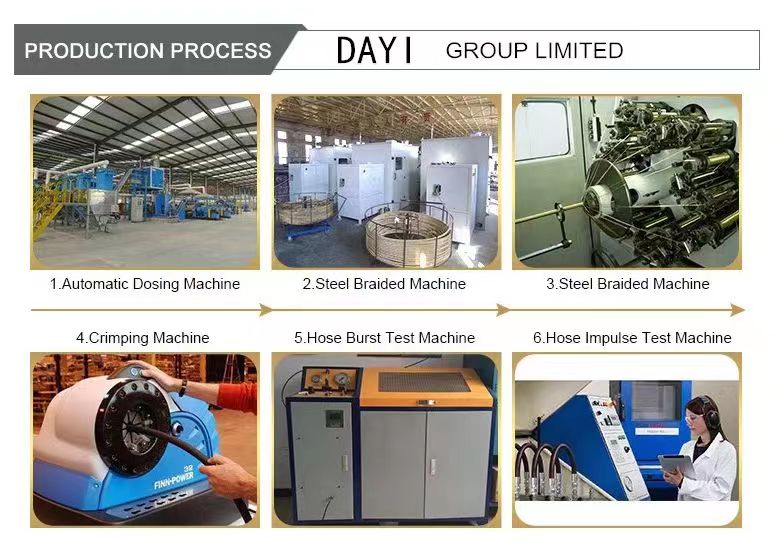
The construction of a 5mm hydraulic hose typically involves four key layers: the inner tube, reinforcement layers, outer cover, and occasionally, an intermediate layer. The inner tube is commonly composed of synthetic rubber, specifically nitrile rubber (NBR) or ethylene propylene diene monomer (EPDM) rubber, chosen for their excellent resistance to hydraulic fluids, abrasion, and temperature fluctuations. NBR offers superior oil resistance, while EPDM exhibits better resistance to heat and weathering. Reinforcement layers, critical for withstanding high pressures, are usually braided or spiraled high-tensile steel wire. The number of layers and the wire gauge directly influence the hose’s working pressure and burst strength. The outer cover is typically constructed from Chloroprene rubber (CR), providing abrasion resistance, weather protection, and resistance to ozone cracking. Manufacturing processes involve extrusion for the inner tube and outer cover, followed by precise winding or spiraling of the reinforcement layers. Critical parameter control during extrusion focuses on maintaining consistent wall thickness and material density. For braided hoses, braiding tension and pitch are meticulously controlled to achieve the desired pressure rating. Curing processes, employing heat and pressure, are crucial for vulcanizing the rubber compounds and achieving the optimal mechanical properties. Quality control includes hydrostatic testing to verify burst pressure and dimensional checks to confirm adherence to specifications.
Performance & Engineering
The performance of a 5mm hydraulic hose is fundamentally governed by its ability to safely transmit hydraulic power. Force analysis centers around hoop stress within the hose wall, which increases proportionally with internal pressure. The reinforcement layers are engineered to counteract this hoop stress, preventing expansion and potential rupture. Environmental resistance is paramount; prolonged exposure to extreme temperatures, UV radiation, and corrosive fluids can lead to material degradation and failure. Testing standards, such as those outlined in SAE J517, specify performance requirements under varying temperature and pressure conditions. Compliance requirements encompass adherence to relevant safety regulations, including those pertaining to pressure vessel integrity and fluid compatibility. The functional implementation of the hose necessitates careful consideration of bending radius to avoid kinking and excessive stress concentration. Correctly installed fittings are also crucial, as improper crimping or thread engagement can create leak paths and compromise the system's reliability. Furthermore, the hose’s flexibility must be adequate for the intended application, allowing for movement and vibration without inducing fatigue failure. Material selection impacts fluid compatibility; incompatibility can cause swelling, softening, or degradation of the hose material, leading to leaks or catastrophic failure.
Technical Specifications
| Parameter | Unit | Typical Value (China 5mm Hose) | Testing Standard |
|---|---|---|---|
| Inner Diameter | mm | 5 ± 0.1 | ISO 1307 |
| Working Pressure | MPa | 16 – 35 | SAE J517 |
| Burst Pressure | MPa | 48 – 105 | SAE J517 |
| Temperature Range | °C | -40 to +100 | DIN EN 853 |
| Reinforcement Type | - | Steel Wire Braid (1/2 or 2 wire) | ISO 6807 |
| Outer Cover Material | - | Chloroprene Rubber (CR) | ASTM D2000 |
Failure Mode & Maintenance
Common failure modes for 5mm hydraulic hoses include fatigue cracking, often initiated at the crimp point or due to repeated bending; abrasion from external sources; and chemical degradation resulting from fluid incompatibility. Fatigue cracking is a progressive process, starting with micro-cracks that propagate under cyclical loading. Abrasion weakens the outer cover, exposing the reinforcement layers to corrosion. Chemical degradation causes the rubber compounds to swell, soften, or lose elasticity, leading to leaks. Delamination, separation of the layers, is often a consequence of poor bonding during manufacturing or exposure to harsh chemicals. Oxidation, particularly at elevated temperatures, can cause hardening and cracking of the rubber materials. Maintenance procedures should include regular visual inspections for signs of abrasion, cracking, or leakage. Hose assemblies should be replaced based on a preventative maintenance schedule, considering the operating conditions and fluid type. Proper storage, away from direct sunlight and extreme temperatures, is essential to prevent premature degradation. When replacing hoses, it is crucial to use fittings that are compatible with both the hose and the hydraulic fluid. Regular fluid analysis can also identify contaminants or chemical imbalances that could accelerate hose degradation.
Industry FAQ
Q: What is the impact of impulse pressure on the lifespan of a 5mm hydraulic hose?
A: Impulse pressure, or pressure spikes, significantly reduces the lifespan of hydraulic hoses. These sudden surges create dynamic stress that accelerates fatigue cracking, especially in the reinforcement layers. Selecting hoses specifically rated for impulse pressure and utilizing pulsation dampeners in systems prone to pressure spikes are crucial mitigating strategies.
Q: How does hose layline marking contribute to traceability and safety?
A: Layline markings, embossed onto the hose cover during manufacturing, provide critical information such as manufacturer identification, production date, working pressure, and hose type. This traceability is essential for identifying the hose’s origin and verifying compliance with relevant standards, enabling effective root cause analysis in case of failure.
Q: What are the critical considerations when selecting fittings for a 5mm hydraulic hose?
A: Fittings must be chemically compatible with both the hose material and the hydraulic fluid. They must also be correctly sized to match the hose inner diameter and rated for the system’s working pressure and temperature. Improperly crimped or mismatched fittings are a primary cause of leakage and hose failure.
Q: What is the role of skew angle in hydraulic hose assembly and how can it be minimized?
A: Skew angle refers to the misalignment between the hose fitting and the hose end. Excessive skew angle introduces bending stress and significantly reduces the hose’s fatigue life. Proper assembly techniques, utilizing specialized tooling and maintaining precise alignment during crimping, are essential for minimizing skew angle.
Q: What is the significance of choosing the correct hose cover material for specific applications?
A: The hose cover material provides critical protection against external factors. Chloroprene rubber (CR) offers excellent abrasion and weather resistance, while polyurethane (PUR) provides superior oil resistance. Selecting the appropriate cover material based on the application environment ensures long-term hose performance and prevents premature failure.
Conclusion
China 5mm hydraulic hose, while seemingly a simple component, represents a complex interplay of material science, engineering design, and manufacturing precision. Its effective performance is contingent upon careful consideration of operating conditions, fluid compatibility, and adherence to rigorous quality control standards. Selecting the appropriate hose type, ensuring correct installation procedures, and implementing a proactive maintenance schedule are essential for maximizing service life and minimizing the risk of costly downtime.
Looking forward, the industry is witnessing a drive towards the development of more durable and sustainable hydraulic hose solutions. Innovations in rubber compound formulations, reinforcement materials, and manufacturing processes are focused on enhancing pressure ratings, extending service life, and reducing environmental impact. Furthermore, the integration of sensor technology for real-time hose condition monitoring is poised to revolutionize preventative maintenance strategies, further enhancing the reliability and safety of hydraulic systems.