
Apr . 01, 2024 17:55 Back to list
bridgestone hydraulic hose Performance Analysis
Introduction
Bridgestone hydraulic hose represents a critical component in fluid power systems across diverse industrial sectors, including construction, agriculture, manufacturing, and material handling. Positioned within the hydraulic power transmission chain, these hoses facilitate the safe and efficient transfer of pressurized hydraulic fluid, enabling the operation of actuators, motors, and other hydraulic machinery. Core performance characteristics revolve around pressure capacity, burst strength, flexibility, and resistance to environmental factors. Unlike simpler rubber tubing, Bridgestone hydraulic hose is engineered to withstand high pressures and repeated flexing, demanding precise material selection and manufacturing processes. A significant industry pain point lies in premature hose failure due to incompatibility with fluids, exceeding pressure ratings, or inadequate abrasion resistance, leading to costly downtime and potential safety hazards. Bridgestone's reputation centers on consistent quality and adherence to stringent industry standards, providing a reliable solution for demanding hydraulic applications.
Material Science & Manufacturing
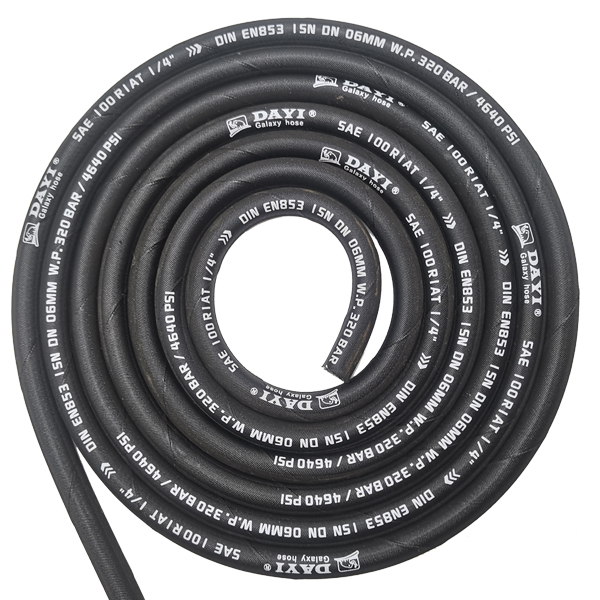
Bridgestone hydraulic hose construction typically involves multiple layers, each contributing to the hose’s overall performance. The innermost layer, the tube, is commonly composed of a synthetic rubber compound specifically selected for compatibility with the intended hydraulic fluid. Common materials include nitrile rubber (NBR) for petroleum-based fluids, ethylene propylene diene monomer (EPDM) for phosphate ester fluids, and fluorocarbon (FKM) for aggressive chemicals. The reinforcement layer provides the necessary strength to withstand internal pressure. This is generally constructed from multiple braids or spirals of high-tensile steel wire, or, in some cases, aramid fiber for lighter-weight applications. The cover, the outermost layer, provides abrasion, ozone, and weather resistance, typically utilizing a synthetic rubber compound like chloroprene (CR) or polyurethane (PU). Manufacturing processes begin with extrusion of the inner tube, followed by the application of reinforcement layers via winding or braiding. The cover is then extruded over the reinforcement. Critical parameters during manufacturing include maintaining precise dimensions, ensuring consistent reinforcement coverage, and adhering to strict quality control measures for bonding between layers. Vulcanization, a chemical process involving heating the rubber compounds with sulfur, is essential for achieving optimal physical properties like tensile strength and elasticity. Post-vulcanization testing includes pressure testing to ensure burst strength compliance and dimensional checks to confirm adherence to specifications. A crucial consideration is the control of volatile organic compounds (VOCs) released during manufacturing, necessitating environmentally responsible production practices.
Performance & Engineering
The performance of Bridgestone hydraulic hose is governed by a complex interplay of material properties and engineering design. Force analysis is paramount, considering internal pressure forces acting on the tube, tensile forces induced by bending, and external loads. Hose flexibility is a critical factor, directly impacting the ability to route the hose in confined spaces without kinking or exceeding bend radius limits. Fatigue resistance, the ability to withstand repeated pressure cycles and flexing, is essential for long-term reliability. Environmental resistance encompasses protection against ozone degradation, UV exposure, chemical attack, and temperature extremes. Compliance with industry standards, such as SAE J517 and EN 853, is non-negotiable, dictating minimum performance requirements for pressure ratings, temperature ranges, and fluid compatibility. The hose’s performance is also influenced by the selection of end fittings, which must be securely crimped or swaged to the hose to prevent leakage and maintain structural integrity. Finite element analysis (FEA) is often employed during the design phase to optimize hose geometry and reinforcement configuration for specific operating conditions. Hose assemblies must also account for thermal expansion and contraction due to temperature fluctuations, and proper hose routing is crucial to minimize stress concentrations and prevent abrasion. A key industry challenge involves mitigating the risk of hose rupture under high-pressure, high-temperature conditions, demanding advanced materials and robust design principles.
Technical Specifications
| Parameter | Unit | Specification (Typical) | Test Standard |
|---|---|---|---|
| Working Pressure | MPa | 20 – 35 | SAE J517 |
| Burst Pressure | MPa | 60 – 105 | SAE J517 |
| Temperature Range | °C | -40 to +100 | SAE J517 |
| Inner Tube Material | - | NBR, EPDM, FKM | ASTM D2000 |
| Reinforcement | - | Steel Wire Braid (2/4/6 Spiral) | SAE J517 |
| Cover Material | - | CR, PU | ASTM D2000 |
Failure Mode & Maintenance
Hydraulic hose failure can manifest in several forms. Fatigue cracking, initiated by repeated flexing and pressure cycles, often occurs in the reinforcement layer. Delamination, the separation of layers within the hose construction, can result from inadequate bonding during manufacturing or exposure to harsh chemicals. Abrasion damage, caused by contact with abrasive surfaces, can compromise the cover and eventually lead to reinforcement exposure. Oxidation and degradation of the rubber compounds, accelerated by exposure to ozone, UV radiation, and high temperatures, can reduce the hose’s flexibility and strength. Internal corrosion, caused by incompatible fluids, can attack the inner tube, leading to leakage. To mitigate these failure modes, regular inspection is crucial. This includes visual checks for abrasion, cracks, and swelling, as well as pressure testing to identify potential leaks. Proper hose routing is essential to avoid sharp bends, abrasion points, and excessive stress. Fluid compatibility must be verified before installation. Hoses should be replaced at recommended intervals, even if no visible damage is present, to prevent unexpected failures. When replacing hoses, ensure the correct specifications are met, including pressure rating, temperature range, and fluid compatibility. Proper crimping or swaging of end fittings is also critical to prevent leakage and maintain structural integrity. Regular maintenance also involves cleaning the hose exterior to remove dirt and debris, and protecting the hose from exposure to extreme temperatures and chemicals.
Industry FAQ
Q: What is the impact of fluid incompatibility on hose life?
A: Fluid incompatibility can drastically reduce hose life. Certain fluids can cause the inner tube material to swell, soften, or degrade, leading to leaks and failure. Always verify the hose’s fluid compatibility with the hydraulic fluid being used.
Q: How does temperature affect hydraulic hose performance?
A: Both high and low temperatures can negatively impact hydraulic hose performance. High temperatures can accelerate rubber degradation, reducing flexibility and strength. Low temperatures can cause the rubber to become brittle and prone to cracking. Ensure the hose’s temperature range is suitable for the application.
Q: What is the significance of the hose reinforcement layer?
A: The reinforcement layer provides the hose with its burst strength and resistance to pressure. The type and number of reinforcement braids or spirals directly influence the hose’s ability to withstand high-pressure applications.
Q: What are the common causes of hose kinking?
A: Kinking occurs when the hose is bent beyond its minimum bend radius. This can damage the reinforcement layer and restrict fluid flow. Proper hose routing and support are essential to prevent kinking.
Q: How often should hydraulic hoses be inspected and replaced?
A: Inspection frequency depends on the severity of the application. A visual inspection should be performed monthly, and pressure testing should be conducted annually. Hoses should be replaced every 3-5 years, or sooner if any signs of damage are observed.
Conclusion
Bridgestone hydraulic hose represents a highly engineered product critical for reliable fluid power transmission. Understanding the interplay of material science, manufacturing processes, and performance characteristics is paramount for selecting the appropriate hose for a given application. Addressing common failure modes through proactive inspection, preventative maintenance, and adherence to industry standards is essential for maximizing hose lifespan and ensuring operational safety.
Future advancements in hydraulic hose technology will likely focus on developing more durable materials, improving fluid compatibility, and incorporating smart sensing capabilities for real-time monitoring of hose health. Continued refinement of manufacturing processes and a commitment to environmentally responsible practices will also be crucial for maintaining a competitive edge in the hydraulic hose market.