
Apr . 01, 2024 17:55 Back to list
braided ptfe hose Performance Analysis

Introduction
Braided PTFE hose, a composite structure consisting of an inner tube of polytetrafluoroethylene (PTFE) reinforced with a braided exterior, is a critical fluid transfer component across diverse industries including automotive, aerospace, chemical processing, and pharmaceutical manufacturing. Its primary function is to convey fluids – ranging from aggressive chemicals and corrosive solvents to high-temperature gases – with minimal pressure loss and exceptional chemical compatibility. Unlike many elastomer-based hoses, braided PTFE hose provides a robust solution where material inertness and thermal stability are paramount. Within the broader hose industry, braided PTFE hose occupies a specialized niche, demanding stringent quality control and precise manufacturing techniques to guarantee performance and reliability. Its unique construction addresses the inherent low burst pressure of PTFE tubing by utilizing the braid – typically stainless steel, but sometimes other alloys – to provide structural support, enabling operation at significantly higher pressures and temperatures. Core performance characteristics center around pressure resistance, temperature range, chemical inertness, and flexibility.
Material Science & Manufacturing
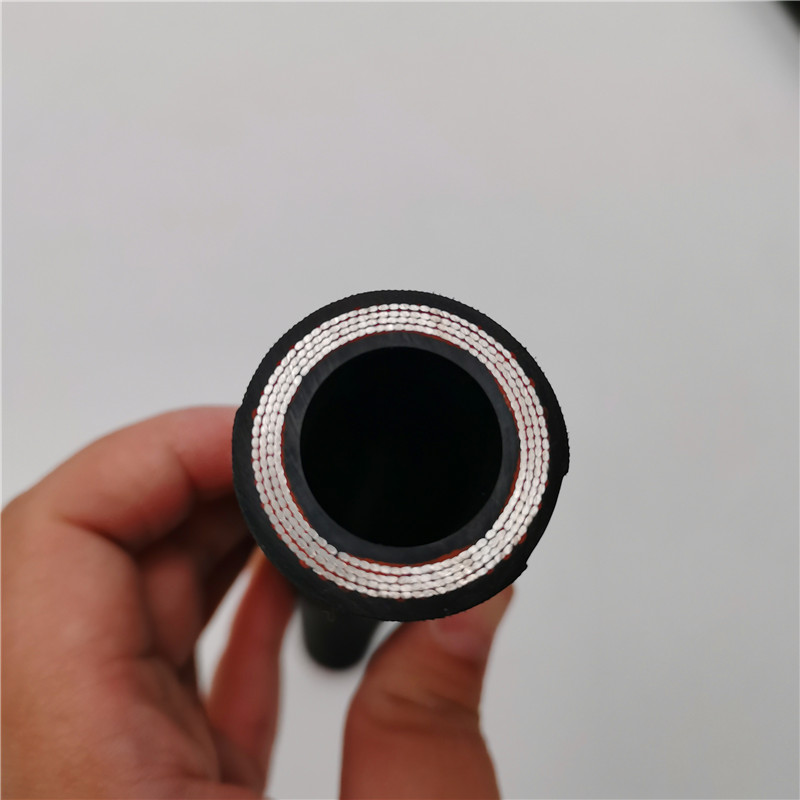
The core material, PTFE (polytetrafluoroethylene), is a synthetic fluoropolymer renowned for its exceptional chemical resistance, wide temperature operating range (-200°C to +260°C), and low coefficient of friction. Raw PTFE resin is produced through the polymerization of tetrafluoroethylene monomer, resulting in a material with a semi-crystalline structure. The crystallinity contributes to its chemical inertness but also to its inherent stiffness. The reinforcing braid is commonly constructed from 304 or 316 stainless steel, selected for corrosion resistance and high tensile strength. Manufacturing begins with PTFE tube extrusion, a process where molten PTFE resin is forced through a die to create a seamless tube. Critical parameters during extrusion include die temperature, extrusion pressure, and cooling rate, all impacting tube dimensions and crystallinity. Following extrusion, the PTFE tube undergoes sintering, a heat treatment process that fuses the PTFE particles, enhancing its mechanical properties. The braiding process involves helically winding the stainless steel wire around the PTFE tube. Braid coverage (the percentage of the tube surface covered by the braid) is a key manufacturing parameter, directly affecting burst pressure and kink resistance. Finally, end fittings are crimped or swaged onto the hose, establishing a secure and leak-proof connection. Quality control at each stage – resin purity, extrusion tolerances, sintering consistency, braid coverage, and fitting integrity – is crucial to ensure the final product meets rigorous performance specifications. Variations exist in braid construction, including single-layer, double-layer, and specialized constructions for specific applications requiring enhanced flexibility or pressure ratings.
Performance & Engineering
The performance of braided PTFE hose is governed by a complex interplay of material properties and structural design. Force analysis focuses on hoop stress within the PTFE tube under internal pressure, which is directly mitigated by the restraining force of the braided reinforcement. The braid's tensile strength and coverage determine its ability to withstand these stresses. Burst pressure calculations utilize Barlow’s formula, modified to account for the contribution of the braid. Flexibility is another crucial performance characteristic, particularly in applications requiring tight bending radii. The braid pitch (distance between braid wires) and wire diameter significantly influence flexibility; a tighter pitch and smaller diameter wire generally result in increased flexibility but reduced burst pressure. Environmental resistance is paramount; PTFE itself is inert to most chemicals, but the stainless steel braid can be susceptible to corrosion in highly aggressive environments. Therefore, material selection for the braid must align with the intended application. Compliance requirements vary by industry. In the automotive sector, hoses must meet SAE standards for fuel and coolant lines. In the pharmaceutical industry, USP Class VI certification ensures biocompatibility. Furthermore, many applications require adherence to RoHS and REACH regulations regarding restricted substances. Functional implementation also involves considerations for fluid velocity, temperature gradients, and potential for electrostatic discharge, all of which can impact hose life and performance.
Technical Specifications
| Parameter | Unit | Typical Value (1/4" ID Hose) | Test Standard |
|---|---|---|---|
| Inner Diameter | in | 0.25 | SAE J20 |
| Outer Diameter | in | 0.43 | SAE J20 |
| Working Pressure | psi | 2000 | ASTM D1430 |
| Burst Pressure | psi | 8000 | ASTM D1430 |
| Temperature Range | °F | -100 to +500 | ASTM D395 |
| Chemical Compatibility | - | Excellent with most chemicals | ASTM F15 |
Failure Mode & Maintenance
Braided PTFE hose, while durable, is susceptible to several failure modes. Fatigue cracking in the braid is a common issue, particularly under cyclic pressure and bending. This occurs due to repeated stress exceeding the braid’s endurance limit. Delamination, the separation of the PTFE tube from the braid, can result from inadequate adhesion during manufacturing or prolonged exposure to extreme temperatures. Degradation of the PTFE itself, though rare, can occur with exposure to certain highly reactive chemicals or intense radiation. Oxidation of the stainless steel braid is possible in environments with limited oxygen or the presence of chlorides. Kinking, particularly in hoses with insufficient flexibility, can lead to localized stress concentrations and eventual failure. Maintenance primarily revolves around visual inspection for signs of damage – braid wear, cracks, swelling, or discoloration. Regular pressure testing can identify leaks or weakening of the hose. Avoid sharp bends and excessive torsion during installation and operation. Ensure compatibility of the hose with the conveyed fluid. For applications involving corrosive environments, consider using braids made from more corrosion-resistant alloys like Hastelloy. Replace hoses at predetermined intervals based on operating conditions and application criticality. Proper storage is also vital; avoid direct sunlight and prolonged exposure to high temperatures.
Industry FAQ
Q: What is the impact of braid type (304 vs. 316 stainless steel) on hose performance and cost?
A: 316 stainless steel offers superior corrosion resistance compared to 304, particularly in chloride-rich environments. While 316 provides enhanced durability in harsh conditions, it comes at a higher material cost. The selection should be driven by the specific chemical exposure anticipated during operation. For general applications, 304 is often sufficient; however, for marine, chemical processing, or pharmaceutical applications, 316 is highly recommended.
Q: How does temperature affect the pressure rating of braided PTFE hose?
A: The working pressure of braided PTFE hose decreases with increasing temperature. As temperature rises, the tensile strength of both the PTFE and the stainless steel braid diminishes. Manufacturers provide derating curves that specify the allowable working pressure at various temperatures. Adhering to these derating guidelines is critical to prevent premature failure.
Q: What is the significance of "braid coverage" and how is it measured?
A: Braid coverage refers to the percentage of the hose’s outer surface area covered by the braided reinforcement. Higher braid coverage provides greater burst strength and kink resistance. It is typically measured by sectioning the hose and visually inspecting the braid pattern. Specifications generally require a minimum braid coverage percentage (e.g., 90%).
Q: Can braided PTFE hose be used with vacuum applications?
A: While PTFE itself possesses good resistance to collapse, standard braided PTFE hose is generally not recommended for sustained vacuum applications. The braid can be susceptible to implosion under high vacuum. Specialized vacuum-rated hose designs, often incorporating internal support structures, are necessary for such applications.
Q: How does the bend radius affect the service life of braided PTFE hose?
A: Exceeding the minimum bend radius specified by the manufacturer can significantly reduce the service life of the hose. Sharp bends induce localized stress concentrations in both the PTFE tube and the braid, leading to premature fatigue cracking. Maintaining the recommended bend radius ensures even stress distribution and maximizes durability.
Conclusion
Braided PTFE hose represents a highly engineered fluid transfer solution offering an unparalleled combination of chemical inertness, thermal stability, and pressure resistance. Its construction, leveraging the unique properties of PTFE and stainless steel braid, allows for safe and reliable operation in demanding applications across diverse industries. Understanding the interplay between material science, manufacturing processes, and performance characteristics is crucial for selecting the appropriate hose for a given application and ensuring long-term operational integrity.
Future developments in braided PTFE hose technology are likely to focus on enhanced braid materials – exploring alloys with superior corrosion resistance and fatigue life – and improved manufacturing techniques to increase braid coverage and reduce hose weight. Furthermore, the integration of sensor technology into the hose structure could enable real-time monitoring of pressure, temperature, and leak detection, further enhancing safety and operational efficiency.

