
Apr . 01, 2024 17:55 Back to list
blue high pressure hydraulic hose manufacturer Performance Analysis
Introduction
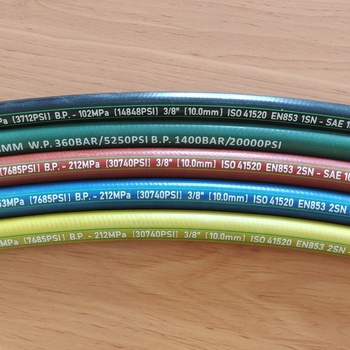
Blue high pressure hydraulic hose is a critical component in fluid power systems across diverse industries including construction, agriculture, manufacturing, and automotive. These hoses are engineered to reliably transmit hydraulic fluid at significant pressures, facilitating the operation of heavy machinery and critical industrial processes. The selection of a suitable hydraulic hose necessitates careful consideration of operating pressure, fluid compatibility, temperature range, and environmental conditions. Unlike lower-pressure hoses utilizing simpler constructions, high-pressure hydraulic hoses employ multiple layers of reinforcement – typically braided steel wire – to withstand the extreme forces exerted by pressurized fluids. This guide provides a detailed technical overview of blue high-pressure hydraulic hoses, encompassing material science, manufacturing processes, performance characteristics, potential failure modes, and relevant industry standards. The core performance metric is burst pressure, determined by a combination of internal hose diameter, reinforcement type and density, and liner material tensile strength. A key industry pain point is premature failure due to improper hose selection for the application or inadequate maintenance leading to compromised reinforcement layers.
Material Science & Manufacturing
The construction of a blue high-pressure hydraulic hose typically involves four primary layers: the inner tube (liner), the reinforcement layer(s), the intermediate layer, and the outer cover. The inner tube is commonly composed of synthetic rubber compounds such as nitrile rubber (NBR), polyethylene (PE), or fluorocarbon rubber (FKM), selected based on fluid compatibility. NBR provides excellent resistance to petroleum-based fluids, while FKM is preferred for its superior chemical resistance and high-temperature performance. Reinforcement layers consist of high-tensile steel wire, precisely wound in a spiral or braided configuration. The number of layers and the wire diameter directly correlate with the hose’s working and burst pressures. An intermediate layer, often a synthetic rubber blend, bonds the reinforcement to the inner tube and outer cover, providing structural integrity. Finally, the outer cover, typically made from chloroprene rubber (CR), provides abrasion resistance, weathering protection, and resistance to ozone degradation. Manufacturing commences with extrusion of the inner tube to precise dimensions. Reinforcement wires are then spirally wound or braided onto the extruded tube. The intermediate layer is applied, followed by the outer cover. Critical process parameters include extrusion temperature, winding/braiding tension, and vulcanization time and temperature. Vulcanization, a chemical process involving sulfur, crosslinks the rubber polymers, enhancing strength, elasticity, and resistance to environmental factors. Improper control of vulcanization parameters can lead to under-cured or over-cured rubber, resulting in reduced hose performance and lifespan. Steel wire quality and consistency are equally paramount, as variations in wire diameter or tensile strength directly impact burst pressure and fatigue resistance.

Performance & Engineering
The performance of a blue high-pressure hydraulic hose is defined by several key engineering parameters. Burst pressure, typically expressed in psi or MPa, represents the maximum pressure the hose can withstand before failure. Working pressure, significantly lower than burst pressure, is the recommended operating pressure for long-term reliability and is typically 75% of the burst pressure. Hose diameter influences flow rate and pressure drop; smaller diameters restrict flow while larger diameters can reduce pressure. Flexibility, often assessed by bend radius, determines the hose’s ability to navigate tight spaces and resist kinking. Temperature range dictates the operational limits of the hose, as extreme temperatures can degrade the rubber compounds and reduce tensile strength. Fatigue resistance, crucial in pulsating pressure applications, is evaluated through cyclic pressure testing. Force analysis reveals the tensile stresses within the hose layers under pressure, guiding reinforcement design. Environmental resistance, particularly to ozone, UV radiation, and chemical exposure, is critical for outdoor applications. Compliance with industry standards, such as SAE J517 and EN 853, ensures safety and performance. A common engineering challenge is managing hose twist; excessive twisting can weaken the reinforcement layers and lead to premature failure. Proper hose assembly, including the correct fitting selection and crimping procedure, is paramount. Improperly crimped fittings can create stress concentrations and compromise hose integrity. Finite element analysis (FEA) is increasingly employed to optimize hose designs and predict performance under various loading conditions.
Technical Specifications
| Parameter | Unit | SAE J517 - 100R2 AT | SAE J517 - 100R12 |
|---|---|---|---|
| Working Pressure | psi | 2000 | 3000 |
| Burst Pressure | psi | 8000 | 12000 |
| Temperature Range | °F | -40 to +212 | -40 to +250 |
| Inner Tube | Material | NBR | Synthetic Rubber |
| Reinforcement | Layers | Two Steel Wire Braids | Six Steel Wire Spirals |
| Outer Cover | Material | Synthetic Rubber | Synthetic Rubber |
Failure Mode & Maintenance
Blue high-pressure hydraulic hoses are susceptible to several failure modes. Fatigue cracking, caused by repeated pressure cycles, initiates at stress concentrations within the reinforcement layers. Abrasion, resulting from external contact with abrasive surfaces, damages the outer cover, exposing the reinforcement to corrosion. Pinholes, small punctures in the inner tube, lead to fluid leakage and pressure loss. Hose kinking, caused by excessive bending, can restrict flow and damage the reinforcement. Fitting failure, often due to improper crimping or corrosion, creates leak paths. Internal degradation of the inner tube, caused by fluid incompatibility or high temperatures, reduces its elasticity and tensile strength. Oxidation, particularly in exposed reinforcement wires, weakens the steel and reduces burst pressure. Maintenance is crucial for preventing failures. Regular visual inspections should identify abrasions, kinks, and leaks. Hose assemblies should be replaced if damage is detected. Fluid compatibility must be verified to prevent inner tube degradation. Proper hose routing, avoiding sharp bends and abrasive surfaces, is essential. Crimped fittings should be periodically inspected for corrosion and tightness. Hose assemblies should be stored in a cool, dry environment, protected from direct sunlight and ozone sources. Implement a preventative maintenance schedule that includes hose replacement based on service hours or a predetermined interval, even in the absence of visible damage. A failure analysis should be performed on any hose that fails prematurely to identify the root cause and prevent recurrence.
Industry FAQ
Q: What is the impact of fluid velocity on hose life?
A: Higher fluid velocities increase the rate of erosion on the inner tube and can induce vibration, accelerating fatigue failure. Maintaining fluid velocity within recommended limits, as specified by the hose manufacturer, is crucial for extending hose lifespan. Proper sizing of the hose diameter to achieve optimal flow rates is essential.
Q: How do I select the correct fitting for a high-pressure hose?
A: Fittings must be compatible with the hose end configuration (e.g., crimped, swaged, field-attachable). The fitting material must be compatible with the hydraulic fluid. The fitting pressure rating must exceed the hose working pressure. Proper crimping procedures, using calibrated tooling, are essential to ensure a secure and leak-free connection.
Q: What are the advantages of spiral reinforcement versus braided reinforcement?
A: Spiral reinforcement generally provides higher pressure ratings and greater flexibility than braided reinforcement. Braided reinforcement offers superior abrasion resistance and is often preferred for applications involving frequent bending. The choice depends on the specific application requirements.
Q: Can I repair a damaged hydraulic hose?
A: Repairing a damaged hydraulic hose is generally not recommended, especially for high-pressure applications. Repairs can compromise the hose’s structural integrity and create potential leak paths. Replacement with a new hose is the safest and most reliable solution. Field repair kits are available for emergency situations, but these should be considered temporary fixes.
Q: What is the role of impulse pressure in hose selection?
A: Impulse pressure, or pressure spikes, are common in hydraulic systems. The hose must be able to withstand these pressure surges without failure. Hoses designed for high-impulse applications incorporate special reinforcement configurations to mitigate the effects of pressure pulsations. Impulse testing is a critical component of hose qualification.
Conclusion
Blue high-pressure hydraulic hoses are indispensable components in numerous industrial applications, demanding careful consideration of material science, manufacturing precision, and operational parameters. The selection of the appropriate hose necessitates a thorough understanding of working pressure, fluid compatibility, temperature ranges, and environmental factors. Failure to account for these variables can lead to premature failures, resulting in costly downtime and potential safety hazards. Implementing robust preventative maintenance programs, including regular inspections and timely replacement of worn or damaged hoses, is paramount for ensuring system reliability and longevity.
The continued advancements in hydraulic hose technology, driven by materials science and engineering innovations, are focused on improving hose performance, extending service life, and enhancing safety. Future developments may include the adoption of advanced materials, such as thermoplastic composites, to reduce weight and improve corrosion resistance. Furthermore, smart hose technologies, incorporating sensors to monitor pressure, temperature, and hose condition, could enable predictive maintenance and further minimize the risk of unexpected failures. A commitment to adhering to relevant industry standards and best practices is essential for maintaining the integrity and reliability of hydraulic systems.