
Apr . 01, 2024 17:55 Back to list
blue air hose Performance Analysis
Introduction
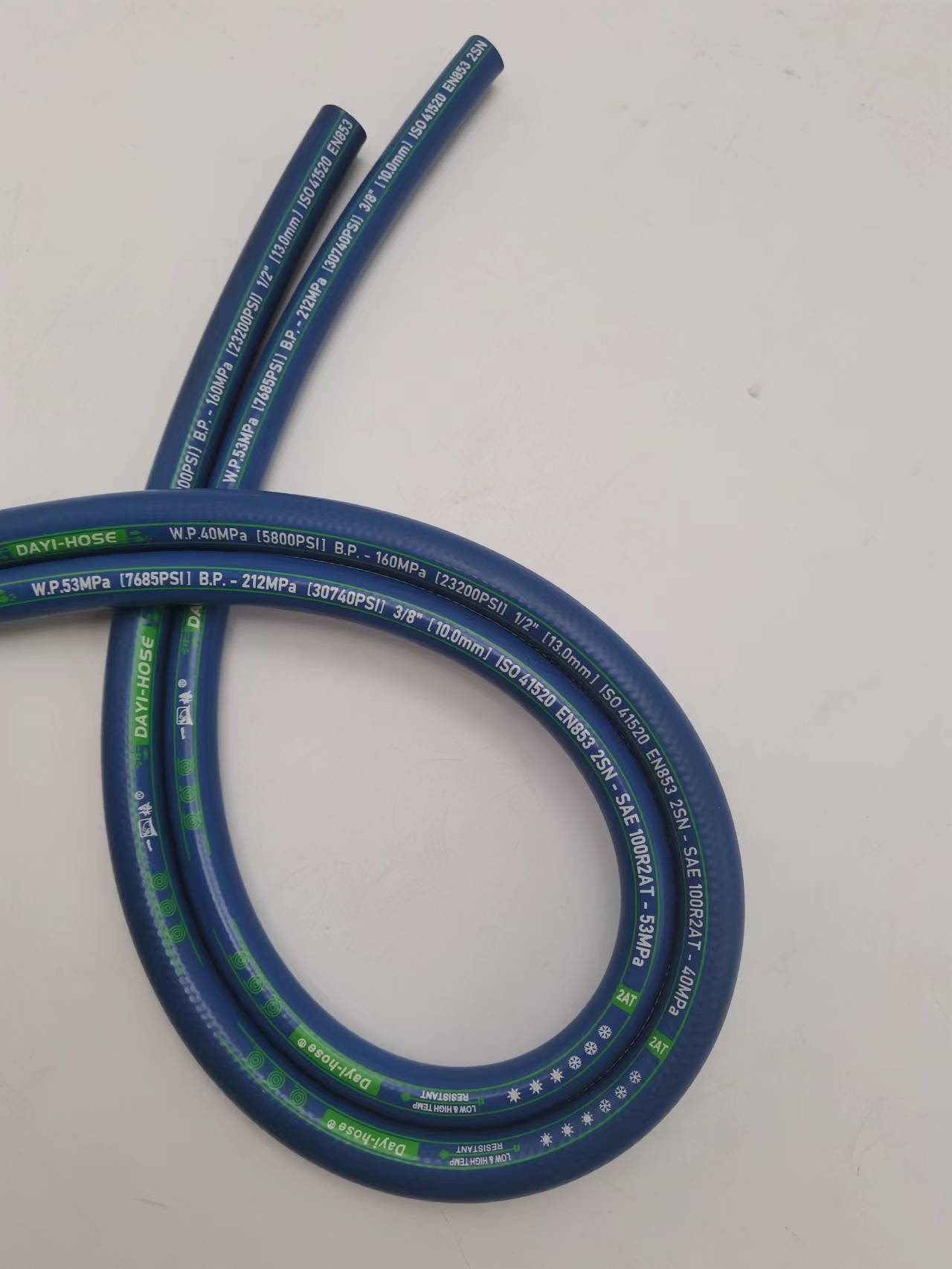
Blue air hose, typically constructed from a flexible polymeric material, serves as a crucial component in pneumatic systems across a diverse range of industrial and commercial applications. Positioned within the fluid power transmission chain, it facilitates the delivery of compressed air to power tools, automated machinery, and various control systems. Unlike rigid piping, air hose offers adaptability and maneuverability, essential for dynamic work environments. Its core performance characteristics – burst pressure, working pressure, flexibility, and temperature resistance – dictate its suitability for specific tasks and define its lifecycle. The proliferation of advanced manufacturing techniques, demanding higher precision and reliability, has amplified the importance of selecting the appropriate air hose, leading to specialization in materials, constructions, and performance specifications. Industry pain points center around hose failure due to abrasion, kinking, chemical exposure, and exceeding pressure ratings, resulting in costly downtime and potential safety hazards.
Material Science & Manufacturing
The predominant material for blue air hose construction is Polyvinyl Chloride (PVC), favored for its cost-effectiveness and reasonable chemical resistance. However, higher-performance applications utilize Polyurethane (PU) and reinforced PVC compounds. PVC’s inherent rigidity necessitates plasticizer addition to impart flexibility, impacting its resistance to oil and temperature extremes. PU offers superior abrasion resistance, flexibility at low temperatures, and resistance to many oils, but is generally more expensive. Reinforcement is crucial; commonly, a high-tensile strength polyester braid is embedded within the hose wall to withstand internal pressure.
Manufacturing typically involves extrusion. The raw polymer, along with plasticizers, stabilizers, and colorants (accounting for the "blue" aesthetic, often achieved with Phthalo Blue pigments), is fed into an extruder where it is melted and forced through a die to form a continuous tube. The reinforcement braid is simultaneously applied, often via a wrapping machine, ensuring uniform coverage. Post-extrusion, the hose undergoes cooling, curing, and quality control checks. Critical parameters during extrusion include barrel temperature (optimized for polymer viscosity), die pressure (influencing wall thickness and dimensional accuracy), and braid tension (directly impacting burst strength). Variations exist, such as spiral-wrapped reinforcement for increased flexibility and kink resistance, and co-extrusion techniques to create multi-layered hoses with specific barrier properties.

Performance & Engineering
The performance of blue air hose is governed by several key engineering principles. Burst pressure, defined as the pressure at which the hose fails catastrophically, is determined by the tensile strength of the polymer and reinforcement material, and the hose wall thickness. Working pressure is typically a fraction (e.g., 1/4 or 1/3) of the burst pressure, providing a safety factor. Flexibility is a function of the polymer's modulus of elasticity and the braid structure. Kink resistance is enhanced by spiral reinforcement. Environmental resistance encompasses a range of factors: Ozone degradation (addressed by stabilizers), UV exposure (requiring UV-resistant formulations), and chemical compatibility (selecting polymers resistant to the fluids being conveyed).
Force analysis involves considering internal pressure acting radially on the hose wall, balanced by the tensile forces in the reinforcement braid. Hose fittings contribute significantly to overall system integrity. Incorrectly installed or incompatible fittings can lead to leaks or hose separation. Compliance standards, such as those set by OSHA regarding compressed air safety, dictate permissible working pressures, hose inspection frequency, and fitting requirements. Understanding the bending radius limitations is critical; exceeding the minimum bending radius can induce stress concentrations and premature failure. Fatigue analysis is also paramount, considering the cyclical nature of pneumatic operation.
Technical Specifications
| Parameter | Typical PVC Air Hose | Typical PU Air Hose | Reinforcement Type |
|---|---|---|---|
| Working Pressure (PSI) | 150 | 200 | Polyester Braid |
| Burst Pressure (PSI) | 450 | 600 | Single or Double Braid |
| Temperature Range (°F) | -20 to 150 | -40 to 175 | N/A |
| Tensile Strength (PSI) | 8,000 | 12,000 | N/A |
| Minimum Bending Radius (inches) | 6 | 4 | N/A |
| Oil Resistance | Poor | Good | N/A |
Failure Mode & Maintenance
Common failure modes for blue air hose include burst failure due to exceeding pressure limits or braid degradation, kinking leading to localized stress and cracking, abrasion resulting in wall thinning and eventual perforation, and chemical attack causing material embrittlement. Fatigue cracking can occur from repeated flexing, particularly near fittings. Delamination between the polymer and reinforcement can compromise the hose's structural integrity. Oxidation, especially at elevated temperatures, can cause polymer degradation.
Preventative maintenance is crucial. Regular visual inspections should identify cuts, abrasions, kinks, and signs of chemical exposure. Pressure testing can verify hose integrity. Hoses should be replaced immediately if damage is detected or if they exceed their recommended service life. Proper storage, away from direct sunlight and extreme temperatures, is essential. When disconnecting hoses, avoid sharp bending or twisting. Fittings should be inspected for corrosion and properly tightened. Consider using hose guards in areas prone to abrasion. Establish a documented inspection and replacement schedule based on usage frequency and environmental conditions.
Industry FAQ
Q: What is the primary difference between PVC and PU air hose regarding chemical resistance?
A: PVC exhibits poor resistance to many oils and solvents, causing swelling and eventual degradation. PU, conversely, demonstrates good resistance to a wider range of chemicals, including oils, greases, and fuels, making it preferable in environments where chemical exposure is likely.
Q: How does reinforcement type affect the working pressure of an air hose?
A: Increased reinforcement – typically achieved with a higher ply count of polyester braid – directly increases the hose's ability to withstand internal pressure. Double-braided hoses generally offer significantly higher working and burst pressures compared to single-braided hoses.
Q: What are the consequences of exceeding the minimum bending radius?
A: Exceeding the minimum bending radius creates localized stress concentrations within the hose wall, particularly at the inner radius. This can lead to premature cracking, kinking, and ultimately, hose failure. It’s crucial to adhere to the manufacturer’s specified bending radius.
Q: What impact do plasticizers have on PVC air hose performance?
A: Plasticizers are added to PVC to improve its flexibility. However, they can migrate over time, leading to hardening and cracking, especially at elevated temperatures. The type and concentration of plasticizer significantly affect the hose’s lifespan and resistance to various environmental factors.
Q: How frequently should air hoses be inspected for wear and tear?
A: The inspection frequency depends on usage intensity and environmental conditions. A minimum inspection schedule of weekly for high-use applications and monthly for low-use applications is recommended. Inspect hoses before each use in critical applications. Documented inspection logs are best practice.
Conclusion
Blue air hose, while seemingly a simple component, is subject to complex material science and engineering considerations. Selecting the appropriate hose necessitates a thorough understanding of the application's pressure requirements, temperature range, chemical exposure, and anticipated service life. PVC offers a cost-effective solution for general-purpose applications, while PU provides superior performance in demanding environments. Proper installation, regular inspection, and timely replacement are critical for ensuring safe and reliable operation.
The industry trend is leaning toward more durable and chemically resistant materials, as well as improved reinforcement techniques to enhance performance and longevity. Future developments will likely focus on incorporating smart sensing technologies into air hoses to provide real-time monitoring of pressure, temperature, and structural integrity, enabling predictive maintenance and minimizing downtime.