
Apr . 01, 2024 17:55 Back to list
black wire braid hydraulic hose Performance Analysis
Introduction
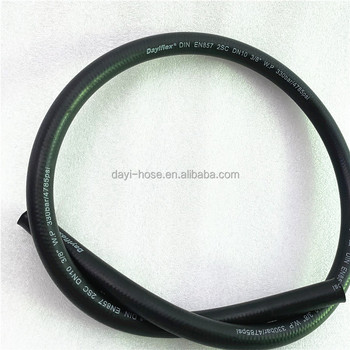
Black wire braid hydraulic hose is a reinforced flexible assembly designed to convey hydraulic fluid under pressure. It occupies a critical position in industrial fluid power systems, serving as the lifeline for transmitting force generated by hydraulic pumps to actuators. Distinguished by its high-pressure capacity and durability, it’s commonly used in construction equipment, agricultural machinery, material handling vehicles, and various industrial applications. Core performance characteristics center on burst pressure, working pressure, temperature range, and fluid compatibility, directly impacting system efficiency and safety. The black wire braid construction provides reinforcement, enhancing resistance to kinking, abrasion, and high pressures compared to non-reinforced hoses. This guide will detail the material science, manufacturing processes, performance parameters, failure modes, and maintenance protocols associated with black wire braid hydraulic hose, adhering to relevant international standards.
Material Science & Manufacturing
The construction of black wire braid hydraulic hose typically involves four key layers: the inner tube, reinforcement layer, outer cover, and occasionally, an intermediary bonding layer. The inner tube is commonly composed of synthetic rubber compounds such as Nitrile (NBR), also known as Buna-N, known for its excellent resistance to petroleum-based hydraulic fluids, as well as Ethylene Propylene Diene Monomer (EPDM) for phosphate ester-based fluids. NBR exhibits a temperature range of -40°C to +120°C, while EPDM extends to -50°C to +150°C. The reinforcement layer is comprised of high-strength steel wire, spirally wound to provide pressure resistance. The wire’s tensile strength is a crucial parameter, generally exceeding 2000 MPa. Carbon steel is frequently used, but stainless steel is implemented in corrosive environments. The outer cover is generally a synthetic rubber compound, often a blend of Chloroprene (CR) for its abrasion and weather resistance, or Polyurethane (PU) for superior oil resistance and cut resistance. Manufacturing begins with extrusion of the inner tube and outer cover. The steel wire is then spirally wound onto the inner tube. Crucially, adhesion between layers is achieved through a bonding agent, often a chemical adhesive system. Curing is a critical parameter, involving controlled temperature and pressure to vulcanize the rubber compounds, achieving desired mechanical properties and ensuring layer adhesion. Post-curing, hoses undergo rigorous testing for leak-proof performance, burst pressure, and dimensional accuracy. Quality control also includes inspection for wire visibility, surface defects, and proper labeling.
Performance & Engineering
The performance of black wire braid hydraulic hose is dictated by several engineering considerations. Burst pressure is the maximum pressure the hose can withstand before rupture, typically four times the working pressure. Working pressure, the safe operating pressure, is determined by the reinforcement layer's strength and the inner tube's wall thickness. Temperature extremes affect fluid viscosity and rubber elasticity. At elevated temperatures, the rubber can soften, reducing pressure capacity, while at low temperatures, it can become brittle, increasing the risk of cracking. Hose flexibility, measured by bend radius, is critical to prevent kinking, which restricts fluid flow and can lead to hose failure. The hose's resistance to external abrasion is another vital performance factor, especially in demanding environments. Furthermore, fluid compatibility is paramount. Incompatible fluids can cause swelling, softening, or degradation of the inner tube, leading to leaks and system failure. Fatigue life is a significant concern in applications involving cyclic pressure, requiring careful consideration of material properties and hose construction to withstand repeated stress. The hose must also meet relevant industry standards for safety and performance, including pressure testing and dimensional tolerances. Force analysis during operation must consider internal pressure, external loads, and bending stresses to ensure safe and reliable operation.
Technical Specifications
| Parameter | Unit | Typical Value (SAE 100R4 Type) | Typical Value (EN 856 R4 Type) |
|---|---|---|---|
| Working Pressure | MPa | 20.7 | 21 |
| Burst Pressure | MPa | 82.7 | 84 |
| Temperature Range | °C | -40 to +100 | -40 to +100 |
| Inner Tube Material | - | NBR (Buna-N) | NBR (Buna-N) |
| Reinforcement | - | Single Steel Wire Braid | Single Steel Wire Braid |
| Outer Cover Material | - | CR (Chloroprene) | CR (Chloroprene) |
Failure Mode & Maintenance
Black wire braid hydraulic hoses are susceptible to several failure modes. Fatigue cracking, initiated by repeated flexing and pressure cycles, often begins at the wire braid interface. Abrasion from external contact causes wear and eventual rupture of the outer cover, exposing the reinforcement. Kinking restricts fluid flow and stresses the hose wall, leading to localized failure. Corrosion of the steel wire reinforcement can weaken the hose's structural integrity, especially in environments with moisture and corrosive fluids. Chemical degradation of the inner tube occurs due to incompatible fluids, causing swelling, softening, and leaks. Oxidation of the rubber compounds over time leads to hardening and cracking. To mitigate these failures, regular visual inspections are essential, looking for abrasions, kinks, cracks, and leaks. Proper hose routing and support prevent excessive bending and abrasion. Fluid compatibility must be verified before use. Hose assemblies should be flushed periodically to remove contaminants. Correct torque specifications must be adhered to during fitting installation to prevent damage to the hose ends. Damaged hoses should be replaced immediately, rather than repaired, as repairs can compromise the hose's structural integrity. Proper storage, away from direct sunlight, ozone, and extreme temperatures, extends hose life.
Industry FAQ
Q: What is the difference between SAE 100R4 and EN 856 R4 hydraulic hoses?
A: While both standards define hoses with similar performance characteristics, there are subtle differences in testing procedures and dimensional tolerances. SAE 100R4 is a common North American standard, while EN 856 R4 is prevalent in Europe. Typically, EN 856 R4 hoses may have slightly tighter dimensional control and different requirements for chemical resistance testing.
Q: How do I determine the correct working pressure for my application?
A: The working pressure should be based on the maximum system pressure, including pressure spikes and surges. A safety factor of at least 4:1 is recommended, meaning the hose’s working pressure rating should be at least four times the maximum system pressure. Consider the fluid temperature, as temperature affects fluid viscosity and hose pressure capacity.
Q: What causes hose kinking, and how can it be prevented?
A: Kinking occurs when the hose is bent beyond its minimum bend radius, restricting fluid flow and damaging the reinforcement. Prevention involves proper hose routing, adequate support, and using hoses with a smaller bend radius for tight spaces. Avoid sharp bends and ensure sufficient clearance around the hose.
Q: Can I use a hydraulic hose with a different fluid than it was originally designed for?
A: No. Fluid incompatibility can lead to rapid degradation of the inner tube, causing leaks and system failure. Always verify the fluid compatibility of the hose material with the hydraulic fluid before use. Refer to the hose manufacturer’s specifications for compatible fluids.
Q: What is the expected lifespan of a black wire braid hydraulic hose?
A: Lifespan varies depending on operating conditions, fluid compatibility, and maintenance practices. Under ideal conditions, a well-maintained hose can last 5-7 years. However, harsh environments, frequent flexing, and incompatible fluids can significantly reduce its lifespan. Regular inspections and preventative maintenance are crucial.
Conclusion
Black wire braid hydraulic hose remains a foundational component in countless hydraulic systems, providing a reliable and robust fluid conveyance solution. Its performance is inextricably linked to its material composition, manufacturing precision, and adherence to rigorous engineering principles. Understanding the nuances of material science, potential failure modes, and recommended maintenance procedures is vital for maximizing lifespan and ensuring operational safety.
Looking ahead, advancements in hose technology will focus on developing lighter-weight materials, enhanced abrasion resistance, and improved fluid compatibility. Furthermore, the integration of smart sensing technologies within hose assemblies will enable real-time monitoring of pressure, temperature, and structural integrity, paving the way for predictive maintenance and enhanced system reliability. Proper selection, installation, and maintenance of black wire braid hydraulic hose, coupled with a proactive approach to system monitoring, will remain paramount for achieving optimal performance and minimizing downtime.