
Apr . 01, 2024 17:55 Back to list
best price high pressure hydraulic hose supplier Performance Analysis
Introduction
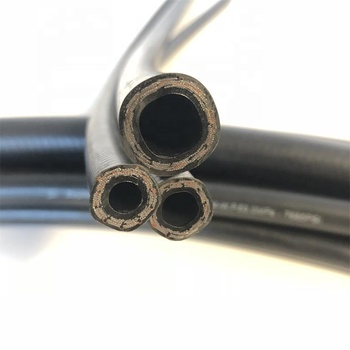
High-pressure hydraulic hoses are critical components in fluid power systems, transmitting hydraulic fluid to actuators and other components. They are fundamental to numerous industries including construction, agriculture, manufacturing, oil & gas, and aerospace. The ‘best price high pressure hydraulic hose supplier’ designation is not simply about cost; it reflects a balance between competitive pricing, consistent quality, adherence to stringent industry standards, and reliable supply chain management. These hoses are typically constructed of an inner tube, reinforcement layers, and an outer cover, each contributing to the hose’s ability to withstand high pressures, resist abrasion, and maintain flexibility. Performance characteristics include pressure rating, burst pressure, temperature range, and fluid compatibility. This guide provides an in-depth examination of the materials, manufacturing processes, performance parameters, failure modes, and relevant standards associated with high-pressure hydraulic hoses.
Material Science & Manufacturing
The materials used in high-pressure hydraulic hose construction directly dictate performance capabilities. The inner tube, responsible for fluid containment, is commonly composed of synthetic rubbers like Nitrile (NBR), Chloroprene (CR – Neoprene), or Ethylene Propylene Diene Monomer (EPDM). NBR offers excellent resistance to petroleum-based fluids, CR provides good resistance to weathering and ozone, and EPDM excels in high-temperature applications and compatibility with phosphate ester fluids. Reinforcement layers provide the structural integrity to withstand high pressures. These layers typically consist of multiple plies of high-tensile steel wire, spirally wound or braided. The number of layers and the wire diameter directly correlate with the hose's pressure rating. The outer cover, providing abrasion and weather resistance, is generally made from synthetic rubbers like CR or a thermoplastic polyurethane (TPU). Manufacturing processes begin with extrusion of the inner tube, followed by the application of reinforcement layers via winding or braiding machines. Precise tension control during reinforcement application is critical to ensure uniform pressure distribution and prevent localized stress concentrations. The outer cover is then extruded over the reinforcement. Post-extrusion processes include vulcanization (curing) to achieve desired rubber properties and dimensional stability. Key parameters controlled during manufacturing include rubber compound mixing ratios, extrusion temperature, braiding/winding tension, and curing time/temperature. Quality control relies on burst pressure testing, impulse testing, and dimensional inspections, all documented in accordance with industry standards.
Performance & Engineering
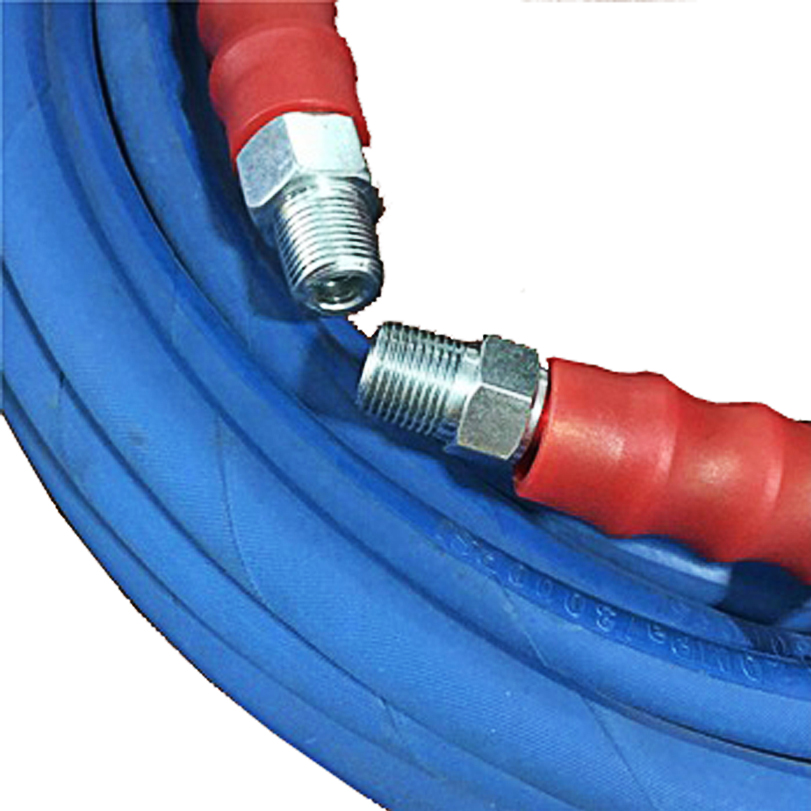
The performance of a high-pressure hydraulic hose is governed by a complex interplay of mechanical and chemical factors. Force analysis focuses on hoop stress within the hose walls, directly proportional to the internal pressure and inversely proportional to the hose diameter. Fatigue life is a critical consideration, especially in applications with pulsating pressures. Impulse testing, simulating repeated pressure spikes, assesses the hose’s ability to withstand cyclic loading without failure. Environmental resistance is crucial; hoses must maintain flexibility and integrity across a wide temperature range and in the presence of corrosive fluids, oils, and UV radiation. Degradation of the rubber compound due to heat, ozone, or chemical attack can lead to reduced flexibility and eventual failure. Compliance requirements vary by industry and geographic region. For example, hoses used in aerospace applications must meet stringent flammability and fluid resistance standards as dictated by agencies like the FAA. In the automotive industry, hoses must comply with REACH and RoHS regulations regarding restricted substances. Functional implementation requires careful consideration of hose length, bend radius, and fitting compatibility. Excessive bending can induce localized stress concentrations and premature failure. Proper fitting selection and installation are paramount to prevent leaks and ensure a secure connection. The selection of the correct hose assembly necessitates a thorough understanding of the system’s operating pressure, fluid type, temperature range, and environmental conditions.
Technical Specifications
| Parameter | Unit | Typical Value (EN 853/857 Equivalent) | Testing Standard |
|---|---|---|---|
| Working Pressure | MPa | 16 - 35 | ISO 6897 |
| Burst Pressure | MPa | 48 - 105 | ISO 3766 |
| Temperature Range | °C | -40 to +100 | DIN 7718 |
| Inner Tube Material | - | NBR, CR, EPDM | ASTM D2000 |
| Reinforcement | - | 2/4/6 Spiral Steel Wire | SAE J517 |
| Outer Cover Material | - | CR, TPU | ASTM D2000 |
Failure Mode & Maintenance
High-pressure hydraulic hoses are susceptible to several failure modes. Fatigue cracking, often initiating at the reinforcement layers, is a common failure mechanism in applications involving pulsating pressures. Delamination, or separation of reinforcement layers, reduces the hose's ability to withstand pressure. Degradation of the rubber compound due to heat, ozone, or chemical attack leads to loss of flexibility and eventual cracking. Oxidation can cause the rubber to become brittle and prone to failure. Pinholes or leaks can develop in the inner tube due to abrasion from fluid particles or corrosion. External damage, such as cuts or abrasions to the outer cover, can compromise the reinforcement layers and lead to sudden failure. Maintenance is critical to extend hose life and prevent catastrophic failures. Regular visual inspections should be conducted to identify any signs of damage, such as cracks, bulges, or abrasions. Hoses should be properly routed and supported to prevent excessive bending or twisting. Fluid contamination should be minimized through the use of filters. Hoses should be replaced at recommended intervals, even if no visible damage is apparent. When replacing hoses, ensure compatibility with the hydraulic fluid and operating conditions. Improperly installed fittings are a major cause of hose failure; fittings should be torqued to the manufacturer’s specifications.
Industry FAQ
Q: What is the primary difference between spiral and braided hydraulic hose reinforcement, and which is more suitable for high-pressure, high-impulse applications?
A: Spiral reinforcement offers higher pressure ratings and superior impulse performance compared to braided reinforcement. Braided hose is constructed with multiple layers of interwoven steel wire, providing flexibility but limited expansion/contraction capacity. Spiral hose utilizes a continuously wound single wire, allowing for greater flexibility and resistance to kinking while also effectively absorbing pressure pulses. For high-pressure, high-impulse applications, spiral reinforcement is generally the preferred choice.
Q: How does fluid compatibility impact the selection of the inner tube material for a hydraulic hose?
A: Fluid compatibility is paramount. Incompatible fluids can cause the inner tube to swell, soften, or degrade, leading to leaks or hose failure. Petroleum-based fluids typically require NBR or CR inner tubes, while phosphate ester fluids necessitate EPDM. Selecting the incorrect inner tube material will significantly reduce the hose's lifespan and reliability.
Q: What are the key considerations when selecting hose fittings, and what potential problems can arise from using incorrect fittings?
A: Key considerations include fitting type (e.g., crimped, field-attachable), pressure rating, and thread type. Using incorrect fittings can result in leaks, hose blowouts, or damage to the hose end. Improperly crimped fittings can distort the hose and create stress concentrations. Fittings must be compatible with the hose and the hydraulic fluid.
Q: What are the recommended practices for storing hydraulic hoses to prevent degradation and extend their service life?
A: Hydraulic hoses should be stored in a cool, dry, and dark environment, away from direct sunlight, ozone sources, and extreme temperatures. Hoses should be stored coiled loosely, avoiding sharp bends or kinks. Protect hoses from abrasion and physical damage during storage. Avoid storing hoses in contact with incompatible materials.
Q: How do international standards like SAE J517 and EN 853 influence the quality and performance of hydraulic hoses?
A: Standards like SAE J517 and EN 853 define performance requirements, testing procedures, and dimensional specifications for hydraulic hoses. Compliance with these standards ensures consistent quality, reliability, and interchangeability. These standards cover parameters such as pressure rating, burst pressure, temperature range, and fluid resistance, providing a benchmark for hose manufacturers and users.
Conclusion
The selection and application of high-pressure hydraulic hoses demand a comprehensive understanding of materials science, manufacturing processes, and performance characteristics. A ‘best price’ supplier is defined not simply by initial cost, but by delivering consistently reliable products that meet stringent industry standards and operate effectively within demanding applications. Failure to account for critical parameters such as fluid compatibility, pressure rating, and environmental conditions can lead to premature failure and costly downtime.
Ongoing maintenance and adherence to recommended storage practices are essential for maximizing hose lifespan and preventing catastrophic failures. Continued advancements in materials science and manufacturing technologies are driving the development of high-performance hydraulic hoses with improved durability, flexibility, and resistance to degradation, further solidifying their role as vital components in countless industrial applications.