
Apr . 01, 2024 17:55 Back to list
best price high pressure hydraulic hose Performance Analysis
Introduction
High-pressure hydraulic hose is a critical component in fluid power systems, serving as the artery for transmitting hydraulic fluid to actuators and other components. Its function extends across diverse industries, including construction, agriculture, mining, manufacturing, and automotive, where reliable power transmission is paramount. “Best price” in this context doesn’t solely denote lowest cost, but rather optimal value – a balance between performance, durability, safety, and cost-effectiveness. This guide details the materials, manufacturing processes, performance characteristics, failure modes, and maintenance requirements of high-pressure hydraulic hose, focusing on considerations pertinent to informed procurement and long-term operational efficiency. The core performance metrics are burst pressure, working pressure, temperature range, and fluid compatibility. Understanding these factors is vital to prevent catastrophic system failures and minimize downtime.
Material Science & Manufacturing
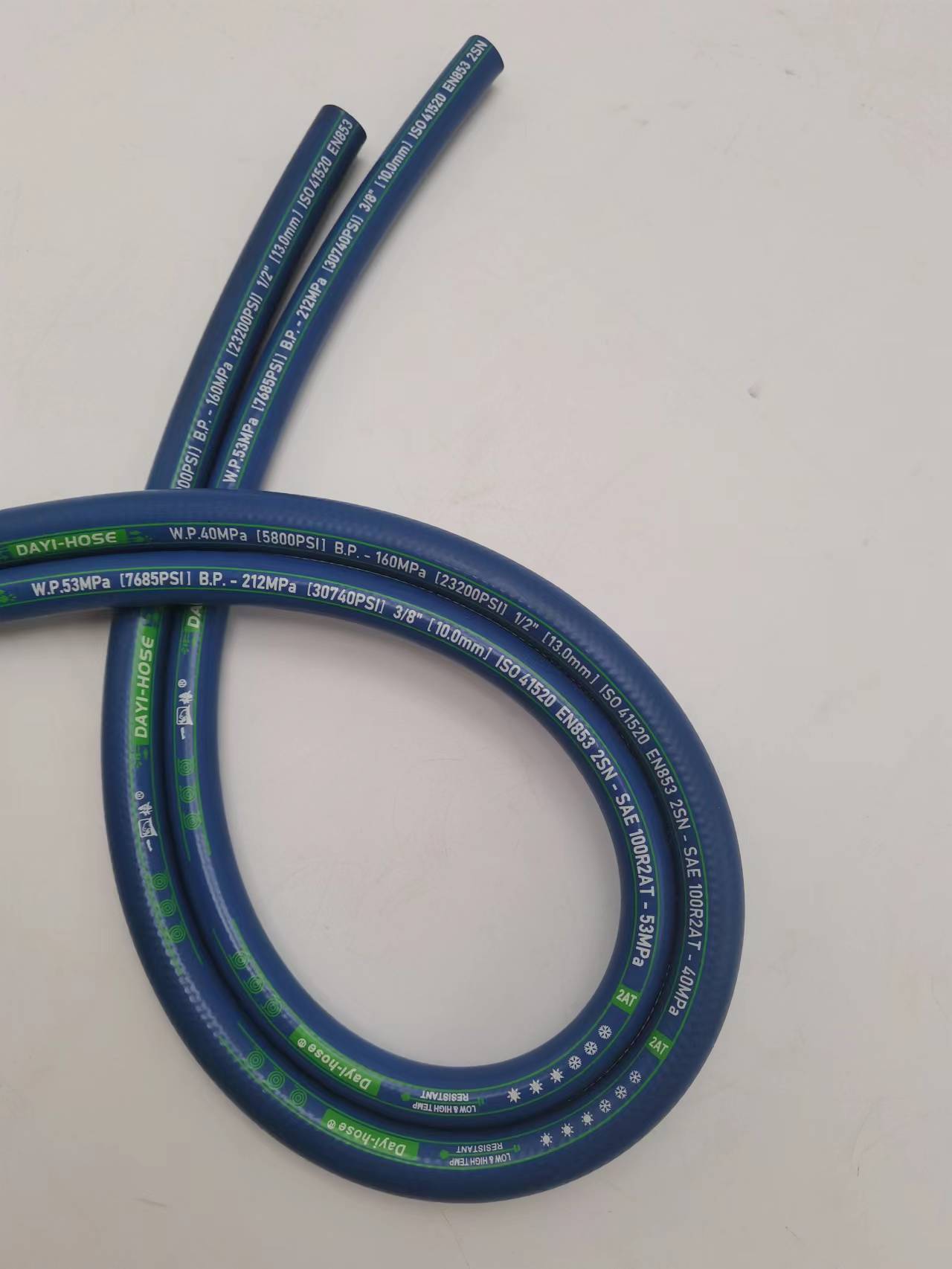
High-pressure hydraulic hose construction typically involves several layers, each serving a specific purpose. The innermost layer, or tube, is commonly composed of synthetic rubbers like nitrile (NBR), chloroprene (CR, Neoprene), or ethylene propylene diene monomer (EPDM). NBR provides excellent resistance to petroleum-based hydraulic fluids, CR offers good resistance to weathering and abrasion, and EPDM excels in high-temperature and phosphate ester fluid applications. The reinforcement layer is the key determinant of burst pressure and hose strength. It often consists of multiple braids or spirals of high-tensile steel wire. The number and configuration of these layers directly correlate with the hose's working pressure capacity. Some hoses incorporate textile reinforcement layers (polyester or aramid) in conjunction with steel to enhance flexibility and reduce weight. The outer cover, providing abrasion and environmental protection, is typically constructed from synthetic rubbers like CR or polyurethane. Manufacturing involves extrusion of the inner tube and outer cover, followed by precise winding of the reinforcement layers. Critical parameters during extrusion include temperature control (to ensure proper rubber vulcanization), die geometry (to maintain consistent wall thickness), and cooling rates (to prevent defects). Steel wire winding requires accurate tension control to ensure uniform reinforcement distribution. Post-manufacturing, hoses undergo rigorous testing, including hydrostatic testing (burst pressure verification) and impulse testing (cyclic pressure fatigue resistance evaluation). Quality control relies on statistical process control (SPC) to monitor key manufacturing variables.
Performance & Engineering
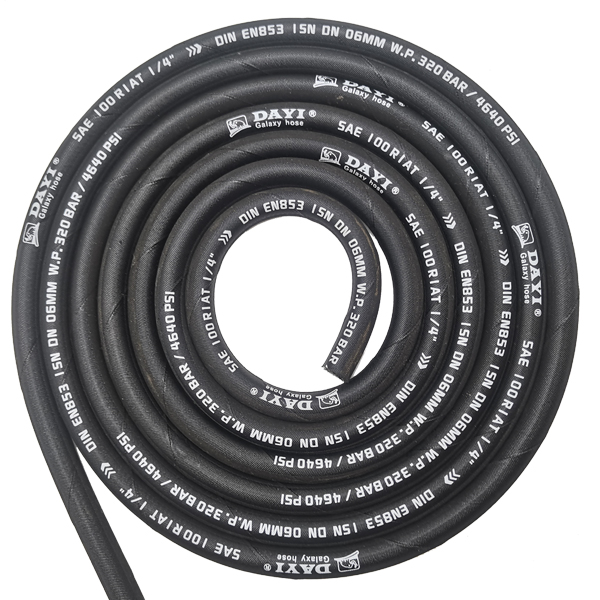
The performance of hydraulic hose is fundamentally governed by principles of fluid mechanics and material strength. Hose selection must account for the system's operating pressure, temperature range, fluid type, and application environment. Force analysis is crucial, particularly concerning burst pressure. Burst pressure is typically four times the working pressure, providing a safety factor. However, sustained high pressures can lead to fatigue failure over time. Impulse testing, simulating pressure spikes caused by pump pulsations or rapid valve closures, assesses the hose’s ability to withstand cyclic loading. Environmental resistance is critical in outdoor applications. Exposure to UV radiation, ozone, and extreme temperatures can degrade the rubber compounds, reducing flexibility and increasing the risk of cracking. Chemical compatibility is paramount; incompatible fluids can cause swelling, softening, or embrittlement of the hose materials. Compliance standards, such as SAE J517 and EN 853, specify minimum performance requirements for hydraulic hose. These standards define testing procedures and acceptance criteria for burst pressure, impulse pressure, temperature range, and fluid resistance. Proper hose routing is essential to minimize bending stress and prevent abrasion. Bending radius should adhere to manufacturer recommendations to avoid kinking and premature failure. Additionally, proper hose end termination (crimping or swaging) is critical for maintaining pressure integrity and preventing leaks. Incorrectly crimped fittings are a common source of hose failure.
Technical Specifications
| Parameter | Unit | Typical Value (DN13 - 1/2" ID Hose) | Test Standard |
|---|---|---|---|
| Working Pressure | MPa | 20-35 | SAE J517 / EN 853 |
| Burst Pressure | MPa | 80-140 | SAE J517 / EN 853 |
| Temperature Range | °C | -40 to +100 | SAE J517 / EN 853 |
| Inner Tube Material | - | NBR (Nitrile Rubber) | ASTM D2000 |
| Reinforcement | - | 2 or 4 Steel Wire Braids | SAE J517 / EN 853 |
| Outer Cover Material | - | CR (Chloroprene Rubber) | ASTM D2000 |
Failure Mode & Maintenance
Hydraulic hose failure manifests in various forms, often stemming from a combination of factors. Fatigue cracking, induced by repeated pressure cycling, is a common failure mode, particularly in applications with frequent pump pulsations. Delamination, the separation of reinforcement layers, results from inadequate adhesion between layers or exposure to corrosive fluids. Degradation of the rubber compounds, caused by UV exposure, ozone, or extreme temperatures, leads to loss of flexibility and cracking. Oxidation, accelerated by high temperatures and oxygen exposure, causes hardening and embrittlement. Abrasion, resulting from external contact with abrasive surfaces, wears away the outer cover, exposing the reinforcement layers. Fitting failure, often due to incorrect crimping or corrosion, can lead to leaks and hose rupture. Preventive maintenance is crucial for extending hose life and preventing catastrophic failures. Regular visual inspections should identify signs of cracking, abrasion, or swelling. Pressure testing, using a dedicated hose test bench, can detect leaks and weaknesses. Hose routing should be checked to ensure proper support and avoid excessive bending. Fluid contamination should be minimized through proper filtration. When replacing hoses, it is essential to use compatible fittings and follow manufacturer’s recommended crimping procedures. Regularly monitor system pressures and temperatures to ensure they remain within the hose’s operating limits. Keeping a maintenance log documenting inspections, tests, and replacements can help identify recurring issues and optimize maintenance schedules.
Industry FAQ
Q: What is the significance of the ‘dash size’ in hydraulic hose nomenclature (e.g., -6, -8, -10)?
A: The dash size refers to the nominal inner diameter of the hose in sixteenths of an inch. So, a -6 hose has a nominal inner diameter of 6/16" or 3/8", a -8 hose is 8/16" or 1/2", and a -10 hose is 10/16" or 5/8". This is a crucial parameter for matching the hose to the flow requirements of the hydraulic system; an undersized hose will restrict flow and cause pressure drop, while an oversized hose may not maintain sufficient velocity to keep particulates in suspension.
Q: How does the number of steel wire braids affect hose performance?
A: Increasing the number of steel wire braids significantly increases the hose’s burst pressure and resistance to bending. A single-braid hose is suitable for lower-pressure applications, while two-braid and four-braid hoses are used for progressively higher pressures. However, increasing the reinforcement also reduces hose flexibility. The optimal braid count represents a balance between pressure capacity and flexibility for the specific application.
Q: What is the impact of fluid incompatibility on hose lifespan?
A: Using a hose with an incompatible fluid can lead to rapid deterioration of the inner tube material. This can manifest as swelling, softening, cracking, or the release of harmful particles into the hydraulic fluid. Always verify the hose material’s compatibility with the specific hydraulic fluid being used, consulting the manufacturer’s chemical resistance chart.
Q: What is the proper procedure for crimping hose fittings?
A: Correct crimping is paramount for a leak-free and reliable connection. The crimp size must be precisely matched to the hose and fitting dimensions, according to the fitting manufacturer’s specifications. Using an improperly sized die or applying insufficient crimp force can result in leaks or fitting blow-off. A calibrated crimping machine and trained personnel are essential.
Q: What are the key differences between SAE J517 and EN 853 standards?
A: Both SAE J517 and EN 853 are widely recognized standards for hydraulic hose, but they have some differences in testing procedures and acceptance criteria. SAE J517 is predominantly used in North America, while EN 853 is common in Europe. EN 853 generally has more stringent requirements for impulse testing and dimensional accuracy. Understanding these differences is crucial when sourcing hoses internationally.
Conclusion
High-pressure hydraulic hose selection and maintenance are critical components of a reliable and safe hydraulic system. Choosing the right hose involves careful consideration of operating pressure, temperature range, fluid compatibility, and environmental factors. Optimizing the balance between performance, durability, and cost (“best price”) requires a thorough understanding of the materials science, manufacturing processes, and engineering principles governing hose behavior.
Ultimately, prioritizing quality, adherence to industry standards, and proactive maintenance are essential for minimizing downtime, preventing catastrophic failures, and maximizing the return on investment in hydraulic power equipment. Future advancements in hose technology will likely focus on lighter-weight materials, improved chemical resistance, and enhanced monitoring capabilities to further improve performance and reliability.