
Apr . 01, 2024 17:55 Back to list
aeroquip ptfe hose Performance Analysis
Introduction
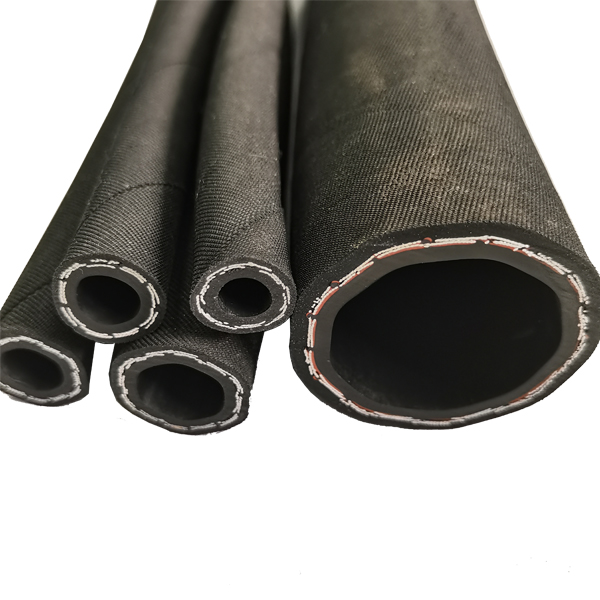
Aeroquip PTFE hose represents a critical component in fluid transfer systems across a diverse range of industries, including automotive racing, aerospace, chemical processing, and industrial manufacturing. Distinguished by its exceptional chemical resistance, wide operating temperature range, and low coefficient of friction, PTFE hose offers a superior alternative to traditional rubber and thermoplastic hoses in demanding applications. Its core construction comprises a PTFE (Polytetrafluoroethylene) inner liner, typically reinforced with a braided stainless steel exterior to withstand high pressures and prevent kinking. Within the broader hose industry, Aeroquip PTFE hose occupies a premium segment, positioned for applications requiring robust performance, longevity, and compatibility with aggressive fluids. The increasing demand for reliable fluid conveyance in high-performance and hazardous environments drives the continued adoption of this technology. Core performance characteristics include pressure rating, fluid compatibility, operating temperature limits, and burst strength.
Material Science & Manufacturing
The foundation of Aeroquip PTFE hose lies in the unique properties of Polytetrafluoroethylene (PTFE). PTFE is a fluoropolymer characterized by its exceptional chemical inertness, resisting degradation from virtually all chemicals. Its molecular structure, composed of carbon-fluorine bonds, imparts an extremely low coefficient of friction and excellent dielectric properties. Raw material selection critically impacts hose performance. Virgin PTFE resin is preferred for optimal purity and resistance to permeation, while modified PTFE formulations may incorporate fillers like glass fiber to enhance mechanical strength. The stainless steel braid reinforcement typically utilizes 304 or 316 stainless steel, chosen for corrosion resistance and tensile strength.
Manufacturing typically involves several key steps. First, PTFE resin is processed via extrusion to create a seamless inner liner tube. Precise control of extrusion temperature and screw speed is paramount to ensure consistent wall thickness and avoid defects. This tube is then sintered – a heat treatment process that fuses the PTFE particles together, creating a dense, non-porous structure. Next, the stainless steel braid is helically wound around the PTFE tube, providing structural support and pressure resistance. The braid pitch and coverage are meticulously controlled to achieve the specified burst pressure rating. Finally, end fittings are attached using a crimping process, ensuring a secure and leak-proof connection. Quality control throughout the manufacturing process includes dimensional checks, pressure testing to industry standards (SAE J526), and visual inspection for defects such as porosity or braid irregularities. Parameter control includes maintaining consistent PTFE resin viscosity, precise braid winding tension, and appropriate crimp force based on fitting material and hose size.

Performance & Engineering
Aeroquip PTFE hose performance is dictated by a complex interplay of internal fluid pressure, external mechanical loads, temperature extremes, and the chemical nature of the conveyed fluid. Force analysis is crucial in determining hose suitability for specific applications. Burst pressure, calculated based on the tensile strength of the PTFE and steel braid, represents the maximum pressure the hose can withstand before failure. Fatigue life, the number of pressure cycles the hose can endure, is also a key consideration, particularly in pulsating flow systems. Environmental resistance is another critical factor. PTFE’s inherent resistance to UV degradation and ozone makes it suitable for outdoor applications, but prolonged exposure to extreme temperatures can affect its flexibility and long-term performance.
Engineering considerations extend to proper fitting selection and installation. Incorrectly sized or installed fittings can create stress concentrations, leading to premature failure. Hose bend radius must be maintained within specified limits to avoid kinking and reduced flow. Compatibility with the conveyed fluid is paramount; while PTFE is chemically inert to most substances, certain highly aggressive chemicals may cause swelling or permeation. Compliance requirements vary by industry, but common standards include SAE J526 (for automotive applications), ISO 6802 (for hydraulic systems), and specific industry regulations pertaining to food-grade or medical-grade fluid handling. Proper grounding is necessary in applications where static electricity buildup is a concern, as PTFE is an excellent insulator.
Technical Specifications
| Parameter | Unit | Typical Value (1/2" ID Hose) | Test Standard |
|---|---|---|---|
| Inner Diameter | inches | 0.500 | SAE J1926 |
| Outer Diameter | inches | 0.750 | SAE J1926 |
| Working Pressure | psi | 3000 | SAE J526 |
| Burst Pressure | psi | 9000 | SAE J526 |
| Temperature Range | °F | -65 to +500 | ASTM D348 |
| Tensile Strength (Braid) | psi | 170,000 | ASTM E8 |
Failure Mode & Maintenance
Aeroquip PTFE hose, while robust, is susceptible to several failure modes under specific conditions. Fatigue cracking, particularly in high-vibration environments, can initiate at stress concentration points, such as near fittings or bends. Delamination, the separation of the PTFE liner from the steel braid, can occur due to improper bonding during manufacturing or prolonged exposure to extreme temperatures. Permeation, the diffusion of fluids through the PTFE liner, can be a concern with highly volatile substances over extended periods. Oxidation of the stainless steel braid, though slow, can occur in corrosive environments, reducing its tensile strength. Kinking, caused by exceeding the minimum bend radius, can damage the PTFE liner and restrict flow.
Preventive maintenance is critical to maximizing hose lifespan. Regular visual inspections should be conducted to identify signs of cracking, delamination, or abrasion. Proper installation, ensuring correct fitting torque and bend radius, is paramount. Avoid exposing the hose to temperatures outside the specified operating range. If the hose is used with corrosive fluids, consider selecting a hose with a 316 stainless steel braid for enhanced corrosion resistance. In the event of a leak or suspected damage, the hose should be replaced immediately. Cleaning should be performed with mild detergent and water; avoid using harsh solvents that could degrade the PTFE. Periodic pressure testing, in accordance with SAE J526, can help identify potential weaknesses before catastrophic failure occurs. Long-term storage requires the hose to be protected from UV light and extreme temperatures.
Industry FAQ
Q: What is the primary advantage of Aeroquip PTFE hose over traditional rubber hose in chemical processing applications?
A: The primary advantage lies in PTFE’s near-universal chemical resistance. Rubber hoses, even those with specialized elastomers, are susceptible to degradation and swelling when exposed to many aggressive chemicals. PTFE remains inert, ensuring long-term reliability and preventing contamination of the process fluid.
Q: How does the steel braid reinforcement impact the hose’s performance, and what considerations should be made when selecting a braid material (304 vs. 316 stainless steel)?
A: The steel braid provides critical structural support, preventing kinking and enabling the hose to withstand high pressures. The material choice—304 or 316 stainless steel—depends on the application environment. 316 stainless steel offers superior corrosion resistance, particularly in environments with chlorides or other corrosive agents, making it suitable for marine or chemical processing applications.
Q: What factors contribute to PTFE hose failure due to fatigue, and how can this be mitigated?
A: Fatigue failure is often initiated by cyclic pressure fluctuations and vibration, leading to stress concentration at fittings or bends. Mitigation strategies include minimizing vibration, ensuring proper installation with adequate support to reduce bending stress, selecting a hose with a higher fatigue life rating, and performing regular inspections for early signs of cracking.
Q: What are the limitations of PTFE hose regarding temperature extremes, and what precautions should be taken?
A: While PTFE has a wide operating temperature range, prolonged exposure to temperatures at the upper or lower limits can affect its flexibility and long-term performance. At high temperatures, PTFE can soften, while at low temperatures, it can become brittle. Avoid exceeding the specified temperature range and consider using insulated hoses or heat shielding in extreme environments.
Q: What is the significance of the SAE J526 standard in relation to Aeroquip PTFE hose, and how does it ensure product quality?
A: SAE J526 is a critical standard for hydraulic hose performance, outlining requirements for pressure testing, burst pressure, and temperature rating. Aeroquip PTFE hose undergoes rigorous testing to comply with this standard, ensuring that the hose meets specified performance criteria and providing assurance of product reliability and safety.
Conclusion
Aeroquip PTFE hose stands as a superior fluid conveyance solution when demanding applications necessitate chemical resistance, high-pressure capability, and broad temperature tolerance. Its construction, leveraging the unique properties of PTFE and reinforced with stainless steel braiding, delivers exceptional performance and longevity. Proper material selection, meticulous manufacturing processes, and adherence to industry standards are critical to realizing the full potential of this technology.
Moving forward, advancements in PTFE formulations and manufacturing techniques are likely to further enhance hose performance and expand its application range. Continued focus on quality control, coupled with a deep understanding of fluid dynamics and material science, will be essential to meeting the evolving needs of industries reliant on reliable and robust fluid transfer systems. The integration of smart monitoring technologies within PTFE hose assemblies may also emerge, providing real-time data on hose condition and enabling proactive maintenance.