
Apr . 01, 2024 17:55 Back to list
aeroquip hydraulic hose Performance Analysis
Introduction
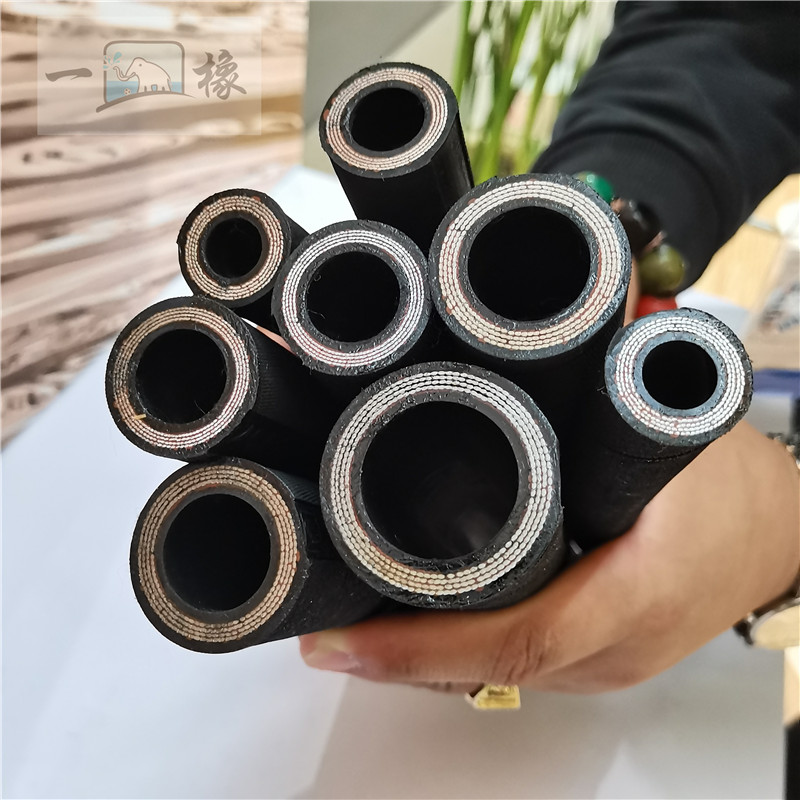
Aeroquip hydraulic hose represents a critical component in fluid power systems across numerous industries, including automotive, construction, agriculture, and aerospace. These hoses are engineered for the reliable transmission of hydraulic fluid under high pressure and varying environmental conditions. Unlike simple rubber tubing, Aeroquip hoses utilize a multi-layered construction, typically consisting of an inner tube, reinforcement layers, and an outer cover, each material selected for specific performance characteristics. Their technical position within the industrial chain lies between the hydraulic pump/reservoir and the actuators (cylinders, motors), demanding consistent performance and adherence to stringent safety standards. Core performance indicators include burst pressure, working pressure, temperature range, fluid compatibility, and resistance to abrasion and kinking. The increasing demand for higher operating pressures and extended service life drives continuous innovation in materials and manufacturing processes within the Aeroquip hose sector.
Material Science & Manufacturing
The performance of Aeroquip hydraulic hose is intrinsically linked to the materials used in its construction. The inner tube is commonly composed of synthetic rubbers like nitrile (NBR), ethylene propylene diene monomer (EPDM), or fluorocarbon (FKM/Viton), chosen based on fluid compatibility. NBR offers excellent resistance to petroleum-based fluids, EPDM excels in applications requiring water and heat resistance, and FKM provides superior chemical resistance but at a higher cost. Reinforcement layers typically consist of multiple braids or spirals of high-tensile steel wire, offering strength and resisting pressure-induced expansion. The outer cover is usually made of a synthetic rubber, often chlorinated polyether (CPE) or polyurethane, providing protection against abrasion, ozone, UV radiation, and oil.
Manufacturing involves a precise layering process. The inner tube is extruded to the required dimensions. Subsequently, reinforcement layers are wound onto the inner tube using automated braiding or spiraling machines. Precise tension control during winding is crucial to ensure consistent pressure ratings. Following reinforcement, the outer cover is extruded over the assembly. Critical parameters during extrusion include temperature, pressure, and screw speed to maintain consistent material density and wall thickness. Curing, a vulcanization process, then chemically crosslinks the rubber compounds, enhancing their strength, elasticity, and resistance to degradation. Finally, hoses undergo rigorous testing, including burst pressure testing, impulse testing (cyclic pressure application), and dimensional checks to verify compliance with industry standards. Skiving, a process of removing a portion of the outer cover at the ends, allows for secure fitting attachment without compromising the hose's reinforcement.
Performance & Engineering
Aeroquip hydraulic hose performance is governed by fundamental engineering principles. Force analysis focuses on hoop stress, induced by internal fluid pressure, and longitudinal stress resulting from axial loads. The reinforcement layers are designed to withstand these stresses, preventing hose failure. Burst pressure, typically four times the working pressure, is a critical design parameter. Impulse testing simulates the pulsating pressure common in hydraulic systems, assessing the hose’s fatigue resistance. Environmental resistance is paramount; prolonged exposure to extreme temperatures, UV radiation, and corrosive fluids can degrade the rubber compounds, reducing their flexibility and strength.
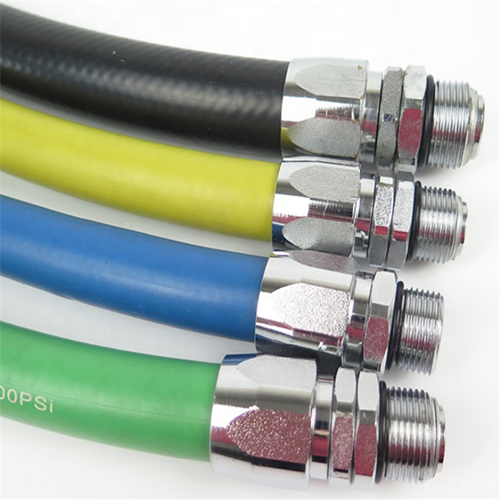
Compliance requirements vary by region and application. SAE International standards (e.g., SAE J517, SAE J518) define hose dimensions, performance characteristics, and testing procedures. EN standards (e.g., EN 853, EN 857) are prevalent in Europe. In safety-critical applications, such as aerospace, hoses must meet stringent quality control procedures and traceability requirements. Functional implementation also dictates hose selection; bend radius limitations, fitting compatibility, and fluid velocity considerations all influence performance and longevity. For instance, excessively tight bend radii can induce kinking, restricting flow and potentially causing hose failure. Proper hose routing and support are essential to minimize stress concentrations.
Technical Specifications
| Parameter | SAE J517 100R2AT | SAE J517 100R6A | DIN EN 853 1SN |
|---|---|---|---|
| Working Pressure (PSI) | 600 | 2250 | 400 |
| Burst Pressure (PSI) | 2400 | 9000 | 1600 |
| Temperature Range (°F) | -40 to +212 | -40 to +250 | -40 to +100 |
| Inner Tube | Synthetic Rubber (NBR) | Synthetic Rubber (NBR) | Synthetic Rubber (NBR) |
| Reinforcement | Two Steel Wire Braids | Six Steel Wire Spirals | One Steel Wire Spiral |
| Outer Cover | CPE | CPE | CPE |
Failure Mode & Maintenance
Aeroquip hydraulic hoses are susceptible to several failure modes. Fatigue cracking, initiated by repeated pressure cycling and bending, is a common cause of failure, particularly in areas of high stress concentration near fittings. Delamination, the separation of reinforcement layers from the inner tube or outer cover, weakens the hose and can lead to catastrophic failure. Degradation of the rubber compounds, caused by exposure to ozone, UV radiation, heat, or incompatible fluids, reduces flexibility and increases the risk of cracking. Oxidation can also embrittle the rubber. Fitting failures, such as corrosion or improper crimping, can create leak paths and compromise the system’s integrity. Kinking, induced by excessive bending, restricts flow and stresses the reinforcement.
Preventive maintenance is critical. Regular visual inspections should be conducted to identify signs of cracking, abrasion, blistering, or leaks. Hose routing should be optimized to minimize bending and stress. Fittings should be checked for corrosion and proper crimping. Fluid compatibility should be verified to prevent degradation. If a hose shows any signs of damage, it should be replaced immediately. Avoid over-pressurization and impulse pressures exceeding the hose's rated capacity. Store hoses in a cool, dry place away from direct sunlight and ozone sources. Proper hose assembly techniques, including the use of appropriate fittings and crimping procedures, are essential for ensuring long-term reliability.
Industry FAQ
Q: What is the impact of fluid velocity on Aeroquip hose life?
A: High fluid velocity can accelerate erosion of the inner tube, particularly with abrasive fluids. It also increases pressure drop and can induce cavitation, leading to localized stress and damage. Selecting a hose with a larger inner diameter can reduce fluid velocity and extend service life.
Q: How do different fitting types affect hose performance?
A: Different fitting types (e.g., crimped, field-attachable, threaded) offer varying levels of sealing integrity and pressure ratings. Crimped fittings generally provide the most secure connection, while field-attachable fittings offer convenience but may have lower pressure capabilities. Proper fitting selection and installation are crucial.
Q: What considerations are important when selecting a hose for hydraulic oil with additives?
A: Additives in hydraulic oil can affect hose compatibility. Some additives may cause swelling or degradation of the inner tube material. It’s essential to consult the hose manufacturer’s chemical compatibility chart to ensure the hose is suitable for the specific fluid.
Q: What is the significance of impulse testing in hydraulic hose evaluation?
A: Impulse testing simulates the pulsating pressure found in most hydraulic systems. It assesses the hose's ability to withstand repeated pressure cycles without fatigue failure. A hose’s impulse rating indicates the maximum number of cycles it can endure at a specified pressure and temperature.
Q: Can Aeroquip hoses be used for conveying air or gas?
A: Generally, Aeroquip hydraulic hoses are designed for liquid applications and are not recommended for conveying air or gas. The static build-up can cause damage to the hose and potential safety hazards. Specific hoses are manufactured for pneumatic applications and should be used in those instances.
Conclusion
Aeroquip hydraulic hose technology is a sophisticated field demanding meticulous attention to material science, manufacturing precision, and engineering principles. The performance and longevity of these hoses are critically dependent on selecting the appropriate materials and construction for the intended application, understanding the potential failure modes, and implementing a robust preventative maintenance program. Failure to do so can result in costly downtime, safety hazards, and reduced system efficiency.
Future advancements in Aeroquip hose technology will likely focus on the development of lighter-weight materials, enhanced chemical resistance, and improved fatigue performance. The integration of smart sensors within the hose structure to provide real-time monitoring of pressure, temperature, and strain is also a promising area of development, enabling predictive maintenance and optimizing system performance.