
Apr . 01, 2024 17:55 Back to list
51mm hydraulic hose Performance Engineering
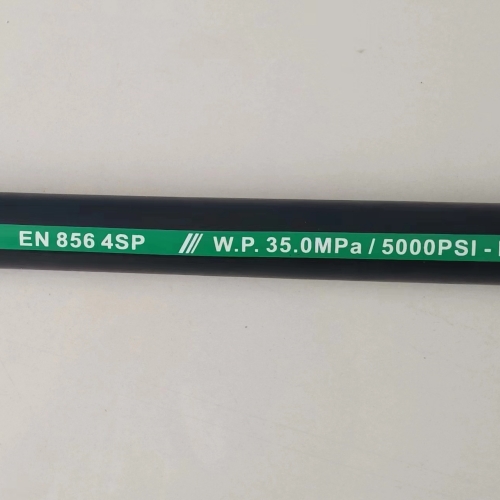
Introduction
51mm hydraulic hose is a critical component in fluid power systems, utilized extensively across industries including construction, agriculture, manufacturing, and automotive. Defined by its 51mm inner diameter, this hose facilitates the transmission of hydraulic fluid under significant pressure, enabling the operation of machinery such as excavators, loaders, presses, and steering systems. Its technical position within the industry chain is as a vital link between the hydraulic pump, control valves, and actuators. Core performance characteristics revolve around its burst pressure, working pressure, temperature range, and resistance to fluid compatibility and external abrasion. Understanding these parameters is crucial for ensuring system reliability, operational efficiency, and personnel safety. The primary pain point in the industry lies in hose failure leading to downtime, safety hazards, and costly repairs, emphasizing the need for robust hose selection and preventative maintenance practices. This guide will provide a detailed examination of 51mm hydraulic hose, covering material science, manufacturing processes, performance engineering, potential failure modes, and relevant industry standards.
Material Science & Manufacturing
The core construction of a 51mm hydraulic hose relies on a layered composition. The innermost layer, the tube, is typically manufactured from synthetic rubber compounds, most commonly nitrile rubber (NBR) for petroleum-based hydraulic fluids, or fluorocarbon rubber (FKM/Viton) for phosphate ester fluids and high-temperature applications. NBR exhibits good abrasion resistance and flexibility at a lower cost, while FKM offers superior chemical resistance and temperature stability. The reinforcement layer is crucial for withstanding internal pressure and preventing hose collapse. This layer commonly utilizes multiple high-tensile steel wire braids, spiraled steel wire, or a combination thereof. The number of braids or the pitch of the spiral directly correlates to the hose's working pressure and burst pressure ratings. The outer cover, providing environmental protection and abrasion resistance, is typically composed of synthetic rubber such as Chloroprene (CR) or polyurethane (PU). CR provides good weathering and ozone resistance, whereas PU offers excellent abrasion and oil resistance. Manufacturing processes begin with the extrusion of the inner tube to precise dimensions. Following extrusion, the reinforcement layers are applied through a winding or braiding process, ensuring consistent and uniform coverage. The outer cover is then extruded over the reinforcement, followed by vulcanization – a process involving heat and pressure – to chemically crosslink the rubber compounds, enhancing their strength, elasticity, and resistance to degradation. Critical parameters controlled during manufacturing include rubber compound formulation, braid density, hose diameter tolerances, and vulcanization temperature and duration. Consistent adherence to these parameters is essential for ensuring product quality and reliability.
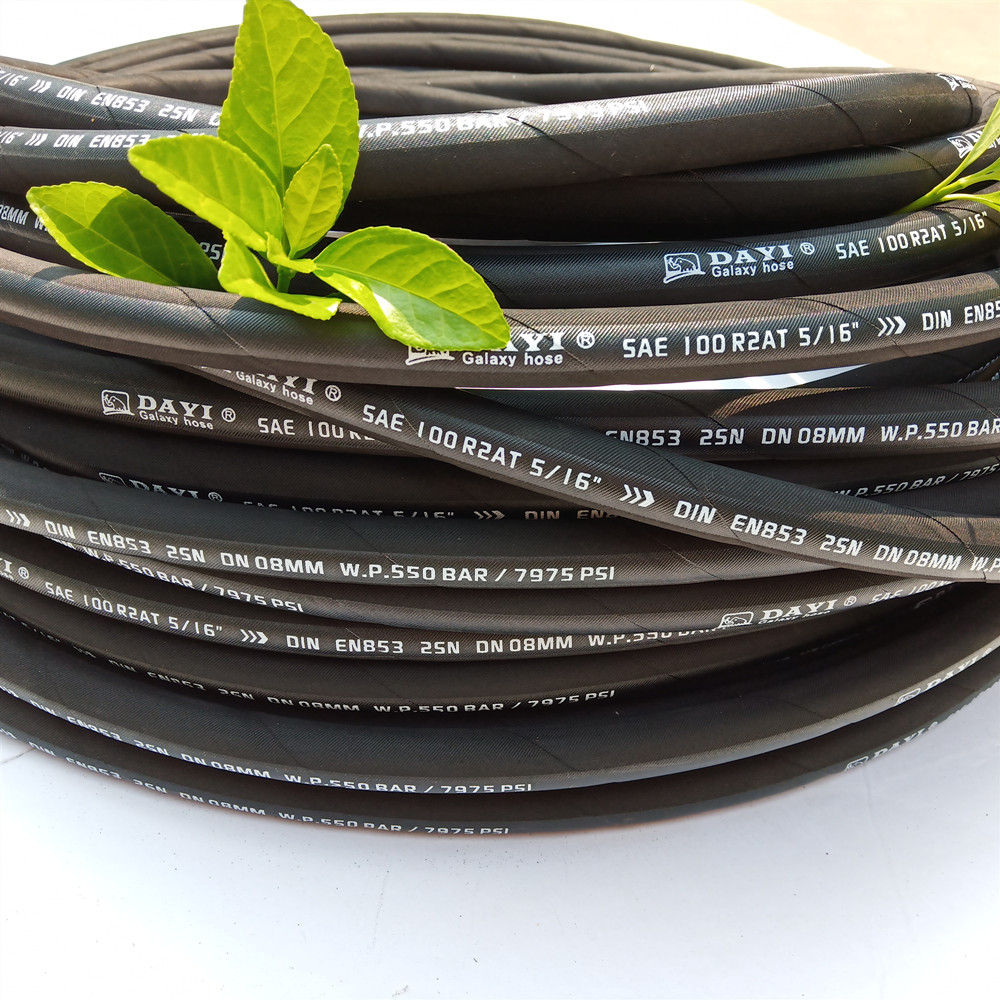
Performance & Engineering
The performance of 51mm hydraulic hose is fundamentally governed by its ability to withstand internal pressure without failure and maintain its dimensional integrity under varying environmental conditions. Force analysis focuses on hoop stress within the hose wall, which increases with internal pressure and hose diameter. The reinforcement layer is engineered to counteract this stress, preventing expansion and potential rupture. Burst pressure is typically four times the working pressure, providing a safety factor. Environmental resistance is another critical aspect. Hydraulic hoses are often exposed to extreme temperatures, UV radiation, ozone, and corrosive fluids. The selection of appropriate rubber compounds for the tube and cover is vital to mitigate degradation. Temperature ratings define the operational limits of the hose; exceeding these limits can lead to reduced flexibility, increased risk of leakage, and premature failure. Compliance requirements, dictated by standards such as SAE J517 and EN 853, specify testing procedures for pressure rating, impulse testing, and dimensional accuracy. Functional implementation requires careful consideration of hose length, bend radius, and fitting compatibility. Excessive bending or sharp turns can create stress concentrations, leading to premature fatigue. Proper fitting selection and installation are paramount to prevent leakage and ensure a secure connection. Furthermore, understanding fluid compatibility is essential; incompatible fluids can cause swelling, softening, or degradation of the hose material.
Technical Specifications
| Parameter | Unit | Specification (Standard Grade) | Specification (High-Performance Grade) |
|---|---|---|---|
| Inner Diameter | mm | 51.0 ± 0.5 | 51.0 ± 0.3 |
| Working Pressure | MPa | 20 | 35 |
| Burst Pressure | MPa | 80 | 140 |
| Temperature Range | °C | -40 to +100 | -55 to +120 |
| Reinforcement | - | 4SP (4 Steel Wire Spiral) | 6SP (6 Steel Wire Spiral) |
| Cover Material | - | CR (Chloroprene) | PU (Polyurethane) |
| Fluid Compatibility | - | Petroleum-based Hydraulic Fluids | Phosphate Ester & Synthetic Fluids |
Failure Mode & Maintenance
Failure modes in 51mm hydraulic hose are diverse and often interconnected. Fatigue cracking, resulting from repeated flexing and pressure cycles, is a common cause of failure, particularly near fittings. Delamination, the separation of reinforcement layers from the tube or cover, can occur due to improper vulcanization or exposure to aggressive fluids. Degradation of rubber compounds, driven by oxidation, UV exposure, and ozone attack, leads to loss of flexibility and increased susceptibility to cracking. Abrasion, caused by external contact with abrasive surfaces, erodes the outer cover, compromising the reinforcement layer. Pinholes, small punctures in the tube, can result from internal corrosion or external damage. Failure analysis typically involves visual inspection for cracks, bulges, or abrasions, followed by microscopic examination of the fractured surface to determine the root cause. Preventative maintenance is crucial for extending hose life and preventing catastrophic failures. Regular visual inspections should be conducted to identify signs of wear and tear. Hoses should be replaced periodically, based on manufacturer recommendations and operational severity. Proper routing and support are essential to minimize bending stress. Fluid contamination should be controlled through filtration systems to prevent internal abrasion and corrosion. Correct fitting installation, utilizing proper torquing procedures, is critical to prevent leakage and ensure a secure connection. Regular fluid analysis can identify potential compatibility issues and guide fluid selection.
Industry FAQ
Q: What is the impact of impulse pressure on hydraulic hose life?
A: Impulse pressure, rapid pressure fluctuations within the system, generates dynamic stresses within the hose wall. These stresses contribute significantly to fatigue failure, particularly in hoses with high flow rates. Hoses designed for impulse duty incorporate reinforced construction to mitigate these effects. Regularly monitoring and controlling impulse pressure through system dampening and accumulator usage can substantially extend hose life.
Q: How does hose layline marking contribute to traceability and safety?
A: Hose layline markings provide critical information regarding the manufacturer, manufacturing date, working pressure, and hose type. This information is vital for traceability in case of failure analysis and for verifying compliance with safety regulations. Proper interpretation of layline markings ensures the correct hose is used for the intended application.
Q: What considerations are important when selecting fittings for 51mm hydraulic hose?
A: Fitting compatibility is paramount. Fittings must be specifically designed for the hose type and size to ensure a leak-free and secure connection. Material compatibility between the fitting and the hose is also crucial to prevent corrosion. Consideration should be given to the fitting's pressure rating, temperature range, and the type of connection (e.g., crimped, field-attachable).
Q: How do different reinforcement materials affect hose performance?
A: Steel wire reinforcement provides high pressure capacity and resistance to kinking. The number of braids or spiral pitch determines the hose's pressure rating. Synthetic fiber reinforcement offers lighter weight and increased flexibility but typically has a lower pressure rating. Choosing the appropriate reinforcement material depends on the specific application requirements.
Q: What are the best practices for storing hydraulic hoses to prevent degradation?
A: Hydraulic hoses should be stored in a cool, dry, and dark environment, away from direct sunlight, ozone sources, and extreme temperatures. Hoses should be stored coiled loosely, avoiding sharp bends. Avoid storing hoses in contact with incompatible materials. Regular inspection of stored hoses is recommended to identify any signs of degradation.
Conclusion
The 51mm hydraulic hose, while seemingly a simple component, is a complex engineered product critically influencing the performance and reliability of hydraulic systems. Its material selection, manufacturing process, and performance characteristics are all intricately linked to ensure safe and efficient fluid power transmission. Understanding the potential failure modes and implementing preventative maintenance practices are essential for maximizing hose life and minimizing downtime. The choice between standard and high-performance grades hinges upon the severity of the operating environment and the demands placed upon the system.
Looking forward, advancements in materials science are driving the development of hydraulic hoses with enhanced durability, chemical resistance, and temperature stability. The increasing adoption of smart hose technology, incorporating sensors to monitor pressure, temperature, and vibration, will provide real-time data for predictive maintenance and optimized performance. Continued adherence to industry standards and best practices will be crucial for ensuring the safe and reliable operation of hydraulic systems worldwide.