
Apr . 01, 2024 17:55 Back to list
5/8 hydraulic hose Performance Analysis
Introduction
The 5/8 inch hydraulic hose is a critical component in hydraulic systems across a vast array of industries, including construction, agriculture, manufacturing, and automotive. Defined by its internal diameter of 5/8 inch, this hose is designed to transmit hydraulic fluid under high pressure, enabling the operation of hydraulic machinery. Its technical position within the industry chain places it between the hydraulic fluid source (pump) and the actuators (cylinders, motors). Core performance characteristics center around burst pressure, working pressure, temperature resistance, and fluid compatibility. The increasing demand for higher operational efficiencies and the adoption of more complex hydraulic systems necessitate hoses capable of handling increasingly stringent demands, driving innovation in materials and manufacturing techniques. A significant industry pain point resides in ensuring consistent performance across varying operating conditions and preventing premature failure due to fluid incompatibility or environmental degradation.
Material Science & Manufacturing
5/8 hydraulic hoses are typically constructed from multiple layers, each serving a specific purpose. The innermost layer, the tube, is commonly made of synthetic rubber compounds such as Nitrile (NBR), Ethylene Propylene Diene Monomer (EPDM), or Teflon (PTFE), chosen for their compatibility with specific hydraulic fluids. NBR provides good resistance to petroleum-based oils, while EPDM excels with phosphate ester fluids. PTFE offers the broadest chemical compatibility but is more expensive. The reinforcement layer is crucial for withstanding high pressures and typically consists of braided steel wire or spiral-wound steel wire. The number of braids or the pitch of the spiral winding directly impacts the hose's pressure rating. An outer cover, usually composed of synthetic rubber like Chloroprene (CR) or Polyurethane (PU), provides protection against abrasion, weathering, and chemical exposure. Manufacturing processes vary depending on the hose construction. For braided hoses, the tube is extruded, followed by the braiding of steel wire around it. Spiral-wound hoses involve wrapping steel wire helically around the tube. Parameter control during extrusion is paramount; precise temperature and pressure settings are required to ensure consistent tube thickness and material uniformity. Steel wire tension during braiding or winding must also be meticulously monitored to achieve the specified pressure rating. Post-manufacturing, hoses undergo pressure testing to verify integrity and leak-proof performance. Quality control relies heavily on non-destructive testing methods like ultrasonic flaw detection.
Performance & Engineering
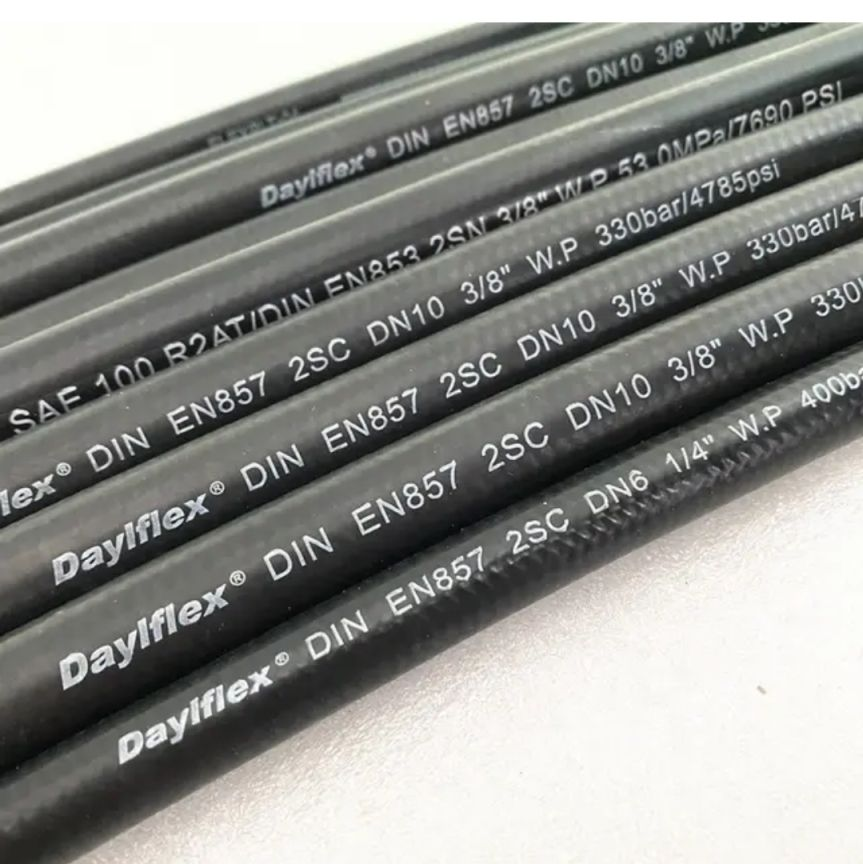
The performance of a 5/8 hydraulic hose is governed by several engineering principles. Burst pressure, the maximum pressure the hose can withstand before rupture, is a critical safety parameter. Working pressure, typically a fraction (e.g., 1/4) of the burst pressure, defines the safe operating limit. Force analysis focuses on hoop stress within the hose wall, calculated using the Barlow’s formula: σ = (P D) / (2 t), where σ is hoop stress, P is internal pressure, D is inner diameter, and t is wall thickness. Environmental resistance is a major concern. Exposure to extreme temperatures (both high and low) can significantly affect the rubber compounds' flexibility and strength. Ozone cracking, caused by atmospheric ozone exposure, is a common degradation mechanism. Hydraulic fluid compatibility is crucial; incompatible fluids can cause swelling, softening, or cracking of the tube material, leading to leaks and failures. Compliance requirements are dictated by standards such as SAE J517 (Hydraulic Hose - Performance Characteristics) and EN 853 (Hydraulic hoses – Rubber hoses with steel wire reinforcement). Functional implementation requires careful consideration of hose bend radius to avoid kinking and stress concentration. Proper hose routing and support are essential to prevent abrasion and fatigue failures.
Technical Specifications
| Parameter | Unit | Specification (Standard Grade) | Specification (Premium Grade) |
|---|---|---|---|
| Internal Diameter | inch | 0.625 | 0.625 |
| Working Pressure | psi | 2000 | 3000 |
| Burst Pressure | psi | 8000 | 12000 |
| Temperature Range | °F | -40 to +212 | -40 to +250 |
| Reinforcement Type | - | 2-wire braid | 4-wire spiral |
| Cover Material | - | CR (Chloroprene) | PU (Polyurethane) |
| Fluid Compatibility | - | Petroleum-based oils | Wide range, including synthetic fluids |
Failure Mode & Maintenance
Common failure modes for 5/8 hydraulic hoses include fatigue cracking, caused by repeated flexing and pressure cycles, particularly near fittings. Delamination, the separation of layers, often results from incompatible fluids or manufacturing defects. Abrasion, due to external contact with rough surfaces, degrades the outer cover. Oxidation and ozone cracking affect the rubber compounds, leading to brittleness and cracking. Internal corrosion can occur if moisture enters the system, reacting with the steel reinforcement. External kinking causes localized stress concentrations, promoting failure. Maintenance involves regular visual inspection for signs of wear, cracking, or leaks. Fittings should be checked for tightness and corrosion. Hoses should be replaced proactively based on manufacturer recommendations or when signs of degradation are observed. Proper storage is crucial; hoses should be stored in a cool, dry, and dark environment, away from ozone sources and direct sunlight. Hydraulic fluid should be regularly analyzed for contamination, as abrasive particles can accelerate hose wear. Implementing a preventative maintenance schedule, including pressure testing and hose replacement, is essential to minimizing downtime and ensuring system reliability.
Industry FAQ
Q: What is the impact of hydraulic fluid type on hose selection?
A: Hydraulic fluid compatibility is paramount. Using an incompatible fluid can cause the hose tube to swell, soften, or crack, leading to leaks and catastrophic failure. NBR tubes are suitable for petroleum-based fluids, while EPDM is better for phosphate esters. PTFE offers the widest compatibility but is more costly. Always consult the hose manufacturer's fluid compatibility chart.
Q: How does temperature affect hydraulic hose performance?
A: Extreme temperatures can significantly impact hose performance. High temperatures can reduce the rubber’s strength and flexibility, while low temperatures can cause brittleness and cracking. Ensure the hose’s temperature rating matches the operating temperature range of the hydraulic system.
Q: What is the difference between braided and spiral-wound hose reinforcement?
A: Braided hoses offer good flexibility and are suitable for moderate pressure applications. Spiral-wound hoses provide higher pressure ratings and are more resistant to kinking. The choice depends on the system's pressure requirements and the required bend radius.
Q: What preventative measures can be taken to extend hose life?
A: Regular visual inspections, proper hose routing and support, fluid contamination control, and adherence to manufacturer recommendations for hose replacement are crucial. Avoid sharp bends, kinking, and abrasion. Store hoses properly when not in use.
Q: What are the key considerations for selecting hose fittings?
A: Fittings must be compatible with the hose and the hydraulic system. Proper crimping is essential to ensure a secure and leak-proof connection. Fittings should be made of materials resistant to corrosion and compatible with the hydraulic fluid. Select fittings with the correct thread type and size.
Conclusion
The 5/8 hydraulic hose, despite its seemingly simple construction, is a sophisticated component engineered to withstand demanding operating conditions. Its performance is fundamentally linked to material science, precise manufacturing processes, and careful consideration of application-specific factors like fluid compatibility, temperature, and pressure. Selecting the appropriate hose for a given application requires a thorough understanding of these parameters and adherence to relevant industry standards.
Ongoing advancements in materials and manufacturing techniques are continuously improving the performance and reliability of hydraulic hoses. Future trends include the development of lighter-weight, higher-strength materials, the incorporation of smart sensors for condition monitoring, and the design of hoses with improved resistance to environmental degradation. A proactive approach to maintenance and a commitment to using high-quality components are essential for maximizing the lifespan and ensuring the safe and efficient operation of hydraulic systems.