
Apr . 01, 2024 17:55 Back to list
5/16 hydraulic hose suppliers Performance Analysis
Introduction
5/16 inch hydraulic hoses are a critical component in fluid power systems, serving as a conduit for transmitting hydraulic fluid to actuators and other components. Their widespread application spans industries including construction, agriculture, manufacturing, and automotive. These hoses differ from general-purpose tubing due to their reinforced construction, designed to withstand high pressures and prevent failure under demanding conditions. The selection of a suitable 5/16” hydraulic hose necessitates a thorough understanding of operating pressure, fluid compatibility, temperature range, and environmental factors. Suppliers specializing in this size typically offer a range of constructions (braided, spiral, non-reinforced) and materials to address diverse application needs. Core performance metrics include burst pressure, working pressure, kink radius, and resistance to abrasion and chemical attack. This guide provides a comprehensive overview of material science, manufacturing processes, performance characteristics, failure modes, and industry standards relevant to 5/16 hydraulic hose selection and utilization.
Material Science & Manufacturing
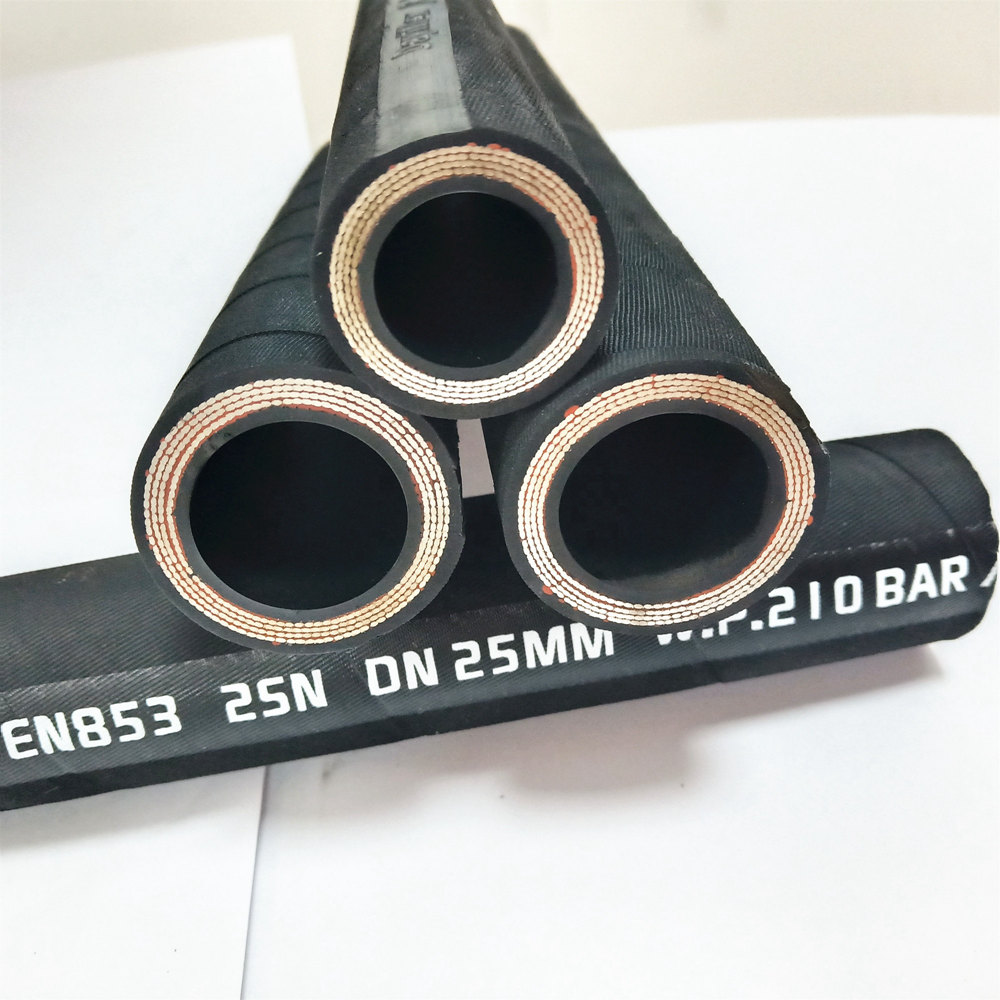
The core construction of a 5/16 hydraulic hose comprises several key materials. The inner tube, typically composed of synthetic rubber such as nitrile (NBR), ethylene propylene diene monomer (EPDM), or fluorocarbon (FKM), determines fluid compatibility. NBR provides excellent resistance to petroleum-based fluids, while EPDM is ideal for phosphate ester-based fluids and offers superior heat and ozone resistance. FKM provides the broadest chemical compatibility, particularly for aggressive fluids. The reinforcement layer is crucial for withstanding pressure. Braided reinforcement commonly utilizes high-tensile steel wire, with varying ply counts dictating pressure capacity. Spiral reinforcement uses a single, continuously wound steel wire, offering higher pressure ratings but reduced flexibility. The outer cover, generally made of chloroprene (CR) rubber, protects the reinforcement from abrasion, weathering, and chemical exposure.
Manufacturing involves several distinct processes. The inner tube is extruded through a die to achieve the desired dimensions. Reinforcement layers are then applied, typically through a braiding or winding process. Braiding machines interweave the steel wires around the inner tube, while spiral winding machines continuously wrap the wire. Following reinforcement, the outer cover is extruded. Curing, a vulcanization process involving heat and pressure, cross-links the rubber compounds, imparting strength, elasticity, and chemical resistance. Critical parameters during manufacturing include temperature control during extrusion and curing, precise wire tension during reinforcement, and adherence to dimensional tolerances. Post-production testing, including burst pressure testing and impulse testing, ensures compliance with industry standards and performance specifications. Proper mold release agent selection and cleaning processes are vital to prevent contamination and ensure consistent rubber properties.
Performance & Engineering
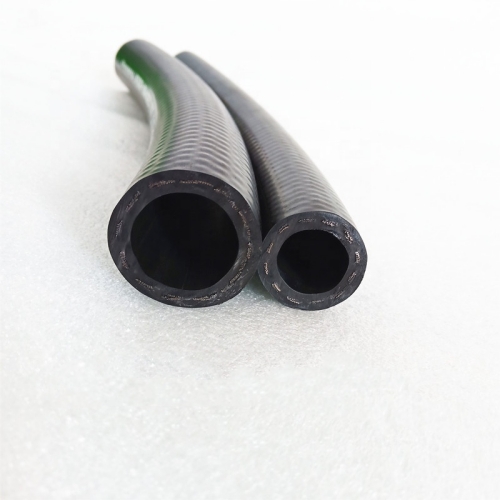
The performance of a 5/16 hydraulic hose is governed by several key engineering principles. Hose selection must account for the maximum system pressure, including pressure spikes caused by pump pulsations or rapid valve closures. The working pressure rating of the hose should be significantly higher (typically a 4:1 safety factor) than the maximum system pressure. Hose flexibility is a critical consideration, particularly in tight spaces or dynamic applications. A smaller bend radius increases stress concentration and reduces hose lifespan. Force analysis, including tensile stress calculations in the reinforcement layers and shear stress analysis in the rubber compounds, is essential for predicting hose behavior under load. Environmental resistance is also paramount. Exposure to extreme temperatures, UV radiation, and corrosive fluids can degrade the rubber compounds, leading to premature failure. Compliance requirements, such as those outlined by SAE International (J517 and J1926), dictate minimum performance standards for hydraulic hoses. These standards specify requirements for burst pressure, impulse pressure, temperature range, and fluid compatibility. The hose end connections – crimped or field-attachable – must also be engineered to withstand the system pressure and provide a leak-free seal. Crimping processes require precise dies and controlled pressure to ensure a secure attachment.
Technical Specifications
| Parameter | NBR Inner Tube, 2 Wire Braid | EPDM Inner Tube, 4 Wire Braid | FKM Inner Tube, Spiral Wire | Chloroprene Cover Hardness |
|---|---|---|---|---|
| Inner Diameter (ID) | 5/16 inch (7.94 mm) | 5/16 inch (7.94 mm) | 5/16 inch (7.94 mm) | 65 ± 5 Shore A |
| Working Pressure (PSI) | 1500 PSI | 2000 PSI | 2500 PSI | N/A |
| Burst Pressure (PSI) | 6000 PSI | 8000 PSI | 10000 PSI | N/A |
| Temperature Range (°F) | -40°F to +212°F | -40°F to +250°F | -20°F to +400°F | -40°F to +212°F |
| Reinforcement | 2 Wire Braid (Steel) | 4 Wire Braid (Steel) | Spiral Wire (Steel) | N/A |
| Fluid Compatibility | Petroleum-based fluids | Phosphate ester fluids | Wide range of chemicals | Oil, Water, Ozone |
Failure Mode & Maintenance
Several failure modes can affect 5/16 hydraulic hoses. Fatigue cracking, caused by repeated flexing and pressure cycling, is a common failure mechanism, particularly near hose ends. Delamination, the separation of reinforcement layers from the inner tube or outer cover, can occur due to inadequate bonding or exposure to harsh chemicals. Abrasion, resulting from contact with abrasive surfaces, can wear through the outer cover, exposing the reinforcement and leading to corrosion. Oxidation and ozone cracking, caused by exposure to oxygen and ozone, degrade the rubber compounds, reducing their elasticity and strength. Internal degradation can occur due to fluid contamination or incompatibility, leading to swelling, softening, or cracking of the inner tube. Impulses or pressure spikes can lead to hose rupture if the working pressure is approached too closely.
Preventative maintenance is crucial for extending hose lifespan. Regular visual inspections should be performed to identify signs of wear, damage, or leakage. Hose routing should be carefully planned to avoid sharp bends, abrasion, and excessive heat. Fluid cleanliness is paramount; filtration should be employed to remove particulate contaminants. Hoses should be replaced at predetermined intervals, even if no visible damage is present. Proper storage, protected from sunlight, ozone, and extreme temperatures, is essential. When replacing hoses, always use compatible end fittings and ensure proper crimping. Consider using hose guards or sleeves in areas prone to abrasion. Record keeping of hose installations, replacements, and maintenance activities is beneficial for tracking performance and identifying potential issues.
Industry FAQ
Q: What is the impact of fluid velocity on 5/16 hydraulic hose lifespan?
A: Higher fluid velocity increases friction losses and generates heat, accelerating the degradation of the inner tube. It also exacerbates erosion caused by particulate contamination. Selecting a hose with a larger inner diameter to reduce velocity is recommended for high-flow applications.
Q: How does hose layline marking contribute to safety and maintenance?
A: The layline marking, a spiral stripe on the hose cover, indicates the direction of reinforcement and proper hose assembly. Incorrect assembly can compromise the hose's pressure rating and lead to premature failure. It also provides traceability information regarding manufacturer, date of manufacture, and pressure ratings.
Q: What are the differences between crimped and field-attachable fittings for 5/16 hydraulic hoses?
A: Crimped fittings offer a highly secure and reliable connection, requiring specialized crimping equipment. Field-attachable fittings, such as those with bite-the-wire or socket designs, allow for on-site assembly without crimping, but generally have lower pressure ratings and require careful installation to ensure a leak-free seal.
Q: Can a 5/16 hydraulic hose be used with different types of hydraulic fluid interchangeably?
A: No. The inner tube material must be compatible with the hydraulic fluid. Using an incompatible fluid can cause swelling, softening, or cracking of the inner tube, leading to leakage and hose failure. Always verify fluid compatibility before installation.
Q: What role does impulse pressure play in selecting a 5/16 hydraulic hose for a reciprocating application?
A: Impulse pressure, caused by the cyclical nature of reciprocating applications (e.g., hydraulic cylinders), creates pressure surges that can significantly reduce hose lifespan. Select a hose with a sufficient impulse pressure rating to withstand these surges. Hoses with spiral reinforcement generally offer superior impulse pressure resistance compared to braided hoses.
Conclusion
The selection and application of 5/16 hydraulic hoses demand a comprehensive understanding of material science, manufacturing processes, and performance characteristics. The appropriate hose construction – dictated by fluid compatibility, operating pressure, temperature range, and environmental conditions – is paramount for ensuring reliable and safe operation. By adhering to industry standards and implementing a proactive maintenance program, users can mitigate the risk of failure and maximize hose lifespan. Ignoring these critical aspects can result in costly downtime, safety hazards, and potential environmental damage.
Future developments in hydraulic hose technology are focused on enhancing material properties, improving manufacturing techniques, and incorporating intelligent monitoring systems. The integration of sensors within the hose construction could enable real-time monitoring of pressure, temperature, and degradation, allowing for predictive maintenance and preventing catastrophic failures. Continued advancements in rubber compound formulations will further expand fluid compatibility and enhance resistance to extreme environments. Furthermore, a shift towards sustainable materials and manufacturing processes is anticipated, aligning with growing environmental concerns.