
Apr . 01, 2024 17:55 Back to list
4sh hydraulic hose Performance Analysis
Introduction
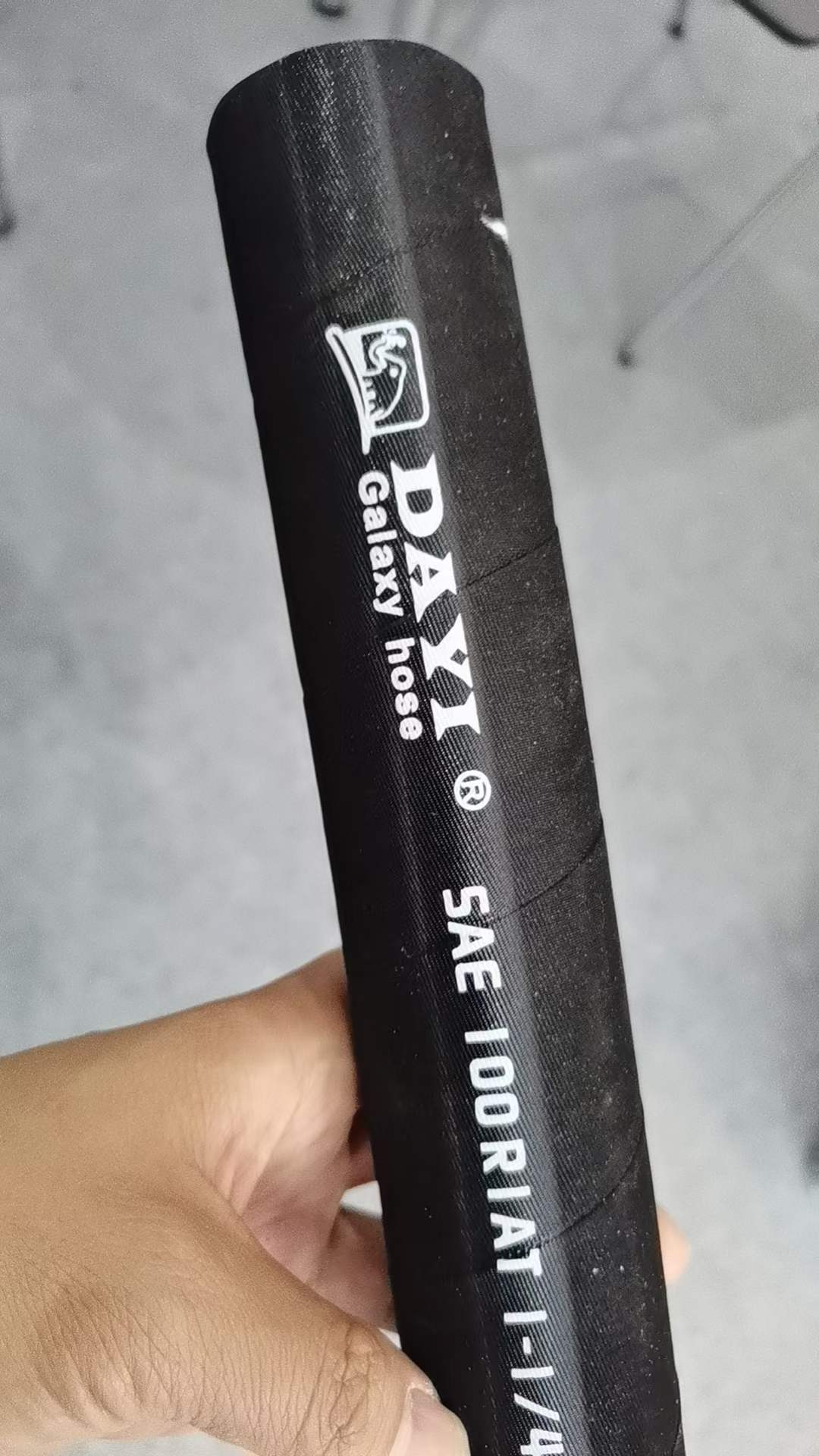
4SH hydraulic hose is a reinforced rubber hose designed for the transmission of hydraulic fluid under high pressure in a variety of industrial applications. Positioned within the fluid power industry as a critical component of hydraulic systems, it represents a cost-effective and reliable solution for conveying pressurized fluids. Core performance characteristics include high burst pressure, excellent flexibility for tight routing, and resistance to abrasion, oil, and temperature extremes. Its primary application areas span mobile hydraulics (construction equipment, agricultural machinery), industrial machinery, and manufacturing processes demanding dependable fluid transfer. Addressing the industry pain point of hose failure leading to downtime and safety hazards, 4SH hose is constructed with multiple layers of reinforcement for enhanced durability and a prolonged service life. The hose is compliant with relevant international safety standards and provides a secure fluid pathway within complex hydraulic circuits.
Material Science & Manufacturing
The 4SH hydraulic hose fundamentally relies on a combination of synthetic rubber and high-tensile steel wire reinforcement. The inner tube is typically composed of a nitrile rubber (NBR) compound, chosen for its excellent resistance to petroleum-based hydraulic fluids. NBR offers good abrasion resistance and maintains flexibility across a broad temperature range, typically -40°C to +100°C. The reinforcement layers consist of multiple spirally wound high-tensile steel wires, providing the pressure resistance and structural integrity of the hose. The steel wire is often treated with a corrosion-inhibiting coating to prevent internal rust and maintain hose flexibility. The outer cover is commonly made from Chloroprene rubber (CR), also known as Neoprene, offering superior resistance to ozone, weathering, and abrasion. Manufacturing begins with the extrusion of the inner tube and outer cover. The steel wire is then spirally wound onto the inner tube using precision winding machines. Critical parameters during winding include wire tension, pitch, and layer alignment, all of which directly impact the hose's burst pressure and fatigue life. Following reinforcement, the assembly undergoes vulcanization – a heating process that crosslinks the rubber compounds, creating a durable, cohesive structure. Quality control measures at each stage, including dimensional checks, pressure testing (to 1.5 times the working pressure), and visual inspection for defects, are crucial for ensuring consistent performance. Chemical compatibility testing of the NBR inner tube with specific hydraulic fluids is also performed.
Performance & Engineering
The performance of 4SH hydraulic hose is dictated by several engineering principles and environmental considerations. Burst pressure, typically ranging from 400 bar to 630 bar (5800 psi to 9100 psi) depending on hose size, is governed by the tensile strength of the steel wire reinforcement and the cross-sectional area of the reinforcement layers. Fatigue life, the number of pressure cycles the hose can withstand before failure, is a critical parameter, particularly in dynamic applications. Finite Element Analysis (FEA) is often employed during the design phase to model stress distribution under pressure and bending, optimizing the reinforcement configuration. Environmental resistance is paramount; exposure to extreme temperatures, UV radiation, and corrosive substances can degrade the rubber compounds. CR outer covers provide good ozone and weathering resistance, but prolonged UV exposure can still lead to cracking. Hydraulic fluid compatibility is crucial to prevent swelling or softening of the inner tube. Furthermore, the hose must comply with safety standards regarding leak prevention and resistance to kinking or twisting. The minimum bend radius, a critical engineering parameter, dictates the tightest allowable bend without compromising hose performance or inducing stress concentrations. Force analysis considers the axial load imposed by pressure and the bending moment induced by routing. Proper end termination (crimping) is also a critical aspect of performance, ensuring a leak-proof and mechanically secure connection.
Technical Specifications
| Parameter | Unit | Specification (Typical) | Test Standard |
|---|---|---|---|
| Working Pressure | bar | 315 | SAE J517 |
| Burst Pressure | bar | 945 | SAE J517 |
| Temperature Range | °C | -40 to +100 | SAE J517 |
| Inner Tube | Material | Nitrile Rubber (NBR) | ASTM D2000 |
| Reinforcement | Material | High-Tensile Steel Wire (Spiral) | SAE J517 |
| Outer Cover | Material | Chloroprene Rubber (CR) | ASTM D2000 |
Failure Mode & Maintenance
4SH hydraulic hose is susceptible to several failure modes in practical applications. Fatigue cracking, a common failure mechanism, arises from repeated pressure cycling, initiating at stress concentrations (e.g., near fittings). Internal abrasion can occur due to particulate contamination in the hydraulic fluid, gradually eroding the inner tube. External abrasion, caused by contact with abrasive surfaces, can damage the outer cover and expose the reinforcement layers. Hose kinking or twisting induces localized stress concentrations, leading to premature failure. Chemical degradation, resulting from incompatibility with certain hydraulic fluids, can cause swelling, softening, or cracking of the rubber compounds. Oxidation, particularly in the outer cover, can lead to hardening and cracking due to exposure to oxygen and ozone. To mitigate these risks, regular visual inspections are essential, checking for cuts, abrasions, kinks, and leaks. Hydraulic fluid should be regularly filtered to remove particulate contamination. The hose should be routed to avoid sharp bends and contact with abrasive surfaces. Proper end termination, using correctly sized crimp fittings and calibrated crimping equipment, is crucial. Preventative maintenance includes periodically checking the hose’s bend radius and ensuring it remains within the specified limits. When replacing a hose, it is critical to select a hose with the correct pressure rating, temperature range, and fluid compatibility.
Industry FAQ
Q: What is the impact of exceeding the minimum bend radius on hose lifespan?
A: Exceeding the minimum bend radius induces significant stress concentration in the reinforcement layers, accelerating fatigue failure. This results in a reduced service life and increases the risk of catastrophic failure.
Q: How does fluid temperature affect the performance of 4SH hose?
A: Elevated temperatures can reduce the tensile strength of the rubber compounds and accelerate degradation. Low temperatures can decrease the flexibility of the hose, increasing the risk of cracking. Maintaining fluid temperatures within the specified range is crucial for optimal performance.
Q: What type of hydraulic fluids are compatible with the NBR inner tube?
A: NBR is generally compatible with petroleum-based hydraulic fluids, mineral oils, and aliphatic hydrocarbons. However, it is incompatible with phosphate ester fluids and glycol-based brake fluids, which can cause swelling and degradation.
Q: What are the key considerations when selecting crimp fittings for 4SH hose?
A: The fitting must be specifically designed for 4SH hose and have the correct bore diameter and angle. The crimp size must be precisely calibrated to ensure a leak-proof and mechanically secure connection. Using incorrect fittings or improper crimping procedures can lead to premature failure.
Q: How often should a visual inspection of the hydraulic hose be performed?
A: A visual inspection should be performed at least monthly, or more frequently in demanding applications. The inspection should include a thorough check for cuts, abrasions, kinks, leaks, and any signs of degradation.
Conclusion
The 4SH hydraulic hose represents a robust and reliable solution for hydraulic fluid power transmission, underpinned by a careful selection of materials – NBR, steel wire, and CR – and a controlled manufacturing process. Its performance is directly linked to adherence to specified engineering parameters like burst pressure, temperature range, and minimum bend radius. Understanding the potential failure modes, including fatigue cracking, abrasion, and chemical degradation, is crucial for implementing effective preventative maintenance strategies.
The continued optimization of 4SH hose technology will likely focus on enhancing abrasion resistance, improving temperature stability, and developing more environmentally friendly rubber compounds. Furthermore, the integration of smart sensors to monitor hose health and predict potential failures represents a promising avenue for future development, contributing to increased system reliability and reduced downtime. Maintaining adherence to relevant industry standards is paramount to ensuring the safe and efficient operation of hydraulic systems employing this critical component.