
Apr . 01, 2024 17:55 Back to list
19mm hydraulic hose Performance Analysis
Introduction
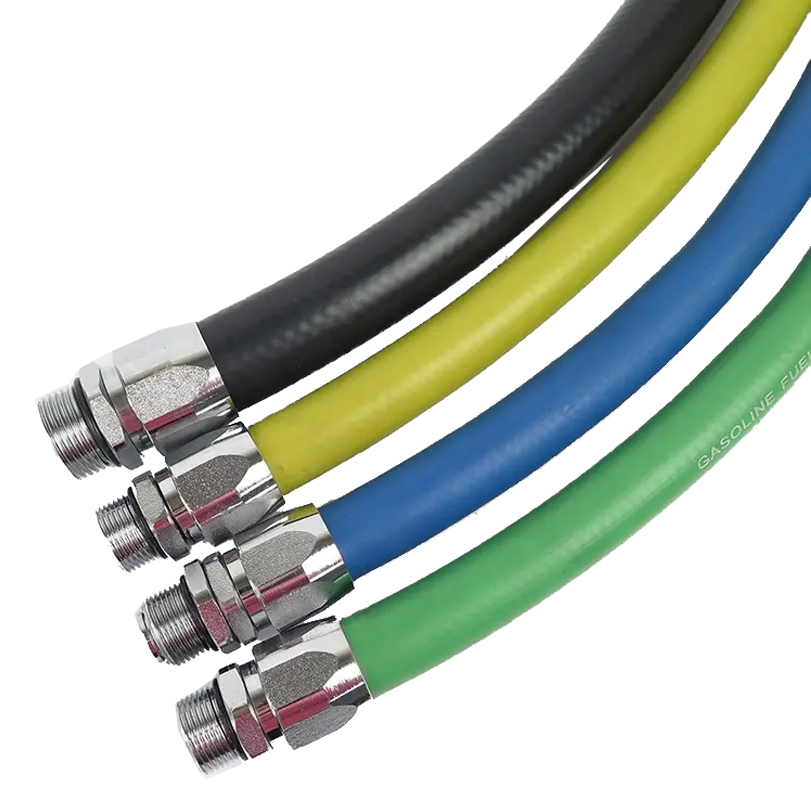
19mm hydraulic hose represents a critical component within fluid power systems, facilitating the transmission of hydraulic fluid to actuators and other devices. Its technical position in the industry chain lies between the hydraulic pump/reservoir and the hydraulic cylinder/motor, requiring precise engineering to withstand high pressures, temperatures, and potential chemical exposure. Core performance characteristics center around burst pressure, working pressure, flexibility, and resistance to abrasion, oil leakage, and environmental degradation. The increasing demand for reliable and efficient hydraulic systems in sectors like construction, agriculture, and manufacturing has driven the development of specialized 19mm hydraulic hoses, incorporating advanced materials and construction techniques. Critical pain points in the industry include premature hose failure due to inadequate material selection, improper installation, and exceeding operational parameters. Maintaining hose integrity is paramount for system safety and minimizing downtime.
Material Science & Manufacturing
The core material composition of a 19mm hydraulic hose typically includes an inner tube, reinforcement layers, and an outer cover. The inner tube is commonly constructed from nitrile rubber (NBR) or fluoroelastomers (FKM, Viton) due to their excellent resistance to hydraulic fluids, including petroleum-based oils and synthetic lubricants. NBR offers a cost-effective solution for general-purpose applications, while FKM provides superior resistance to high temperatures and aggressive fluids. Reinforcement layers, crucial for withstanding pressure, are generally composed of multiple braids of high-tensile steel wire. The number and configuration of these braids directly impact the hose’s burst pressure rating. Outer covers are commonly made from synthetic rubbers like chloroprene (CR) or polyurethane (PU), offering abrasion resistance, weather protection, and resistance to ozone and UV degradation.
Manufacturing involves a multi-stage process. The inner tube is extruded through a die to achieve the desired 19mm inner diameter and wall thickness. Steel wire is then spirally wound or braided around the inner tube, forming the reinforcement layer. Precise tension control during braiding is essential to ensure uniform pressure resistance. Subsequently, the outer cover is extruded over the reinforcement layer, encapsulating the hose structure. Following extrusion, the hose undergoes curing (vulcanization) at elevated temperatures to crosslink the rubber compounds, enhancing their mechanical properties and chemical resistance. Key parameters controlled during manufacturing include rubber compound formulation, extrusion temperature, braiding tension, curing time, and dimensional accuracy. Post-production testing, including hydrostatic pressure testing and impulse testing, verifies the hose’s performance and compliance with industry standards.
Performance & Engineering
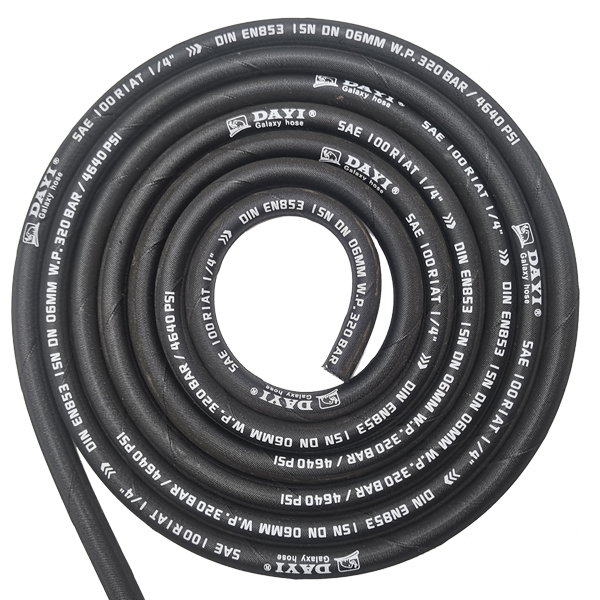
The performance of a 19mm hydraulic hose is dictated by several key engineering considerations. Force analysis focuses on hoop stress within the hose walls under internal pressure. The reinforcement layers are engineered to resist this stress and prevent hose rupture. Burst pressure, a critical performance parameter, is determined by the material strength of the steel wire and the number of reinforcement layers. Working pressure is typically a fraction (safety factor) of the burst pressure. Flexibility, essential for navigating tight bends and complex routing, is influenced by the hose’s construction and the type of rubber compounds used. Environmental resistance is paramount, particularly in outdoor applications, requiring materials that can withstand UV radiation, ozone exposure, and temperature fluctuations.
Compliance requirements are stringent, governed by international standards such as SAE J517, EN 853, and DIN EN 489. These standards specify testing procedures for burst pressure, impulse pressure, temperature range, and fluid compatibility. The design must consider the fluid being conveyed; incompatible fluids can cause swelling, degradation, and hose failure. Furthermore, proper fitting selection and installation are crucial. Incorrect fittings can create stress concentrations and lead to leakage or rupture. Hose assemblies should be regularly inspected for signs of wear, damage, or leakage to ensure continued safe operation. Understanding the effects of fluid velocity on pressure drop is also vital for optimal system performance.
Technical Specifications
| Parameter | Specification (Standard Grade) | Specification (High-Temperature Grade) | Specification (Chemical Resistant Grade) |
|---|---|---|---|
| Inner Diameter | 19 ± 0.3 mm | 19 ± 0.3 mm | 19 ± 0.3 mm |
| Working Pressure (PSI) | 2000 PSI | 2000 PSI | 1500 PSI |
| Burst Pressure (PSI) | 8000 PSI | 8000 PSI | 6000 PSI |
| Temperature Range (°C) | -40 to +100 | -40 to +150 | -40 to +80 |
| Reinforcement | 2 Steel Wire Braids | 3 Steel Wire Braids | 2 Steel Wire Braids with PTFE lining |
| Outer Cover Material | Chloroprene (CR) | Polyurethane (PU) | Polychloroprene (CR) with chemical resistance additives |
Failure Mode & Maintenance
Common failure modes in 19mm hydraulic hoses include burst failure due to exceeding pressure limits, fatigue cracking from repeated bending and flexing, abrasion from external contact, and degradation of rubber compounds due to oil incompatibility or environmental exposure. Fatigue cracking often initiates at points of high stress concentration, such as near fittings or at bends. Delamination can occur between the reinforcement layers and the rubber matrix, weakening the hose structure. Oxidation, particularly in hoses exposed to high temperatures, can cause rubber compounds to become brittle and crack. Internal abrasion can result from particulate contamination in the hydraulic fluid.
Preventative maintenance is crucial. Regular visual inspections should identify any signs of wear, abrasion, cracking, or leakage. Hose assemblies should be replaced if damage is detected. Proper installation, including correct fitting selection and tightening torque, is essential. The hydraulic fluid should be maintained clean and free of contaminants through filtration. Hoses should be protected from extreme temperatures and direct sunlight. A regular schedule for hose replacement, based on operational hours and environmental conditions, should be implemented. In case of a burst, the system should be immediately shut down, and the hose assembly replaced with a new one of equivalent specification. Detailed records of hose inspections and replacements should be maintained.
Industry FAQ
Q: What is the impact of using a hose with a working pressure rating lower than the system’s operating pressure?
A: Utilizing a hose with an insufficient working pressure rating poses a severe safety risk. It dramatically increases the probability of catastrophic failure (bursting), leading to potential injury to personnel and damage to equipment. The working pressure rating must always exceed the maximum system pressure, incorporating a substantial safety factor. Failure to adhere to this principle compromises the integrity of the entire hydraulic system.
Q: How does fluid compatibility affect the lifespan of a 19mm hydraulic hose?
A: Fluid incompatibility is a significant contributor to hose degradation. Certain hydraulic fluids can cause swelling, softening, or cracking of the inner tube material. For example, using petroleum-based fluids in a hose designed for synthetic fluids will likely lead to premature failure. Selecting a hose with an inner tube material specifically compatible with the intended fluid is paramount for maximizing service life.
Q: What are the best practices for bending a 19mm hydraulic hose to avoid kinking or damage?
A: Maintaining a minimum bend radius is critical. Exceeding the recommended bend radius can cause kinking, internal damage, and reduced flow. The specific bend radius varies depending on the hose construction, but generally, a larger radius is preferable. Avoid sharp bends and maintain a smooth, consistent curve. Support the hose properly to prevent excessive stress on the bends.
Q: What is the role of steel wire braiding in a hydraulic hose, and how does the number of braids affect performance?
A: Steel wire braiding provides the structural integrity to withstand high internal pressures. The braids act as a reinforcing layer, resisting hoop stress and preventing hose expansion or rupture. Increasing the number of braids directly enhances the hose's burst pressure capacity. However, more braids also reduce flexibility, requiring a careful balance between pressure resistance and maneuverability.
Q: How often should a 19mm hydraulic hose be replaced, even if it shows no visible signs of damage?
A: Even in the absence of visible damage, a hydraulic hose should be replaced based on a predetermined service life, considering the operating conditions and application. Generally, a replacement interval of 5-7 years is recommended for general-purpose applications. However, more frequent replacements may be necessary in harsh environments (e.g., high temperatures, abrasive conditions, exposure to chemicals) or for critical applications where failure could have severe consequences.
Conclusion
The 19mm hydraulic hose is a foundational component in numerous industrial applications, demanding precise material selection, manufacturing control, and adherence to stringent performance standards. Understanding the interplay between material properties, pressure ratings, environmental resistance, and potential failure modes is critical for ensuring system reliability and operator safety. Proper installation, regular inspection, and timely replacement are vital preventative measures.
Future advancements in hydraulic hose technology will likely focus on developing lighter-weight materials, improving chemical resistance, and incorporating smart sensing capabilities for real-time condition monitoring. The integration of predictive maintenance strategies, leveraging data analytics to forecast hose failure, will further enhance system uptime and reduce operational costs. Continued innovation in hose construction and materials will be essential to meet the evolving demands of modern hydraulic systems.