
Apr . 01, 2024 17:55 Back to list
16mm hydraulic hose Performance Analysis
Introduction
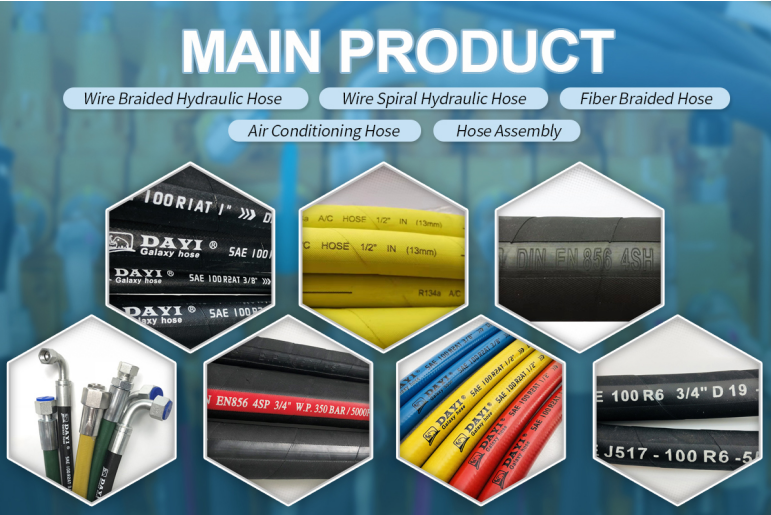
16mm hydraulic hose is a critical component in fluid power systems, utilized extensively across industries including construction, agriculture, manufacturing, and automotive. Defined by its 16mm internal diameter, this hose facilitates the transmission of hydraulic fluid under significant pressure to actuate machinery and power equipment. Its technical position within the industry chain lies between the hydraulic pump/reservoir and the hydraulic cylinder/motor – it is the conduit enabling power transfer. Core performance characteristics include pressure rating (typically ranging from 200 to 400 bar or higher), temperature resistance, fluid compatibility, and resistance to abrasion and fatigue. A key industry pain point is premature hose failure due to incorrect specification for application demands, leading to costly downtime, safety risks, and maintenance expenses. Ensuring correct hose selection, proper installation, and consistent maintenance are therefore paramount for operational efficiency and safety.
Material Science & Manufacturing
The construction of a 16mm hydraulic hose typically involves several layers of materials, each contributing to its overall performance. The innermost layer, or tube, is commonly composed of synthetic rubber compounds like nitrile rubber (NBR) for oil-based hydraulic fluids, or fluoropolymer (FKM/Viton) for applications demanding compatibility with aggressive fluids or high temperatures. The reinforcement layer is crucial for withstanding high pressure and preventing bursting. Common reinforcement materials include multiple braids of high-tensile steel wire, or a spiral-wound steel wire construction. The number of braids or the pitch of the spiral dictates the hose's pressure rating. An outer cover, usually made of synthetic rubber like chloroprene (CR) or polyurethane (PU), provides protection against abrasion, ozone, weathering, and oil contamination.
Manufacturing involves several key processes. The inner tube is extruded through a die to achieve the 16mm diameter and desired wall thickness. Reinforcement layers are then applied via braiding or winding machines, with precise tension control critical to maintain consistent pressure capacity. After reinforcement, the outer cover is extruded over the assembly. Post-extrusion processes include vulcanization (curing) using heat and pressure to crosslink the rubber compounds, improving their mechanical properties and chemical resistance. Quality control checks at each stage – including dimensional inspection, pressure testing, and visual examination – are essential. Parameter control focuses on maintaining consistent rubber compound formulations, precise braiding/winding tension, accurate temperature and pressure during vulcanization, and adherence to dimensional tolerances.
Performance & Engineering
The performance of a 16mm hydraulic hose is dictated by several engineering considerations. Burst pressure, working pressure, and impulse pressure are key metrics. Burst pressure is the pressure at which the hose fails catastrophically, typically four times the working pressure. Working pressure is the maximum continuous operating pressure. Impulse pressure refers to the hose’s ability to withstand pressure surges and fluctuations. Finite Element Analysis (FEA) is frequently employed during the design phase to model stress distribution within the hose under various loading conditions, optimizing reinforcement layer configuration and material selection.
Environmental resistance is critical. Temperature range – encompassing both minimum and maximum operating temperatures – must align with the application. Hydraulic fluid compatibility is another vital factor; incompatible fluids can cause swelling, degradation, or cracking of the inner tube. Abrasion resistance is paramount in applications where the hose is exposed to rubbing or contact with abrasive surfaces. Compliance requirements, such as those stipulated by SAE (Society of Automotive Engineers) and EN (European Norms), necessitate adherence to specific testing protocols and performance standards. Functional implementation considerations include bend radius (avoiding excessive bending which can cause kinking and failure), hose length selection (minimizing excess length to reduce whip and fatigue), and proper fitting selection and installation (ensuring leak-free connections and avoiding over-tightening).
Technical Specifications
| Parameter | Unit | Typical Value (NBR Tube, Steel Wire Braid) | Typical Value (FKM Tube, Spiral Steel Wire) |
|---|---|---|---|
| Internal Diameter | mm | 16 | 16 |
| Working Pressure | bar | 200 | 350 |
| Burst Pressure | bar | 800 | 1400 |
| Temperature Range | °C | -40 to +100 | -20 to +150 |
| Reinforcement | - | 2 Steel Wire Braid | Spiral Steel Wire |
| Outer Cover | - | Chloroprene Rubber (CR) | Polyurethane (PU) |
Failure Mode & Maintenance
Common failure modes for 16mm hydraulic hose include: Fatigue Cracking: Caused by repeated flexing and pressure cycling, leading to crack initiation and propagation in the reinforcement layer or the rubber compounds. Abrasion: External abrasion from contact with abrasive surfaces can wear through the outer cover, exposing the reinforcement and accelerating corrosion. Pinholes: Small punctures in the inner tube caused by internal corrosion or foreign objects within the hydraulic fluid. Kinking: Excessive bending beyond the minimum bend radius can cause internal damage and restrict flow. Blowout: Catastrophic failure resulting from exceeding the working pressure or a weakened hose due to prior damage. Chemical Degradation: Incompatible fluids can cause swelling, softening, or cracking of the rubber compounds.
Preventative maintenance is crucial. Regular visual inspections should be conducted to identify signs of abrasion, cracking, bulging, or leaks. Hose assemblies should be replaced at recommended intervals based on application severity and operating conditions. Hydraulic fluid should be regularly analyzed for contamination and maintained at the proper viscosity and cleanliness levels. Proper hose routing, securing, and guarding are essential to prevent abrasion and kinking. When replacing hoses, ensure correct hose length, fitting compatibility, and proper torque during installation. Implement a hose management program that tracks hose history, maintenance records, and replacement schedules.
Industry FAQ
Q: What is the significance of the 'dash size' (e.g., -16) associated with hydraulic hoses?
A: The dash size doesn't directly correlate to the outer diameter. It’s a standardized designation indicating the internal hose diameter in sixteenths of an inch. Therefore, a -16 hose has a 16/16 = 1 inch internal diameter. This is a crucial specification for ensuring compatibility with fittings and hydraulic system components.
Q: What is the difference between braided and spiral hydraulic hose, and when would you choose one over the other?
A: Braided hose utilizes multiple layers of interwoven steel wire, providing good flexibility and moderate pressure capability. Spiral hose employs a single continuous steel wire wound helically around the tube, offering higher pressure ratings and greater resistance to kinking but less flexibility. Spiral hose is preferred for high-pressure, high-impulse applications, while braided hose is suitable for general-purpose hydraulic systems.
Q: How does temperature affect the performance and lifespan of a hydraulic hose?
A: Both high and low temperatures can degrade hose materials. High temperatures accelerate rubber aging and reduce pressure capacity. Low temperatures can cause the rubber to become brittle and less flexible, increasing the risk of cracking. Selecting a hose with a temperature rating appropriate for the operating environment is critical.
Q: What role do hose fittings play in overall system reliability, and what common fitting-related issues should be addressed?
A: Hose fittings are integral to the integrity of the hydraulic system. Incorrect fitting selection, improper crimping, or contamination at the fitting interface can lead to leaks and failures. Using fittings specifically designed for the hose type and fluid is essential. Regular inspection of fittings for corrosion, damage, and proper torque is recommended.
Q: What are the key considerations for selecting a hose based on the hydraulic fluid being used?
A: Fluid compatibility is paramount. Different fluids require different inner tube materials. For example, phosphate ester fluids require specialized hoses with fluoropolymer (FKM) tubes. NBR is suitable for petroleum-based hydraulic fluids, but may not be compatible with other types. Always consult a fluid compatibility chart to ensure the hose material is compatible with the specific hydraulic fluid.
Conclusion
The 16mm hydraulic hose is a fundamental component in countless hydraulic systems, demanding meticulous consideration of material science, manufacturing processes, and application-specific performance requirements. Accurate hose selection, based on pressure, temperature, fluid compatibility, and environmental factors, is critical to ensure reliable operation and minimize the risk of costly failures. Understanding the potential failure modes and implementing a proactive maintenance program are essential for maximizing hose lifespan and preventing unplanned downtime.
Future advancements in hydraulic hose technology are likely to focus on developing materials with enhanced chemical resistance, higher temperature capabilities, and improved fatigue life. Smart hose solutions, incorporating embedded sensors to monitor pressure, temperature, and structural integrity, could provide real-time insights into hose health and enable predictive maintenance strategies. Continued adherence to industry standards and best practices will be vital for maintaining the safety and efficiency of hydraulic systems.