
warman slurry pump replacement decisions are becoming harder to forecast when abrasive slurry changes concentration faster than operators can detect hose-wall wear. For researchers and industry strategists, the challenge is no longer simply extending hose life; it is anticipating how new materials, sensors, and operating conditions will reshape the entire conveying system.
One emerging direction is the instrumented hose: a flexible product designed to report its own condition. Conductive layers, embedded fiber-optic elements, or compact pressure and temperature sensors could help identify deformation, overheating, and developing damage before a leak interrupts production. If these signals are combined with flow and pump data, maintenance planning can move from calendar-based intervals toward condition-based decisions.
Sensing turns the hose into process data
A hose has traditionally been treated as a passive link between machines. That assumption is changing as industrial monitoring becomes more distributed. In a future system, a hose may provide information about pressure pulses, temperature excursions, flexing frequency, or localized changes in its structure. Rather than relying on a single sensor, operators could compare hose readings with pump speed, slurry density, and valve position to distinguish normal operating variation from an emerging fault.
The value would be practical as well as analytical. A gradual shift in vibration or temperature could prompt an inspection during a planned stoppage, while a sudden pressure anomaly could trigger an immediate response. Researchers will need to establish which measurements reliably precede failure, how often they should be sampled, and how sensor data can remain useful in dusty, wet, chemically aggressive environments.
Smarter systems still face material constraints
Adding intelligence does not remove the fundamental demands placed on rubber. A hose carrying sharp mineral particles must resist abrasion while remaining flexible enough to accommodate movement and installation geometry. In other services, oil, chemicals, heat, ultraviolet exposure, or repeated pressure cycles may dominate the specification. Reinforcement, lining, cover compounds, and coupling design must work together; optimizing one property in isolation can shift failure to another part of the assembly.
Embedded electronics introduce further trade-offs. Conductive pathways and sensing fibers must survive repeated bending without creating stress concentrations or compromising fluid containment. Sensors also need stable calibration despite temperature swings, contamination, and mechanical shock. Cost, repairability, data security, and the ability to replace a sensor without discarding a serviceable hose will influence adoption as much as measurement accuracy.
Material development has its own balancing act. Recycled or bio-based feedstocks may reduce reliance on virgin resources, but their variability can complicate compound consistency. Thermoplastic elastomers and recyclable reinforcement concepts could support more circular product designs, yet they must demonstrate performance under real service conditions—not only in controlled laboratory tests. Long-term abrasion data and end-of-life recovery routes remain important research needs.
Where next-generation hose design could matter most
Mining and mineral processing are likely to be significant testing grounds because slurry properties can vary with ore, water availability, and process stage. A monitored hose could help operators understand how changes in particle size or solids concentration affect wear and pressure loss. In tailings transport, early warning of abnormal conditions could support safer inspection planning across long or difficult-to-access routes.
Dredging offers a different set of requirements. Equipment may experience changing suction conditions, movement, and exposure to water and sediment, making flexibility and impact resistance central considerations. In construction and industrial transfer, modular hose assemblies with digital identification could simplify asset tracking, inspection records, and replacement planning across large fleets.
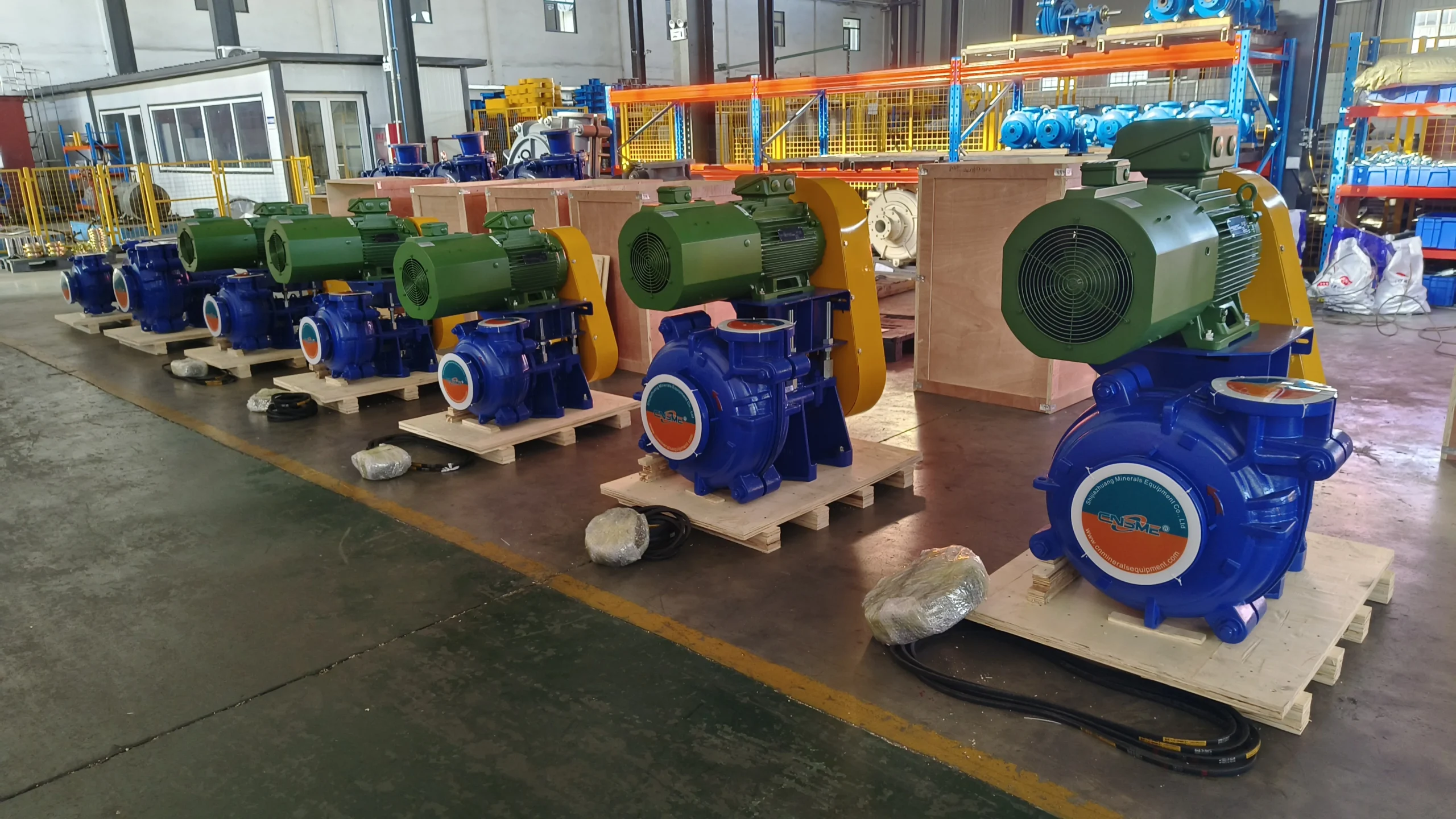
These applications also show why hose performance should be assessed as part of a complete conveying line. A heavy duty horizontal slurry pump, the connecting pipework, hose sections, valves, and operating controls form a coupled system. Pump selection and operating conditions influence pressure, flow, and wear patterns downstream; hose specifications in turn affect the system’s operating envelope. CNSME, a slurry-pump manufacturer with experience in pump application and maintenance, represents one part of this broader equipment supply chain, where component-level expertise can inform system planning.
The next research milestone is credible prediction
The likely near-term future is not a universally self-repairing hose, but a better-characterized and more observable one. Progress will depend on field trials that connect sensor readings to actual inspection findings and service life. Shared test methods could help compare compounds, reinforcement structures, and monitoring technologies under representative abrasion, pressure, and flex conditions.
Over time, validated data may support digital models that estimate remaining service life and recommend operating adjustments. Such forecasts should communicate uncertainty rather than imply false precision: a model is only as useful as the conditions and failure modes represented in its training data. For strategists, the most consequential development may be a shift in procurement criteria—from judging hoses solely by initial specification toward evaluating durability, monitoring capability, maintainability, and recoverability across the asset lifecycle.