
Apr . 01, 2024 17:55 Back to list
oem wrapped surface hydraulic hose supplier Performance Analysis
Introduction
OEM wrapped surface hydraulic hose represents a critical component in fluid power systems across diverse industries, including construction, agriculture, manufacturing, and automotive. This guide details the intricacies of these hoses, focusing on their design, material science, manufacturing processes, performance characteristics, potential failure modes, and relevant industry standards. Unlike standard hydraulic hose, the wrapped surface construction – typically incorporating synthetic fiber braiding over a rubber inner tube – provides enhanced pressure capacity, abrasion resistance, and flexibility, making it suitable for demanding applications. The OEM designation signifies that these hoses are frequently manufactured to specific client specifications, requiring a deep understanding of hydraulic system integration and performance requirements. Core performance metrics include burst pressure, working pressure, temperature range, and fluid compatibility, all of which are critical for ensuring system reliability and safety. The increasing demand for higher operating pressures and more durable hoses drives continuous innovation in materials and manufacturing techniques.
Material Science & Manufacturing
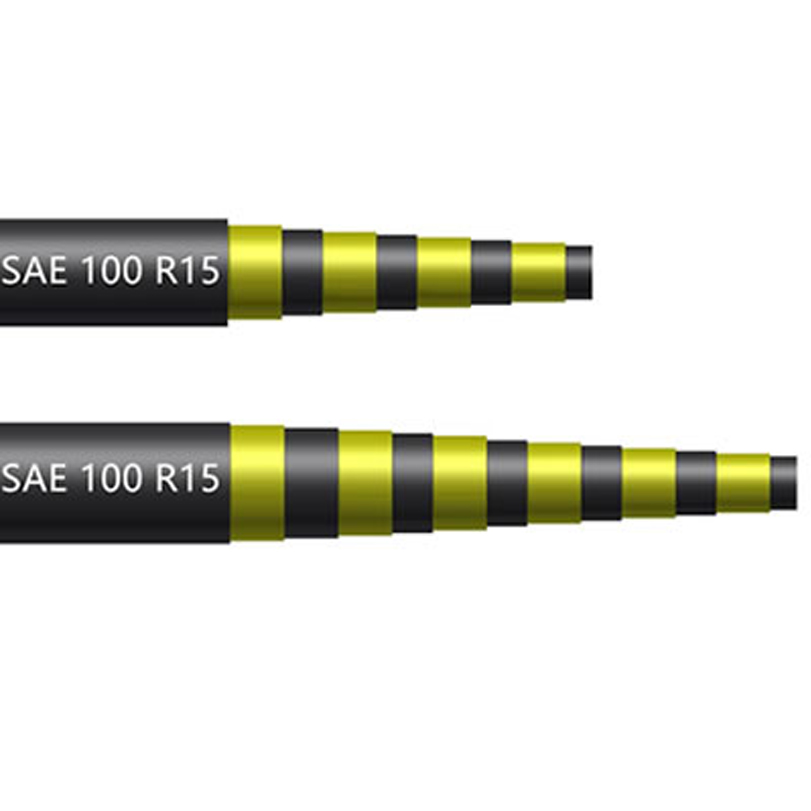
The foundation of a high-performance wrapped surface hydraulic hose lies in the careful selection and processing of its constituent materials. The inner tube is commonly constructed from synthetic rubbers such as nitrile (NBR), ethylene propylene diene monomer (EPDM), or fluorocarbon (FKM), each offering varying degrees of resistance to specific hydraulic fluids, temperatures, and pressures. NBR provides excellent resistance to petroleum-based fluids, EPDM excels in high-temperature applications and compatibility with phosphate ester fluids, and FKM offers superior chemical resistance, particularly to aggressive fluids. Reinforcement layers, crucial for pressure containment, typically consist of multiple plies of high-tensile strength synthetic fibers, including polyester, aramid (Kevlar), or rayon. The fiber braiding angle is a critical parameter, directly influencing the hose’s burst pressure and flexibility – steeper angles generally increase pressure capacity but reduce flexibility. The outer cover, providing abrasion and weather resistance, is often made from polyurethane or a blend of polymers.
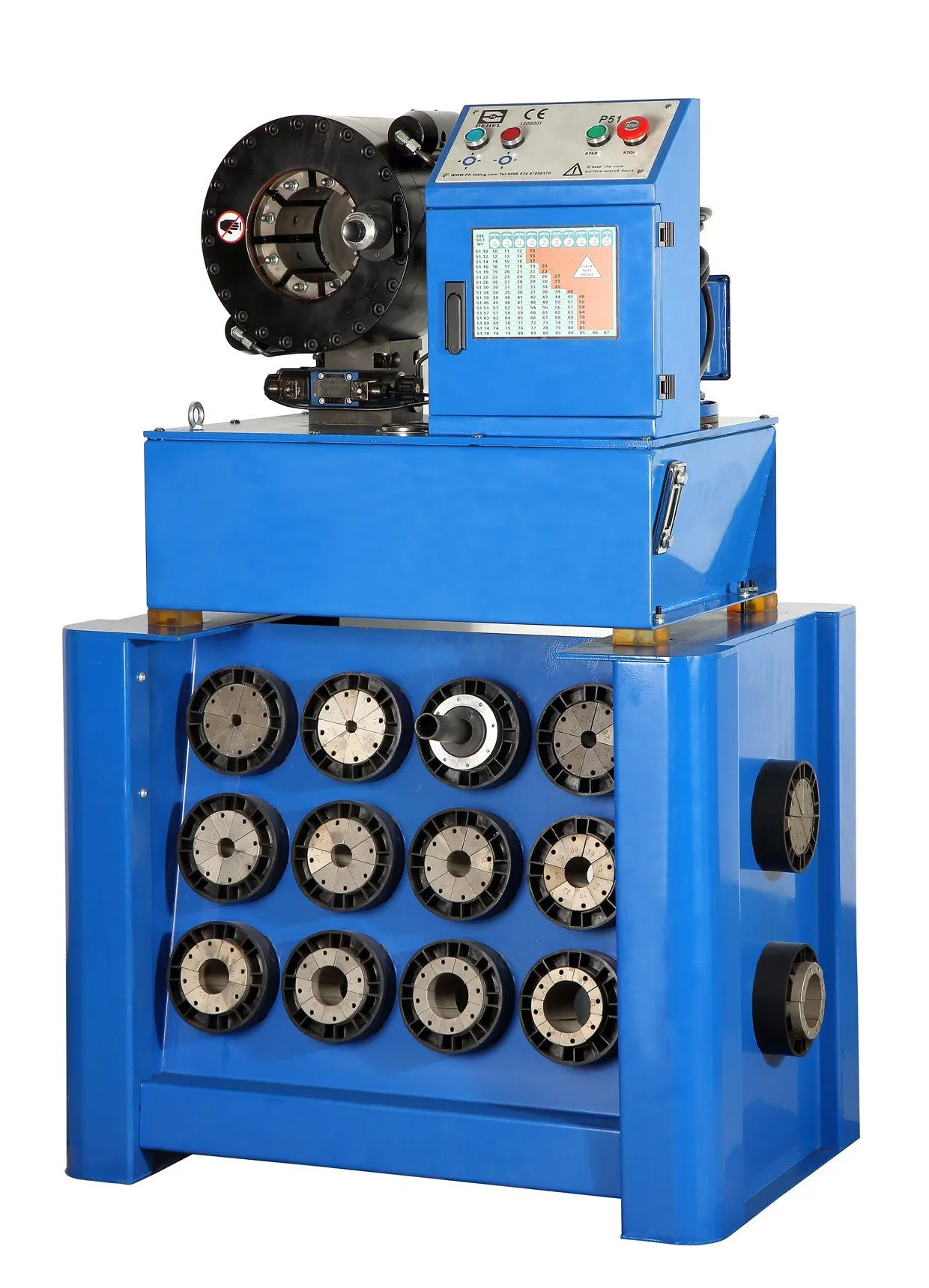
Manufacturing typically involves a multi-stage process. First, the inner tube is extruded to the specified dimensions. This is followed by the application of reinforcement layers through a braiding machine, carefully controlling tension and ply angle. The outer cover is then extruded over the reinforcement, followed by surface treatment (wrapping) as required by OEM specifications. Curing, or vulcanization, is a critical step where the rubber compounds are crosslinked using heat and pressure, imparting their final mechanical properties. Parameter control during curing – temperature, pressure, and time – is paramount to achieve consistent and reliable performance. Post-curing, hoses undergo rigorous testing, including hydrostatic testing to verify burst pressure and impulse testing to assess fatigue life. Quality control measures throughout the process, including dimensional checks, material composition analysis, and visual inspection, are essential to maintain product consistency.
Performance & Engineering
The performance of a wrapped surface hydraulic hose is governed by a complex interplay of material properties and geometric parameters. Force analysis, particularly stress-strain relationships within the rubber and reinforcement layers, is fundamental to predicting hose behavior under pressure. Hose wall thickness, reinforcement ply count, and fiber angle directly influence the hose’s ability to withstand internal pressure without exceeding its yield strength. Finite element analysis (FEA) is frequently employed to simulate stress distribution under various loading conditions, optimizing hose design for specific applications. Environmental resistance is another crucial performance factor. Exposure to extreme temperatures, UV radiation, ozone, and corrosive fluids can degrade the rubber compounds, reducing their flexibility and increasing the risk of failure. Selection of appropriate rubber formulations and outer cover materials is essential to mitigate these effects. Compliance requirements, such as those stipulated by SAE International (SAE J517, J518) and EN standards, dictate minimum performance criteria for burst pressure, working pressure, and temperature range. The design must also consider the hose's bend radius; exceeding the minimum bend radius can lead to kinking and premature failure. Furthermore, proper hose assembly – including correct crimping of fittings – is vital for maintaining structural integrity.
Technical Specifications
| Parameter | Unit | Typical Value (NBR Inner Tube, Polyester Reinforcement) | Typical Value (FKM Inner Tube, Aramid Reinforcement) |
|---|---|---|---|
| Working Pressure | MPa | 20 | 30 |
| Burst Pressure | MPa | 80 | 120 |
| Temperature Range | °C | -40 to +100 | -20 to +200 |
| Inner Diameter | mm | 19.1 | 25.4 |
| Outer Diameter | mm | 28.6 | 38.1 |
| Minimum Bend Radius | mm | 178 | 254 |
Failure Mode & Maintenance
Wrapped surface hydraulic hoses are susceptible to several failure modes, including fatigue cracking, burst failure, abrasion damage, and fluid permeation. Fatigue cracking, often initiated at the braid crossover points, occurs due to repeated pressure cycling. Burst failure results from exceeding the hose’s maximum pressure rating. Abrasion damage can compromise the outer cover, exposing the reinforcement layers to corrosion and accelerating failure. Fluid permeation, particularly with incompatible fluids, can cause the inner tube to swell or degrade, leading to leaks and reduced performance. Oxidation of the rubber compounds, accelerated by high temperatures and exposure to oxygen, can lead to hardening and cracking. A common failure analysis technique involves microscopic examination of fracture surfaces to identify the initiation point and failure mechanism.
Preventative maintenance is crucial for extending hose service life. Regular visual inspections should be conducted to identify signs of abrasion, cracking, or swelling. Hose assemblies should be checked for proper fitting crimp integrity. Fluid compatibility must be verified before use, and the system should be regularly flushed to remove contaminants. Avoid exceeding the hose’s maximum working pressure and temperature limits. When replacing hoses, ensure the new hose meets or exceeds the original specifications. Proper storage conditions – avoiding direct sunlight, extreme temperatures, and ozone sources – can also help preserve hose integrity. Periodic impulse testing, if feasible, can provide an indication of remaining fatigue life.
Industry FAQ
Q: What is the significance of the fiber braiding angle in a wrapped surface hydraulic hose?
A: The fiber braiding angle directly impacts the hose’s pressure capacity and flexibility. A steeper angle (closer to 90 degrees) increases the hose’s ability to withstand internal pressure by providing more reinforcement in the hoop direction, but it reduces flexibility. A shallower angle increases flexibility but compromises pressure capacity. The optimal angle is determined by the application's specific requirements, balancing pressure demands with bend radius constraints.
Q: How does fluid compatibility affect hose selection?
A: Fluid compatibility is paramount. Incompatible fluids can cause the inner tube to swell, degrade, or dissolve, leading to leaks and premature failure. The hose’s inner tube material must be chemically resistant to the hydraulic fluid being used. Refer to compatibility charts provided by rubber manufacturers to ensure the correct material is selected for the specific fluid.
Q: What are the common causes of hose fatigue failure?
A: Fatigue failure is typically caused by repeated pressure cycling, leading to crack initiation and propagation within the reinforcement layers, often at braid crossover points. Factors contributing to fatigue include high operating pressures, frequent pressure spikes, excessive vibration, and improper hose routing. Regular inspection for signs of cracking is crucial.
Q: How important is proper crimping of hose fittings?
A: Proper crimping is absolutely critical. Incorrect crimping – either too loose or too tight – can compromise the hose assembly’s structural integrity. A loose crimp allows the fitting to move relative to the hose, potentially leading to leaks or blow-off. An over-crimped fitting can damage the reinforcement layers, reducing the hose’s pressure capacity. Utilize calibrated crimping tools and follow manufacturer’s recommendations.
Q: What are the key differences between NBR, EPDM, and FKM inner tube materials?
A: NBR (Nitrile Butadiene Rubber) offers excellent resistance to petroleum-based hydraulic fluids, making it a common choice for general-purpose applications. EPDM (Ethylene Propylene Diene Monomer) provides superior resistance to high temperatures and compatibility with phosphate ester fluids. FKM (Fluorocarbon) exhibits the highest level of chemical resistance, particularly to aggressive fluids, and is often used in demanding environments.
Conclusion
OEM wrapped surface hydraulic hoses are sophisticated engineered components vital to the safe and reliable operation of hydraulic systems. Their performance is contingent upon careful material selection, precise manufacturing processes, and adherence to industry standards. Understanding the interplay between material properties, geometric parameters, and operating conditions is essential for optimizing hose design and maximizing service life.
Continuous innovation in materials and manufacturing techniques, coupled with rigorous quality control measures, are driving improvements in hose durability and performance. Proper maintenance practices, including regular inspections and fluid compatibility verification, are crucial for preventing premature failure and ensuring long-term system reliability. Selecting the appropriate hose for a specific application, based on detailed engineering analysis and a thorough understanding of operating requirements, remains paramount.