
Apr . 01, 2024 17:55 Back to list
oem two wire braided high pressure hydraulic hose manufacturers Performance Engineering

Introduction
OEM two-wire braided high-pressure hydraulic hoses represent a critical component within fluid power systems across numerous industries, including construction, agriculture, manufacturing, and oil & gas. These hoses are engineered to safely and reliably transmit hydraulic fluid under substantial pressure, facilitating the operation of heavy machinery and critical processes. Positioned within the hydraulic system supply chain between hose fitting manufacturers and equipment OEMs, they bridge the gap between fluid power delivery and application functionality. Core performance characteristics center around pressure rating, burst pressure, temperature resistance, fluid compatibility, and dimensional accuracy. A significant industry pain point lies in maintaining consistent quality control throughout the manufacturing process, ensuring adherence to stringent safety standards, and managing the complexities of custom specifications demanded by OEMs. This guide will provide a comprehensive technical overview of these hoses, covering material science, manufacturing, performance, failure modes, and industry best practices.
Material Science & Manufacturing
The construction of a two-wire braided high-pressure hydraulic hose involves several key materials and processes. The inner tube is typically composed of synthetic rubber compounds – commonly nitrile (NBR) for oil-based fluids, or fluorocarbon (FKM/Viton) for applications demanding enhanced chemical resistance and high-temperature performance. NBR offers good abrasion resistance and cost-effectiveness, while FKM excels in extreme environments. The reinforcement layer consists of two braids of high-tensile steel wire, precisely angled to provide maximum burst strength and flexibility. Wire selection is critical; high-carbon steel conforming to standards like SAE J1926 is preferred for its strength and fatigue resistance. The outer cover, usually a synthetic rubber like polyurethane or chlorinated polyethylene (CPE), provides protection against abrasion, ozone, weathering, and oil degradation. CPE offers superior ozone resistance, while polyurethane provides excellent abrasion protection.
Manufacturing commences with extrusion of the inner tube to precise dimensions. This process requires careful control of temperature, screw speed, and die design to ensure uniform wall thickness and consistent material properties. The steel wire braids are then applied over the inner tube using automated braiding machines, maintaining consistent braid angle and tension. This is followed by vulcanization, a chemical process utilizing heat and pressure to cross-link the rubber compounds, enhancing their strength, elasticity, and resistance to degradation. Post-vulcanization, hoses undergo rigorous testing including pressure testing, impulse testing, and dimensional checks. Key parameter controls during manufacturing include rubber compound formulation (polymer blend, filler content, plasticizer type), wire tensile strength, braid coverage, vulcanization temperature and time, and dimensional tolerances. Improper control of these parameters can lead to premature failure, reduced service life, and safety hazards.
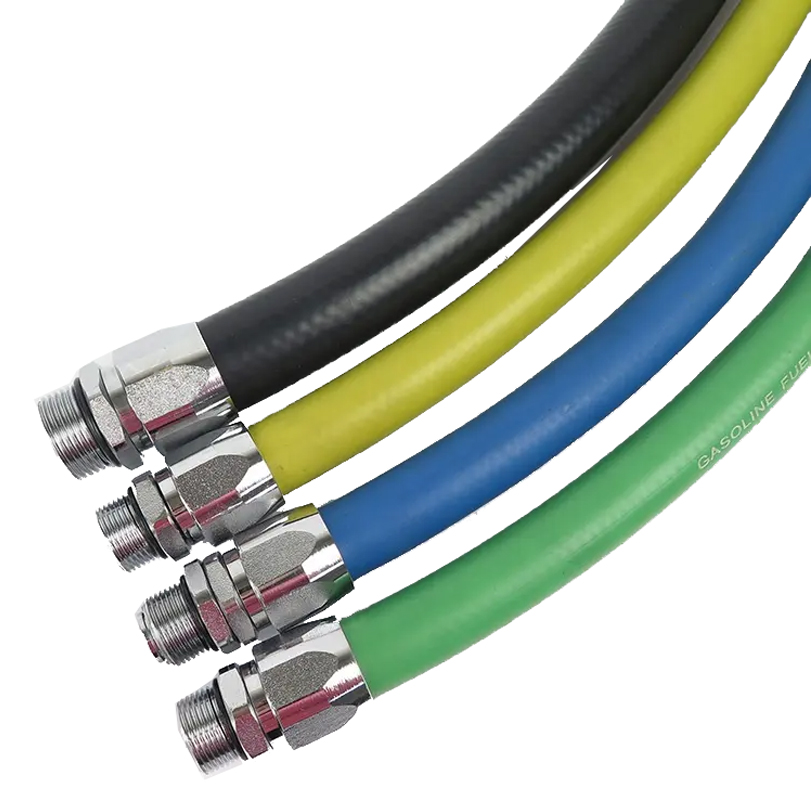
Performance & Engineering
The performance of a two-wire braided hydraulic hose is dictated by its ability to withstand internal pressure, external loads, and environmental factors without failure. Force analysis involves considering hoop stress in the inner tube due to internal pressure, axial stress in the reinforcement braids, and bending stress induced by hose routing. The burst pressure, typically four times the working pressure, is a critical safety parameter and is directly related to the tensile strength of the steel wire and the effectiveness of the braid construction. Environmental resistance encompasses temperature range (typically -40°C to +100°C, depending on material selection), fluid compatibility (resistance to swelling, degradation, and permeation by hydraulic fluids), and UV/ozone resistance. Compliance requirements are stringent, dictated by standards like SAE J517 (hose construction) and ISO 6899 (burst pressure and impulse testing). Functional implementation details include considerations for hose bend radius (to avoid kinking and stress concentration), hose assembly techniques (proper fitting crimping is crucial for secure connections), and routing strategies (avoiding sharp bends and abrasion points). A key industry challenge is mitigating impulse pressures (pressure spikes) which can significantly reduce hose life and contribute to fatigue failure. Dynamic testing simulating real-world operating conditions is essential to validate hose performance under impulse loads.
Technical Specifications
| Parameter | Unit | SAE J517 - 100R2AT | SAE J517 - 100R1AT |
|---|---|---|---|
| Working Pressure | MPa | 31.5 | 20.7 |
| Burst Pressure | MPa | 126 | 82.7 |
| Temperature Range | °C | -40 to +100 | -40 to +100 |
| Inner Tube Material | - | NBR | NBR |
| Reinforcement | - | Two Steel Wire Braids | One Steel Wire Braid |
| Cover Material | - | Synthetic Rubber (CPE or Polyurethane) | Synthetic Rubber (CPE or Polyurethane) |
Failure Mode & Maintenance
Failure modes in two-wire braided hydraulic hoses are diverse and often interconnected. Fatigue cracking, initiated by repeated flexing and pressure cycling, is a common failure mechanism, particularly near fittings. Delamination occurs when the bonding between the inner tube, reinforcement braids, and outer cover weakens, leading to separation. Degradation of the rubber compounds due to exposure to heat, ozone, oil, or chemicals can reduce their elasticity and strength. Oxidation of the steel wire can diminish its tensile strength and corrosion resistance. Pinholes can develop in the inner tube due to abrasion or chemical attack.
Maintenance solutions prioritize preventative measures. Regular visual inspections should identify signs of wear, cracking, swelling, or abrasion. Hose assemblies should be routed to avoid sharp bends, abrasion points, and excessive heat. Fluid compatibility must be verified to prevent degradation of rubber components. Proper fitting crimping is essential; under-crimping can lead to leakage, while over-crimping can damage the hose. Impulse pressures should be mitigated through the use of accumulators or surge suppressors. When replacing hoses, use only certified components and follow manufacturer’s instructions. Documenting hose service history, including replacement dates and operating conditions, aids in identifying recurring issues and optimizing maintenance schedules. In the event of a hose failure, a thorough root cause analysis should be conducted to prevent future occurrences. Specialized testing, such as burst testing and impulse testing of returned hoses, can provide valuable insights into failure mechanisms.
Industry FAQ
Q: What is the primary difference between 100R2AT and 100R1AT hoses, and when would I specify one over the other?
A: 100R2AT hoses feature two steel wire braids, providing significantly higher pressure capabilities and enhanced impulse performance compared to 100R1AT hoses, which have only one braid. Specify 100R2AT for applications involving higher operating pressures, frequent pressure spikes, or demanding duty cycles. 100R1AT is suitable for lower-pressure systems where cost is a primary concern.
Q: How does fluid compatibility impact hose selection, and what testing is typically performed to verify compatibility?
A: Fluid compatibility is critical. Incompatible fluids can cause swelling, degradation, or permeation of the inner tube, leading to failure. Testing typically involves immersing hose samples in the target fluid for a specified duration at a controlled temperature, then measuring changes in dimensions, weight, and physical properties (tensile strength, elongation). Nitrile (NBR) is generally suitable for petroleum-based fluids, while FKM is preferred for aggressive chemicals.
Q: What are the key considerations for proper hose fitting crimping, and what are the consequences of improper crimping?
A: Proper crimping ensures a secure and leak-free connection. Considerations include selecting the correct die size based on hose and fitting specifications, using a calibrated crimping machine, and verifying the crimp dimensions after completion. Under-crimping can lead to leakage and blow-off, while over-crimping can damage the hose and reduce its service life.
Q: How can I mitigate the risk of fatigue failure in hydraulic hoses subjected to continuous flexing and impulse pressures?
A: Mitigation strategies include selecting hoses with high impulse ratings (e.g., 100R2AT), using flexible hose routing, employing vibration dampeners, and implementing surge suppression devices to reduce pressure spikes. Regular inspections for signs of cracking or wear are also crucial.
Q: What is the role of the outer cover material in hose performance, and how do CPE and Polyurethane differ?
A: The outer cover protects the hose from abrasion, ozone, weathering, and oil degradation. CPE (Chlorinated Polyethylene) offers excellent ozone and weathering resistance, making it suitable for outdoor applications. Polyurethane provides superior abrasion resistance, ideal for harsh environments where physical damage is a concern.
Conclusion
OEM two-wire braided high-pressure hydraulic hoses are indispensable components in a wide range of industrial applications, demanding meticulous attention to material selection, manufacturing processes, and performance characteristics. Understanding the underlying material science, particularly the properties of the rubber compounds and steel wire, is paramount to ensuring reliability and safety. Maintaining strict control over manufacturing parameters, such as vulcanization time and fitting crimping, is crucial for consistent quality.
Looking forward, advancements in hose technology will likely focus on developing lighter-weight materials, enhancing chemical resistance, and improving impulse performance. Continuous monitoring of operating conditions and implementation of proactive maintenance programs are essential for maximizing hose service life and minimizing downtime. The careful consideration of these technical factors will contribute to the safe and efficient operation of hydraulic systems across diverse industries.