
Apr . 01, 2024 17:55 Back to list
oem two wire braided high pressure hydraulic hose factories Performance Analysis

Introduction
OEM two-wire braided high-pressure hydraulic hoses are critical components in fluid power systems across numerous industries, including construction, agriculture, manufacturing, oil & gas, and material handling. Positioned within the hydraulic system as the conduit for pressurized fluid, they transmit power generated by pumps to actuators, enabling mechanical work. These hoses differ from low-pressure alternatives through their reinforced construction, employing two layers of high-tensile steel wire braid embedded within a rubber compound. This reinforcement provides the burst strength and pressure containment necessary for demanding applications. Core performance characteristics include working pressure, burst pressure, temperature range, fluid compatibility, and resistance to abrasion and kinking. The growing demand for higher operating pressures in modern hydraulic machinery, coupled with stricter safety regulations, drives the need for reliable and precisely manufactured high-pressure hoses. A key industry pain point is maintaining consistent quality and dimensional accuracy across large production volumes, alongside ensuring traceability and adherence to international safety standards.
Material Science & Manufacturing
The construction of a two-wire braided high-pressure hose begins with the selection of appropriate materials. The inner tube is typically composed of synthetic rubbers such as nitrile (NBR), which provides excellent oil resistance, or ethylene propylene diene monomer (EPDM) for compatibility with phosphate ester fluids. The reinforcement layers consist of high-tensile steel wire, often drawn to specific diameters and treated with adhesion promoters to ensure bonding with the surrounding rubber. The outer cover commonly utilizes a Chlorinated Polyethylene (CPE) or Polyurethane (PU) compound, offering abrasion, weather, and ozone resistance.
Manufacturing involves several critical processes. The inner tube is extruded to precise dimensions. The steel wire braid is then applied helically, with consistent pitch and tension being paramount to maintain uniform pressure distribution. Following braiding, the hose assembly undergoes vulcanization – a chemical process utilizing heat and pressure to crosslink the rubber compounds and permanently bond the wire reinforcement. Critical parameters during vulcanization include temperature, pressure, and cure time, all of which affect the final hose properties. Post-vulcanization, hoses are inspected for defects, tested for pressure integrity, and often subjected to dimensional checks. Quality control at each stage is essential; inconsistencies in rubber compound formulation, wire braid tension, or vulcanization parameters can lead to premature failure. Skiving (removing rubber layers at the ends) and fitting attachment are typically performed by the hose assembly specialist, not the hose manufacturer.
Performance & Engineering
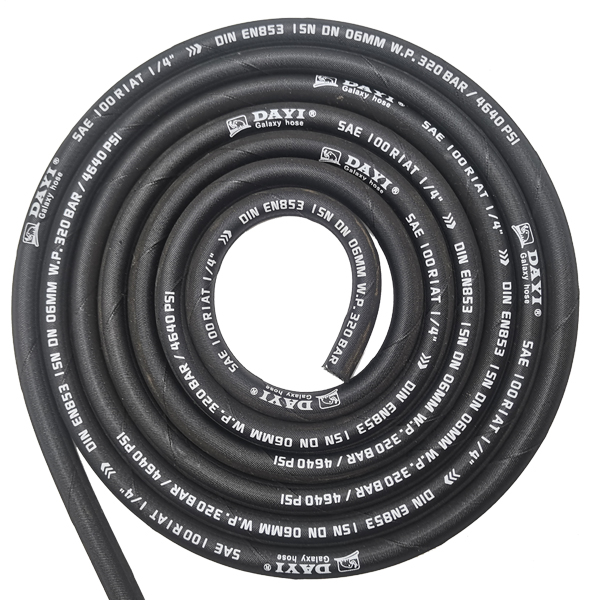
Performance analysis of two-wire braided hydraulic hoses centers on their ability to withstand internal pressure without failure. This is governed by the hoop stress equation, where pressure, inner diameter, and wall thickness are key variables. The steel wire braid significantly increases the tensile strength of the hose, resisting circumferential expansion under pressure. Fatigue life is a critical consideration; repeated pressurization and depressurization cycles can lead to wire breakage and eventual failure. Environmental resistance is also vital. Exposure to extreme temperatures (both high and low), ultraviolet radiation, and corrosive fluids can degrade the rubber compounds, reducing flexibility and increasing the risk of cracking.
Engineering design considerations include selecting the appropriate hose size (inner diameter) to minimize pressure drop and maintain fluid velocity. Hose layline (the spiral marking on the hose) helps prevent kinking during bending. Proper fitting selection and installation are essential; incorrect fittings can create stress concentrations and lead to leaks or failures. Compliance requirements, such as those outlined by SAE J517 and EN 856, dictate minimum burst pressure, working pressure, and testing procedures. Failure analysis often reveals issues related to improper installation, fluid contamination, or exceeding the hose’s rated specifications. Proper hose routing and support are crucial to prevent abrasion and bending stress.
Technical Specifications
| Parameter | Unit | Typical Value (DN20, 2 Wire Braid) | Testing Standard |
|---|---|---|---|
| Working Pressure | MPa | 25 | SAE J517 |
| Burst Pressure | MPa | 100 | SAE J517 |
| Inner Diameter | mm | 13 | ISO 1307 |
| Outer Diameter | mm | 21 | ISO 1307 |
| Temperature Range | °C | -40 to +100 | SAE J517 |
| Minimum Bend Radius | mm | 4D (where D is the outer diameter) | Manufacturer Specification |
Failure Mode & Maintenance
Common failure modes in two-wire braided hydraulic hoses include burst failure due to exceeding the working pressure, wire breakage from fatigue or corrosion, pinhole leaks caused by abrasion or chemical attack, and fitting failures resulting from improper installation or corrosion. Fatigue cracking typically initiates at stress concentrators, such as around fittings or at points of repeated bending. Delamination occurs when the bond between the rubber compound and the steel wire braid weakens, leading to separation. Oxidation of the rubber compound, particularly at elevated temperatures, results in hardening and cracking. Corrosion of the steel wire can significantly reduce its tensile strength.
Preventative maintenance is crucial. Regular visual inspections should be conducted to identify signs of damage, such as cuts, abrasions, blistering, or kinking. Hoses should be flushed periodically to remove contaminants that can accelerate wear. Proper hose routing and support are essential to minimize bending stress and abrasion. Replace hoses at recommended intervals, even if no visible damage is present. When replacing a hose, ensure the fittings are compatible and properly installed, using calibrated torque wrenches. Avoid sharp bends and ensure adequate clearance between the hose and moving parts. Utilize hose guards or sleeves in areas prone to abrasion. Document all maintenance activities for traceability and performance analysis.
Industry FAQ
Q: What is the primary difference between one-wire and two-wire braided hoses in terms of pressure capacity?
A: Two-wire braided hoses offer significantly higher burst pressures and working pressures compared to one-wire braided hoses. The additional layer of steel wire provides substantially increased tensile strength and resistance to expansion under pressure. This makes two-wire braid hoses suitable for applications demanding higher hydraulic system pressures and improved safety margins.
Q: How does fluid compatibility affect the lifespan of a hydraulic hose?
A: Fluid compatibility is critical. Using a hose with an incompatible inner tube material can lead to swelling, softening, or degradation of the rubber, resulting in leaks and premature failure. For example, standard nitrile rubber (NBR) is generally incompatible with phosphate ester fluids, requiring the use of EPDM. Always verify the fluid compatibility chart for the hose material before use.
Q: What is the role of the outer cover in protecting the hose?
A: The outer cover provides critical protection against abrasion, ozone, weathering, and chemical attack. Materials like CPE and PU offer varying degrees of resistance. A damaged outer cover can expose the reinforcement layers to corrosion and accelerate degradation of the inner tube, leading to failure. Regular inspection of the outer cover is essential.
Q: What are the critical factors to consider when selecting a hydraulic hose fitting?
A: Fitting selection must consider the hose type, operating pressure, fluid compatibility, and connection type (e.g., crimped, threaded, field-attachable). The fitting material must be compatible with the hose and fluid. Incorrectly sized or installed fittings can create stress concentrations, leading to leaks and failures. Always use fittings that meet or exceed the hose’s pressure rating.
Q: How important is proper hose routing and support in preventing premature failure?
A: Proper hose routing and support are paramount. Avoid sharp bends, excessive twisting, and contact with hot surfaces or abrasive materials. Use hose clamps or supports to prevent sagging and minimize stress on the hose. Ensure sufficient clearance between the hose and moving parts to prevent abrasion and kinking. Improper routing significantly reduces hose lifespan and increases the risk of catastrophic failure.
Conclusion
OEM two-wire braided high-pressure hydraulic hoses are engineered components critical to the safe and efficient operation of numerous industrial applications. Their performance relies on a complex interplay of material science, precise manufacturing processes, and adherence to stringent industry standards. Understanding the potential failure modes and implementing proactive maintenance procedures is essential for maximizing hose lifespan and minimizing downtime.
As hydraulic systems continue to evolve with increasing pressure demands and stricter safety regulations, the development of advanced hose materials and manufacturing techniques will be paramount. Future advancements may include the incorporation of smart sensors for real-time monitoring of hose condition and the development of self-healing rubber compounds to enhance durability and reduce the risk of catastrophic failures. Maintaining a thorough understanding of these technologies and their implementation will be crucial for manufacturers and end-users alike.