
Apr . 01, 2024 17:55 Back to list
oem thermoplastic hose factory Performance Analysis
Introduction
OEM thermoplastic hoses represent a critical component in numerous industrial fluid transfer applications. These hoses, manufactured to specific customer requirements, bridge the gap between standardized product offerings and the unique demands of diverse industries including automotive, agriculture, construction, and chemical processing. Technically positioned between raw polymer extrusion and final system integration, their performance directly impacts system reliability, operational efficiency, and safety. Core performance characteristics are defined by pressure rating, temperature resistance, chemical compatibility, flexibility, and abrasion resistance. The increasing demand for lightweight, durable, and corrosion-resistant fluid handling solutions drives the proliferation of thermoplastic hose technology, exceeding the limitations of traditional rubber and metal hoses in many applications. The primary challenge lies in balancing cost-effectiveness with tailored performance to meet stringent industrial specifications and evolving regulatory standards.
Material Science & Manufacturing
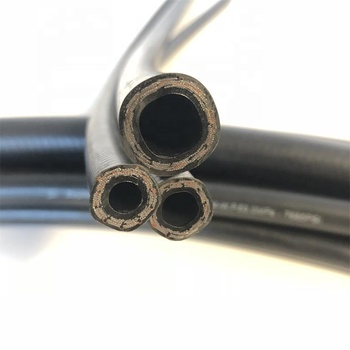
Thermoplastic hoses are typically constructed from polymers such as Polyvinyl Chloride (PVC), Polyethylene (PE), Polypropylene (PP), Polyamide (Nylon), and Thermoplastic Polyurethane (TPU). Each material exhibits unique physical and chemical properties influencing hose performance. PVC offers excellent chemical resistance and low cost but suffers from limited temperature range and flexibility. Nylon provides high tensile strength and abrasion resistance but is susceptible to hydrolysis. TPU combines flexibility, abrasion resistance, and good low-temperature performance. Manufacturing processes primarily involve extrusion, reinforcement, and potentially, post-treatment. Extrusion involves melting the thermoplastic polymer and forcing it through a die to create the hose wall. Reinforcement, crucial for pressure handling capabilities, commonly utilizes textile braids (polyester, nylon) or spiral-wound wire (steel or stainless steel). Parameter control during extrusion is paramount. Melt temperature, screw speed, die pressure, and cooling rate directly impact polymer crystallinity, wall thickness uniformity, and dimensional accuracy. Post-treatment can include surface coating for UV protection, antistatic properties, or enhanced chemical resistance. Chemical compatibility is ensured through rigorous testing of the polymer with the intended fluid media. Failure to properly assess compatibility can lead to swelling, degradation, and catastrophic hose failure. The selection of reinforcement materials is also critical, accounting for tensile strength, elongation, and corrosion potential.

Performance & Engineering
Performance evaluation of thermoplastic hoses necessitates a comprehensive understanding of force analysis, environmental resistance, and applicable compliance requirements. Burst pressure testing, conducted according to industry standards (see footer), determines the hose's maximum withstand capacity. Fatigue testing assesses the hose’s endurance under cyclical pressure loads, crucial for applications involving pulsations. Environmental resistance is evaluated through exposure to varying temperatures, UV radiation, ozone, and chemical environments. Temperature extremes can induce brittleness or softening, affecting flexibility and strength. UV radiation can cause polymer degradation, leading to cracking and loss of mechanical properties. Chemical resistance is assessed by immersing the hose in the target fluid and monitoring for swelling, discoloration, or changes in physical properties. Engineering considerations include hose bend radius, which impacts stress concentration and potential failure points. Proper bend radius calculations are vital to prevent kinking and premature wear. Compliance requirements vary depending on the application and geographic location. Automotive hoses, for example, must meet FMVSS 106 standards for fuel lines. Food-grade hoses must comply with FDA regulations regarding material leachability and safety. Furthermore, static electricity build-up can be a concern in flammable environments; thus, antistatic hose materials and grounding procedures are often required.
Technical Specifications
| Parameter | PVC Hose (Standard Grade) | Nylon 6,6 Hose | TPU Hose | Polyethylene Hose (HDPE) |
|---|---|---|---|---|
| Operating Pressure (PSI) | 250 | 500 | 300 | 150 |
| Temperature Range (°F) | -20 to 150 | -40 to 250 | -60 to 200 | -76 to 185 |
| Tensile Strength (PSI) | 6,000 | 10,000 | 7,500 | 4,000 |
| Elongation at Break (%) | 300 | 200 | 400 | 500 |
| Chemical Resistance | Good (Acids, Alkalis) | Fair (Oils, Solvents) | Excellent (Oils, Fuels) | Excellent (Acids, Alkalis) |
| Abrasion Resistance | Fair | Good | Excellent | Fair |
Failure Mode & Maintenance
Common failure modes in thermoplastic hoses include fatigue cracking, especially at connection points or areas subjected to bending stress. Hydrolysis, particularly in nylon hoses exposed to moisture, causes degradation of the polymer matrix and reduces strength. Chemical attack leads to swelling, softening, and eventual rupture. Abrasion, resulting from contact with abrasive surfaces, thins the hose wall and compromises pressure integrity. UV degradation causes surface cracking and loss of flexibility. Delamination can occur in reinforced hoses if the bond between the polymer and reinforcement layer fails. Preventative maintenance is crucial. Regular visual inspections should identify cracks, blisters, or discoloration. Pressure testing can detect leaks or weakening of the hose wall. Avoid exceeding the rated pressure and temperature limits. Protect hoses from sharp objects and abrasive surfaces. Store hoses in a cool, dry place away from direct sunlight. For nylon hoses, minimize exposure to moisture. When cleaning, use mild detergents and avoid harsh solvents. Replace hoses exhibiting signs of damage or degradation immediately. Detailed records of hose usage, inspection dates, and maintenance activities are recommended for tracking performance and optimizing replacement schedules.
Industry FAQ
Q: What is the primary advantage of thermoplastic hoses over traditional rubber hoses in chemical processing?
A: Thermoplastic hoses offer superior chemical resistance to a broader range of aggressive fluids compared to many rubber compounds. They are less prone to swelling, degradation, and permeation, leading to a longer service life and reduced risk of leaks and contamination. Additionally, they often exhibit lower permeability, crucial for maintaining fluid purity.
Q: How does the reinforcement material impact the burst pressure of a thermoplastic hose?
A: The reinforcement material directly dictates the hose’s ability to withstand internal pressure. Textile braids (polyester, nylon) provide moderate pressure resistance, while spiral-wound wire (steel or stainless steel) offers significantly higher burst pressures. The type of wire, wire diameter, and pitch of the spiral winding all contribute to the overall pressure rating.
Q: What factors should be considered when selecting a thermoplastic hose for a high-temperature application?
A: The operating temperature range of the thermoplastic polymer is paramount. TPU and Nylon offer better high-temperature performance than PVC. The hose must also be compatible with the fluid being transferred at elevated temperatures. Furthermore, the reinforcement material must maintain its structural integrity at the operating temperature.
Q: Can thermoplastic hoses be used for conveying abrasive slurries?
A: While some thermoplastic materials (like TPU) exhibit good abrasion resistance, prolonged exposure to highly abrasive slurries will eventually wear down the hose wall. Selecting a hose with a thicker wall and potentially a specialized abrasion-resistant liner is essential. Regular inspection and replacement are critical in these applications.
Q: How does UV exposure affect the lifespan of a thermoplastic hose used outdoors?
A: UV radiation can cause polymer degradation, leading to cracking, discoloration, and loss of mechanical properties. Using a hose with a UV-stabilized formulation or providing physical shielding (e.g., covering the hose) is crucial to extend its service life in outdoor environments.
Conclusion
OEM thermoplastic hoses offer a versatile and reliable solution for a wide range of fluid transfer applications. Successful implementation requires a thorough understanding of material science, manufacturing processes, performance characteristics, and potential failure modes. The selection of the appropriate thermoplastic polymer, reinforcement material, and hose construction is critical for optimizing performance and ensuring long-term reliability.
The ongoing development of advanced thermoplastic materials and manufacturing techniques continues to expand the capabilities of these hoses, enabling them to meet the evolving demands of increasingly challenging industrial environments. Prioritizing preventative maintenance and adhering to industry standards will further enhance the longevity and safety of thermoplastic hose systems, minimizing downtime and maximizing operational efficiency.