
Apr . 01, 2024 17:55 Back to list
oem teflon hose supplier Performance Analysis

Introduction
Polytetrafluoroethylene (PTFE) hose, supplied by OEMs, represents a critical component in numerous industrial fluid transfer applications. Its technical position in the supply chain extends from raw material (PTFE resin) production through extrusion, sintering, and final assembly, ultimately serving diverse sectors including automotive, aerospace, chemical processing, food & beverage, and pharmaceuticals. These hoses are characterized by their exceptional chemical inertness, high-temperature resistance, low coefficient of friction, and excellent dielectric properties. Core performance metrics center around maintaining fluid purity, preventing leakage under extreme conditions, and ensuring long-term reliability. OEM supply focuses on customization – adapting hose dimensions, materials, fittings, and certifications to meet specific customer requirements, offering a critical advantage over standard, off-the-shelf options. The inherent challenges within this industry revolve around maintaining dimensional consistency during extrusion, ensuring complete sintering for porosity control, and managing the high costs associated with virgin PTFE resin.
Material Science & Manufacturing
The foundational material for PTFE hose is polytetrafluoroethylene, a synthetic fluoropolymer of tetrafluoroethylene. PTFE exhibits unique physical and chemical properties: a melting point of 327°C (621°F), a density of 2.2 g/cm³, and a remarkably low coefficient of friction (0.04). Crucially, it is virtually inert to all known chemicals except molten alkali metals and fluorine at high temperatures. Raw material quality, specifically the molecular weight distribution of the PTFE resin, directly impacts processability and final product performance. Manufacturing typically begins with fine PTFE resin powder. This powder undergoes compression and sintering—a heat treatment process below the melting point—to fuse the particles together, creating a dense, porous structure. Subsequent extrusion through a die shapes the hose to the desired inner diameter and wall thickness. Post-extrusion sintering is critical to eliminate porosity and enhance mechanical strength. Parameter control is paramount; temperature uniformity during sintering, precise die geometry during extrusion, and consistent resin mixing are vital for achieving consistent dimensions and performance. Variations in sintering temperature can lead to incomplete fusion, resulting in compromised burst pressure and potential leakage. The addition of fillers such as glass fiber or carbon black modifies properties, increasing stiffness or conductivity, but can also impact chemical resistance if not carefully controlled.
Performance & Engineering
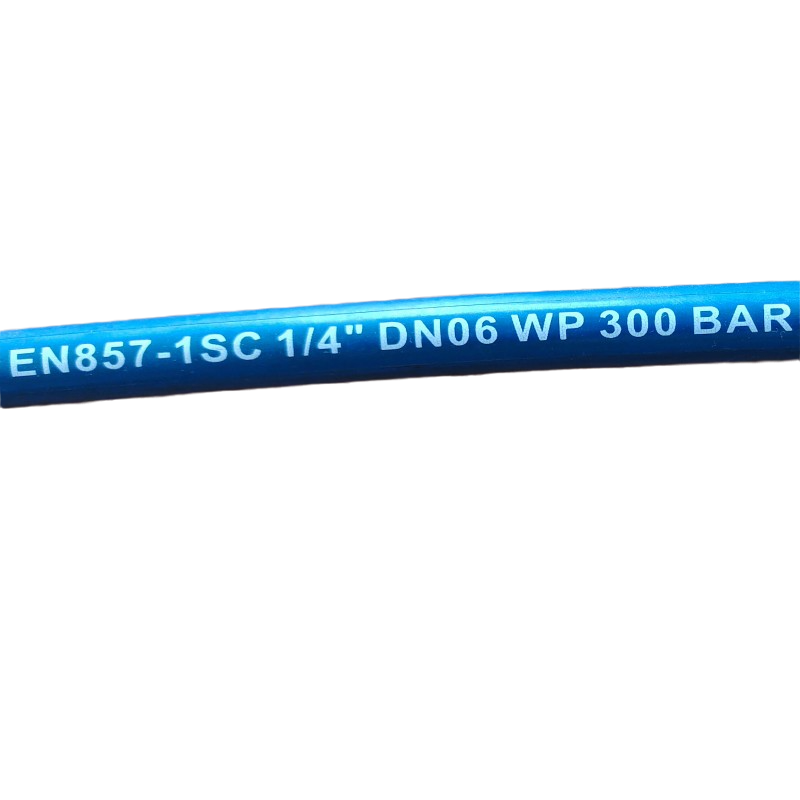
The performance of PTFE hose is governed by a complex interplay of mechanical stresses, fluid compatibility, and environmental factors. Force analysis focuses on burst pressure, tensile strength, and elongation at break. Burst pressure, determined by standardized tests (ASTM D1418), defines the maximum internal pressure the hose can withstand before failure. Tensile strength quantifies the resistance to axial loading, while elongation at break indicates ductility. Environmental resistance is crucial; PTFE’s chemical inertness protects against degradation from corrosive fluids, but prolonged exposure to high temperatures or UV radiation can lead to embrittlement. Compliance requirements vary significantly by industry. For food and beverage applications, the hose must meet FDA 21 CFR 177.1550 standards for food contact safety. Aerospace applications demand adherence to stringent flammability and outgassing specifications (AMS 7117). Automotive applications require resistance to fuels, oils, and coolants, often necessitating specialized PTFE formulations. The hose’s ability to maintain dimensional stability under pressure and temperature fluctuations is critical to prevent leaks and ensure consistent flow rates. The inclusion of reinforcement layers, such as stainless steel braid, significantly enhances burst pressure and kink resistance. Finite element analysis (FEA) is often employed during the design phase to optimize hose geometry and reinforcement configuration for specific application requirements.
Technical Specifications
| Parameter | Unit | Typical Value (Standard Grade PTFE) | Typical Value (Glass Fiber Reinforced PTFE) |
|---|---|---|---|
| Inner Diameter | mm | 6.35 - 152.4 | 6.35 - 152.4 |
| Wall Thickness | mm | 0.76 - 3.81 | 1.52 - 6.35 |
| Operating Pressure (Max) | MPa | 2.4 | 17.2 |
| Burst Pressure | MPa | 6.9 | 51.7 |
| Temperature Range | °C | -200 to +260 | -200 to +260 |
| Tensile Strength | MPa | 20.7 | 48.3 |
Failure Mode & Maintenance
PTFE hose, while remarkably durable, is susceptible to several failure modes. Fatigue cracking can occur under cyclical pressure loading, particularly at connection points. This is exacerbated by improper installation or excessive bending. Delamination, the separation of PTFE layers, often results from inadequate sintering or contamination during manufacturing. Chemical attack, while rare, can occur with molten alkali metals or fluorine. Oxidation, specifically thermal oxidation at extremely high temperatures, can lead to embrittlement and reduced flexibility. Permeation, the diffusion of gases through the hose wall, is a concern in applications involving volatile fluids. Failure analysis typically involves visual inspection for cracks or delamination, pressure testing to identify leaks, and chemical analysis to determine if corrosion has occurred. Maintenance primarily focuses on preventative measures: regular visual inspections for signs of wear, proper storage to avoid UV exposure, and adherence to recommended operating pressure and temperature limits. Avoid sharp bends and kinking, and ensure that fittings are correctly tightened to prevent leakage. If damage is detected, the hose should be replaced immediately. Periodic dielectric strength testing can identify insulation breakdown in electrically sensitive applications.
Industry FAQ
Q: What are the key differences between virgin PTFE and filled PTFE hoses, and when would I choose one over the other?
A: Virgin PTFE offers the highest purity and chemical resistance, making it ideal for critical fluid handling in pharmaceutical and semiconductor applications. Filled PTFE, such as glass fiber reinforced, provides increased strength, stiffness, and dimensional stability, making it suitable for higher pressure applications or where kink resistance is paramount. The trade-off is a slight reduction in chemical inertness and potentially increased permeability. Cost is also a factor; filled PTFE is generally less expensive than virgin PTFE.
Q: How does temperature affect the performance of PTFE hose?
A: PTFE maintains its properties over a wide temperature range (-200°C to +260°C). However, prolonged exposure to temperatures near the upper limit can cause embrittlement and a reduction in flexibility. At very low temperatures, PTFE can become slightly more brittle. Rapid temperature cycling can induce stress cracking, especially if the hose is under pressure.
Q: What fitting types are compatible with PTFE hose, and what considerations are important for ensuring a leak-proof connection?
A: Common fitting types include crimp fittings, compression fittings, and threaded fittings. Crimp fittings offer the most secure connection but require specialized tooling. Compression fittings are versatile but require proper tightening torque. Threaded fittings must be sealed with PTFE tape or an appropriate sealant. Critical considerations include matching the fitting material to the fluid being conveyed and ensuring that the fitting is correctly sized for the hose.
Q: How do you ensure consistent batch-to-batch quality for OEM PTFE hose production?
A: Consistent quality is maintained through rigorous raw material inspection, strict process control during extrusion and sintering, and comprehensive testing of finished goods. Key parameters monitored include resin molecular weight, sintering temperature profiles, dimensional accuracy, burst pressure, and leak testing. Statistical process control (SPC) is employed to identify and address any deviations from established specifications.
Q: What certifications are typically available for PTFE hose used in regulated industries?
A: Depending on the application, common certifications include FDA 21 CFR 177.1550 (food contact), USP Class VI (biocompatibility), RoHS/REACH (environmental compliance), and industry-specific standards like AMS 7117 (aerospace). Material traceability and documentation are essential for compliance.
Conclusion
OEM-supplied PTFE hose represents a highly engineered solution for fluid transfer, offering exceptional chemical resistance, temperature stability, and reliability. Understanding the intricacies of material science, manufacturing processes, and performance characteristics is crucial for selecting the appropriate hose for a specific application. Careful consideration of potential failure modes and adherence to recommended maintenance practices are essential for maximizing lifespan and ensuring safe operation.
The future of PTFE hose technology will likely focus on developing new formulations with enhanced properties, such as improved permeability resistance and higher operating temperatures. Advances in extrusion and sintering techniques will enable the production of more complex hose geometries and tighter dimensional tolerances. Increasingly stringent regulatory requirements will drive the need for more comprehensive material traceability and testing.

