
Apr . 01, 2024 17:55 Back to list
oem teflon hose manufacturers Performance Engineering

Introduction
Polytetrafluoroethylene (PTFE) hoses, commonly referred to as Teflon hoses, represent a critical component in numerous industrial fluid transfer applications. OEM Teflon hose manufacturers specialize in the custom design and production of these hoses, catering to stringent requirements across sectors like automotive, aerospace, chemical processing, food & beverage, and pharmaceuticals. The technical position within the industry chain lies between raw material suppliers (PTFE resin, reinforcing materials) and end-users requiring fluid conveyance solutions. Core performance characteristics center on chemical inertness, broad temperature resistance (-100°F to +500°F), low coefficient of friction, and excellent dielectric properties. These properties make Teflon hoses ideal for handling corrosive fluids, high-purity substances, and demanding operating conditions where other materials would degrade or fail. OEM manufacturers focus on providing tailored solutions, including variations in hose diameter, wall thickness, reinforcement types (braided, spiral-wound), and end fitting configurations. The primary industry pain point is maintaining consistent quality control throughout the manufacturing process, especially concerning permeation rates and long-term resistance to aggressive chemicals. Another challenge is optimizing the balance between flexibility and pressure rating, which often necessitates specific reinforcement strategies.
Material Science & Manufacturing
The foundational material, PTFE, is a synthetic fluoropolymer composed of carbon and fluorine atoms. Its exceptionally stable carbon-fluorine bonds contribute to its remarkable chemical inertness and thermal stability. Raw material selection includes PTFE resin grades with varying molecular weights, influencing processability and final product performance. Reinforcement materials commonly employed are stainless steel (304, 316L), aramid fibers (Kevlar), and other high-strength polymers. Manufacturing typically involves several key steps. Firstly, PTFE resin is processed into tubing via extrusion, utilizing a ram or screw extrusion process. Critical parameters include extrusion temperature (around 380°C), screw speed, and die design, all impacting tube diameter and surface finish. Secondly, reinforcement layers are applied. Braiding is a common method, where strands of reinforcement material are woven around the PTFE tube, providing burst strength and pressure resistance. Spiral winding involves wrapping reinforcement around the tube in a helical pattern. Thirdly, sintering is essential to fuse the PTFE particles and achieve desired mechanical properties. Sintering occurs at temperatures above the PTFE melting point (327°C) but below its decomposition temperature. Precise temperature control and sintering time are crucial. Finally, end fitting attachment is performed, often using crimping, swaging, or adhesive bonding techniques. Post-manufacturing quality control involves dimensional inspection, pressure testing, and chemical resistance testing. The chemical compatibility of PTFE is exceptionally high, but prolonged exposure to certain alkali metals and high-temperature fluorinated compounds can cause degradation. The permeation rate of gases through PTFE is relatively high compared to other polymers; this is mitigated through material selection and wall thickness optimization.
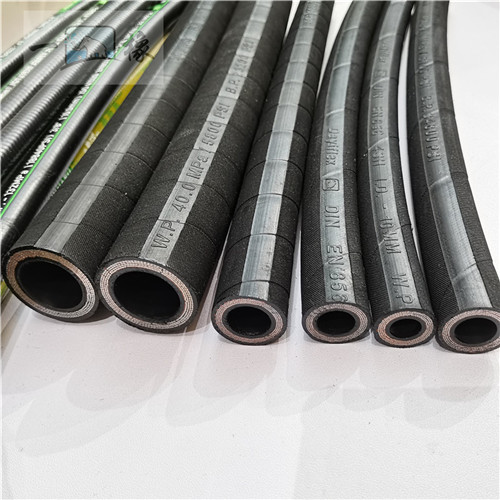
Performance & Engineering
The performance of Teflon hoses is fundamentally governed by its resistance to internal pressure, external loads, and environmental factors. Burst pressure is a critical parameter, determined by the hose diameter, wall thickness, and reinforcement type. Force analysis involves calculating hoop stress within the PTFE tube and axial stress in the reinforcement layers under internal pressure. Finite element analysis (FEA) is often utilized to model stress distribution and optimize hose design. Environmental resistance is paramount. While PTFE is highly resistant to most chemicals, exposure to certain solvents can cause swelling or softening. UV exposure can lead to surface degradation, although the underlying material properties are largely unaffected. Temperature cycling can induce thermal stress, potentially leading to cracking or delamination. Compliance requirements vary depending on the application. For food & beverage applications, hoses must comply with FDA regulations (21 CFR 177.1550) regarding food contact materials. For pharmaceutical applications, compliance with USP Class VI standards is often required. In the automotive industry, hoses must meet SAE J30R9 specifications for fuel lines and coolant hoses. Functional implementation considerations include hose routing, bend radius limitations (typically 5-10 times the hose diameter), and compatibility with end fittings. Proper installation techniques are critical to prevent kinking, twisting, and premature failure. Static dissipation requirements may necessitate the incorporation of conductive fillers into the PTFE matrix, particularly in applications where static electricity buildup is a concern. Permeation rates must be considered for applications involving hazardous or high-value fluids. The selection of appropriate end fittings is crucial to ensure leak-free connections and compatibility with the fluid being conveyed.
Technical Specifications
| Parameter | Unit | Typical Value (Standard Grade PTFE) | Reinforcement: Stainless Steel Braid |
|---|---|---|---|
| Operating Pressure | psi | 150 | 1000 |
| Burst Pressure | psi | 600 | 4000 |
| Temperature Range | °F | -100 to +500 | -100 to +500 |
| Tensile Strength | psi | 2000 | 3500 |
| Elongation at Break | % | 150 | 80 |
| Permeation Rate (Helium) | cc-mil/min-ft²-psi | 10 | 8 |
Failure Mode & Maintenance
Common failure modes in Teflon hoses include permeation-induced swelling, stress cracking, and delamination. Permeation, particularly of small gas molecules, can cause the PTFE to swell over time, reducing its mechanical properties. Stress cracking can occur under sustained mechanical load, especially in the presence of aggressive chemicals. Delamination refers to the separation of PTFE layers or the detachment of reinforcement, often due to inadequate bonding or thermal cycling. Fatigue cracking can result from repeated flexing or vibration. Oxidation is generally not a significant failure mode for PTFE due to its exceptional chemical inertness, but high-temperature exposure to oxidizing environments can cause surface degradation. Another failure mode specific to braided hoses is corrosion of the stainless steel braid, particularly in chloride-containing environments. Maintenance primarily involves visual inspection for signs of damage, such as cracks, swelling, or discoloration. Regular pressure testing should be performed to verify hose integrity. Hose replacement is recommended based on service life, operating conditions, and visual inspection results. Cleaning should be performed with mild detergents and water; avoid harsh solvents that could damage the PTFE. Proper storage is essential; hoses should be stored in a cool, dry place, away from direct sunlight and oxidizing agents. For braided hoses, inspect the braid for signs of corrosion and consider applying a corrosion inhibitor if necessary. End fittings should be inspected for leaks or damage and replaced if required. Record keeping of hose installation dates and maintenance activities is crucial for tracking performance and predicting potential failures.
Industry FAQ
Q: What is the impact of PTFE molecular weight on hose performance?
A: Higher molecular weight PTFE resins generally exhibit improved creep resistance, tensile strength, and chemical inertness. However, they can be more difficult to process during extrusion, requiring higher temperatures and pressures. Lower molecular weight grades offer easier processability but may have reduced long-term performance characteristics.
Q: How does the reinforcement type affect the pressure rating and flexibility of the hose?
A: Stainless steel braiding provides the highest pressure rating but reduces flexibility. Aramid fiber reinforcement offers a good balance between pressure resistance and flexibility. Spiral-wound reinforcement provides excellent flexibility but lower burst strength compared to braiding.
Q: What are the key considerations when selecting end fittings for Teflon hoses?
A: End fitting material compatibility with the fluid and hose material is crucial. Connection type (crimped, swaged, threaded) must be appropriate for the pressure rating and application. Fitting size must match the hose inner diameter. Leak-tightness and resistance to vibration are also important considerations.
Q: Can Teflon hoses be used for vacuum applications?
A: While PTFE has good inherent vacuum properties, Teflon hoses are not ideally suited for prolonged, high-vacuum service. The hose may collapse under negative pressure due to its flexibility. Reinforced hoses with spiral wound reinforcement are better suited for vacuum applications, providing structural support.
Q: What is the expected service life of a Teflon hose?
A: Service life is highly dependent on operating conditions, fluid compatibility, and proper maintenance. Under normal conditions, a Teflon hose can last for several years. However, exposure to aggressive chemicals, high temperatures, or extreme pressures can significantly reduce its service life. Regular inspection and replacement based on visual assessment and pressure testing are recommended.
Conclusion
OEM Teflon hoses represent a sophisticated fluid transfer solution engineered for demanding applications. Their exceptional chemical inertness, thermal stability, and low friction characteristics, combined with customizable reinforcement options, make them indispensable in various industries. Successful implementation relies on a thorough understanding of material science, manufacturing processes, and performance parameters.
The continued development of PTFE hose technology is focused on enhancing permeation resistance, improving high-temperature performance, and reducing manufacturing costs. Future trends include the exploration of novel PTFE formulations and reinforcement materials, as well as the adoption of advanced manufacturing techniques. Careful consideration of these factors will ensure optimal performance and longevity of Teflon hose systems.