
Apr . 01, 2024 17:55 Back to list
oem suction hose supplier Performance Analysis
Introduction
OEM suction hoses are critical components in fluid transfer systems across a diverse range of industrial applications, including agriculture, mining, construction, chemical processing, and marine engineering. These hoses are specifically designed to convey liquids and slurries under vacuum conditions, requiring robust construction and specialized material selection to prevent collapse and ensure efficient operation. The performance of a suction hose is fundamentally linked to its ability to maintain its internal diameter under negative pressure, resist abrasion, and withstand the chemical compatibility demands of the conveyed media. OEM supply focuses on customization, delivering hoses tailored to specific application requirements concerning length, diameter, reinforcement, and end fittings. A key industry pain point revolves around the premature failure of hoses due to inadequate material selection for the specific fluid being transferred, leading to costly downtime and potential environmental hazards. This guide provides a comprehensive overview of suction hose technology, encompassing material science, manufacturing processes, performance considerations, failure modes, and relevant industry standards.
Material Science & Manufacturing
The core material for most suction hoses is a thermoplastic elastomer (TPE) or rubber compound. Common materials include Polyvinyl Chloride (PVC), Polyurethane (PU), Ethylene Propylene Diene Monomer (EPDM) rubber, Nitrile Butadiene Rubber (NBR), and Chlorinated Polyethylene (CPE). PVC offers cost-effectiveness and good abrasion resistance but can become brittle at low temperatures. PU provides excellent abrasion resistance and flexibility but may be susceptible to hydrolysis. EPDM excels in outdoor applications due to its resistance to UV radiation, ozone, and weathering. NBR exhibits superior oil resistance, while CPE offers a balance of properties, including good chemical resistance and weathering characteristics. The reinforcement layer is crucial for maintaining hose integrity under vacuum. Common reinforcement materials include a rigid PVC helix, multiple textile plies (typically polyester or nylon), and steel wire helices for high-pressure applications. The manufacturing process generally involves extrusion of the hose wall, followed by the insertion of the reinforcement, and finally, the application of end fittings. Critical parameters during extrusion include melt temperature, screw speed, and die pressure, which directly influence the wall thickness, material density, and surface finish. Parameter control during helix winding is vital to ensure consistent pitch and prevent hose distortion. Post-manufacturing quality control checks include hydrostatic testing to verify pressure resistance and dimensional inspections to confirm compliance with specifications. Chemical compatibility testing, using standardized immersion tests, is performed to validate material suitability for the intended fluid.

Performance & Engineering
Suction hose performance is governed by several key engineering principles. The primary consideration is the ability to withstand negative pressure without collapsing. This is directly related to the hose’s hoop strength, which is influenced by the wall thickness, material properties, and reinforcement structure. The vacuum rating, typically expressed in inches of mercury (inHg) or kilopascals (kPa), is a critical specification. Abrasion resistance is another vital performance parameter, particularly in applications involving abrasive slurries or particulate matter. Taber abrasion testing is commonly used to quantify abrasion resistance. Flexural fatigue, induced by repeated bending and unbending, is a common failure mechanism. Testing involves subjecting the hose to cyclic bending and measuring the time to failure. Environmental resistance, including resistance to UV radiation, ozone, and chemicals, is paramount for outdoor and industrial applications. These properties are evaluated through accelerated weathering tests and chemical immersion tests. End fitting attachment is a critical aspect of hose performance; secure connections are essential to prevent leaks and failures. Attachment methods include clamping, crimping, and bonding. Finite Element Analysis (FEA) is employed to model hose behavior under various loading conditions, optimizing reinforcement design and predicting performance characteristics. Compliance with relevant regulations, such as FDA requirements for food-grade hoses or REACH/RoHS compliance for restricted substances, is mandatory for specific applications.
Technical Specifications
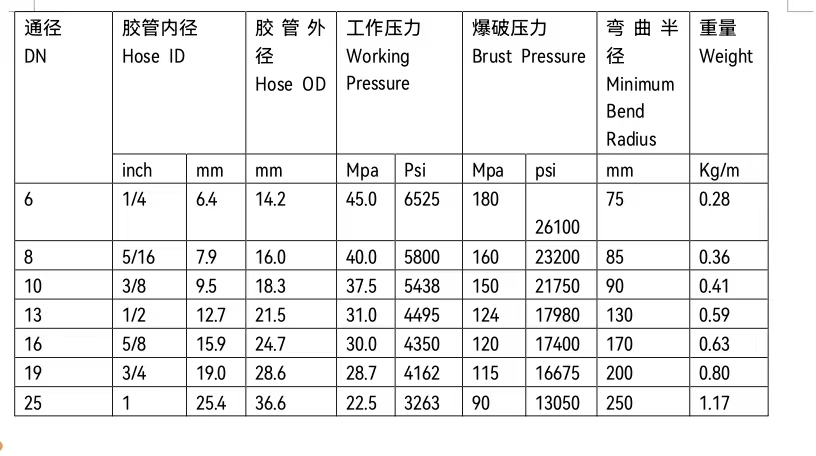
| Parameter | Unit | Typical Value (PVC Suction Hose) | Typical Value (EPDM Suction Hose) |
|---|---|---|---|
| Working Pressure | psi | 150 | 100 |
| Vacuum Rating | inHg | 29 | 27 |
| Temperature Range | °F | -20 to 150 | -40 to 212 |
| Abrasion Resistance (Taber Abrasion Index) | mg loss | 50 | 75 |
| Tensile Strength | psi | 1200 | 1500 |
| Elongation at Break | % | 300 | 400 |
Failure Mode & Maintenance
Common failure modes in suction hoses include collapse due to insufficient vacuum resistance, cracking due to flexural fatigue, permeation leading to fluid loss, and degradation caused by chemical attack or UV exposure. Collapse typically occurs when the negative pressure exceeds the hose's capacity, causing the wall to buckle inward. Flexural fatigue arises from repeated bending, leading to micro-cracks that propagate over time. Permeation is particularly problematic with certain fluids that can diffuse through the hose wall. Chemical attack occurs when the hose material is incompatible with the conveyed fluid, resulting in swelling, softening, or dissolution. UV degradation occurs when the hose is exposed to sunlight, causing the material to become brittle and crack. Preventative maintenance includes regular visual inspections for cracks, abrasions, and leaks. Hoses should be replaced if any damage is detected. Proper storage is also essential; hoses should be stored in a cool, dry place away from direct sunlight and chemicals. Avoid sharp bends and kinking during installation and operation. Regular pressure testing can help identify potential weaknesses before they lead to failure. For heavily soiled hoses, gentle cleaning with mild soap and water is recommended; avoid harsh solvents or abrasive cleaners. Following manufacturer’s recommendations for hose life and operating parameters is critical for maximizing service life and preventing catastrophic failures.
Industry FAQ
Q: What material is best suited for a suction hose handling abrasive silica slurry?
A: For abrasive silica slurry, a polyurethane (PU) hose with a high-abrasion resistant liner and a robust fabric reinforcement is recommended. PU offers superior abrasion resistance compared to PVC or rubber compounds. Consider a hose specifically designed for slurry transfer with an extended wear strip to further enhance lifespan.
Q: How does temperature affect the vacuum rating of a PVC suction hose?
A: Elevated temperatures decrease the flexibility of PVC, reducing its ability to withstand negative pressure. The vacuum rating is typically specified at room temperature (73°F / 23°C). Operating at higher temperatures will significantly reduce the hose’s vacuum capability and increase the risk of collapse. De-rating factors should be applied based on the operating temperature.
Q: What are the key considerations when selecting end fittings for a suction hose?
A: End fittings must be compatible with both the hose material and the fluid being conveyed. Consider the pressure and vacuum requirements, as well as the connection type (e.g., threaded, flanged, quick-disconnect). Ensure the fittings are securely attached to the hose to prevent leaks and separation. Stainless steel fittings are generally recommended for corrosive environments.
Q: How can I prevent kinking in a flexible suction hose?
A: Kinking occurs when the hose is bent too sharply, restricting flow and potentially causing damage. Use hoses with a larger bend radius. Employ hose guards or support structures to prevent excessive bending. Avoid pulling the hose at a sharp angle. Proper hose routing and support are crucial for maintaining flow and extending service life.
Q: Is there a standard test method for evaluating the chemical resistance of a suction hose?
A: Yes, ASTM D543 (Standard Test Method for Rubber Industry Products—Chemical Analysis) and ISO 1817 (Rubber, vulcanized or thermoplastic — Determination of the resistance to ageing by immersion in liquids) are commonly used to assess chemical resistance. These tests involve immersing samples of the hose material in the target fluid for a specified period and evaluating changes in physical properties, such as weight, hardness, and tensile strength.
Conclusion
The selection and application of OEM suction hoses require a comprehensive understanding of material science, engineering principles, and industry standards. Failure to properly consider these factors can result in premature failure, costly downtime, and potential safety hazards. The key to optimal performance lies in choosing a hose material and reinforcement structure that are specifically tailored to the intended application, including the type of fluid being conveyed, the operating pressure and temperature, and the environmental conditions.
Looking forward, advancements in material technology and manufacturing processes will continue to drive improvements in suction hose performance and durability. The development of new TPEs with enhanced chemical resistance and abrasion resistance, as well as the integration of smart sensors for real-time monitoring of hose condition, will further enhance the reliability and efficiency of fluid transfer systems. A proactive approach to maintenance, including regular inspections and preventative replacement, remains critical for maximizing service life and ensuring safe operation.

