
Apr . 01, 2024 17:55 Back to list
oem suction hose manufacturers Performance Analysis

Introduction
OEM suction hoses are critical components in fluid transfer systems across diverse industrial sectors, including agriculture, mining, construction, chemical processing, and wastewater management. These hoses are specifically designed to draw fluids – liquids, slurries, and even gases – from one location to another. Unlike pressure hoses optimized for delivery, suction hoses must withstand vacuum conditions and prevent collapse. The industry chain begins with raw material suppliers (rubber compounds, thermoplastic polymers, reinforcement materials), progresses through hose manufacturers specializing in compounding, extrusion, braiding/spiraling, and end-fitting attachment, and culminates with integration into larger industrial systems by OEMs. Core performance characteristics revolve around maintaining suction integrity, resisting abrasion, ensuring chemical compatibility, and providing a defined operational lifespan. A primary challenge lies in balancing flexibility, which is crucial for maneuverability, with structural rigidity to prevent implosion under vacuum. The selection of appropriate materials and construction methods is paramount to achieving optimal performance and reliability.
Material Science & Manufacturing
Suction hoses are commonly manufactured from a range of materials, each offering distinct advantages and disadvantages. Rubber compounds, including Natural Rubber (NR), Styrene-Butadiene Rubber (SBR), Nitrile Rubber (NBR), and Ethylene Propylene Diene Monomer (EPDM), are prevalent due to their inherent flexibility and resilience. Thermoplastic Polyurethane (TPU) and Polyvinyl Chloride (PVC) are also employed, offering cost-effectiveness and chemical resistance. Reinforcement materials, such as textile braiding (polyester, nylon) or steel wire spiraling, provide structural support to withstand vacuum pressure.
The manufacturing process typically begins with compound preparation, where raw rubber or thermoplastic polymers are blended with additives (plasticizers, fillers, antioxidants, curing agents) to achieve desired physical properties. Extrusion forms the hose body, followed by reinforcement application. Braiding involves interlacing textile yarns around the hose, while spiraling embeds steel wire in a helical pattern. Curing (for rubber compounds) or cooling (for thermoplastics) solidifies the material. End fittings – typically metal or plastic – are then attached using methods like crimping, swaging, or bonding. Precise control of extrusion temperature, curing time, braiding tension, and fitting attachment pressure are crucial for ensuring consistent quality and preventing defects like porosity, delamination, and premature failure. Chemical compatibility testing of the compound with the intended fluids is also essential during material selection.
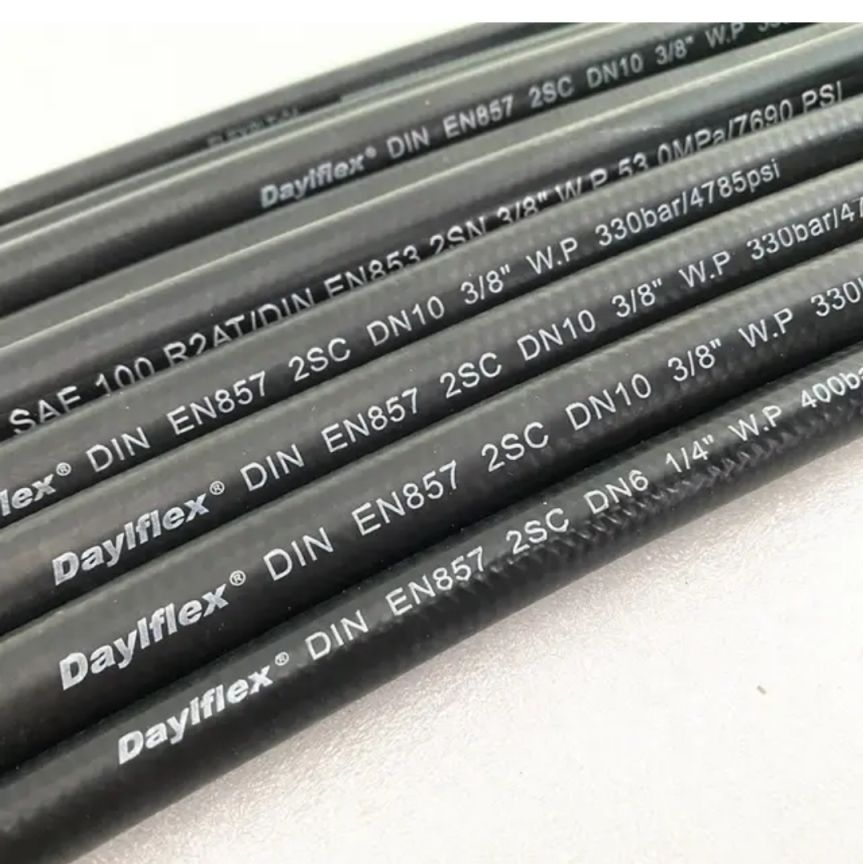
Performance & Engineering
The performance of a suction hose is governed by several key engineering principles. The primary concern is resistance to collapse under vacuum. This is quantified by measuring the hose's ability to withstand a specified negative pressure without imploding. Force analysis involves calculating hoop stress – the circumferential tension in the hose wall – which is proportional to the vacuum pressure and the hose’s radius. Reinforcement layers significantly reduce hoop stress. Abrasion resistance is crucial, particularly in applications involving abrasive slurries or particulate matter. This is evaluated using Taber abrasion testing. Chemical compatibility ensures that the hose material doesn’t degrade or leach contaminants into the fluid being transferred. Environmental resistance encompasses factors like UV exposure, ozone degradation, and temperature extremes.
Compliance requirements vary depending on the application and region. For example, hoses used in food and beverage applications must comply with FDA regulations (US) or EU 1935/2004 (Europe). Hoses used in oil and gas extraction must meet API standards. Static grounding requirements are critical for flammable fluids to prevent static electricity buildup and potential ignition. Bending radius is an important engineering consideration; exceeding the minimum recommended bending radius can induce stress and reduce the hose's lifespan. Fatigue life is also a critical parameter, especially in applications with cyclical loading and unloading.
Technical Specifications
| Parameter | Unit | Typical Value (Rubber Hose) | Typical Value (TPU Hose) |
|---|---|---|---|
| Working Pressure (Suction) | PSI | -30 | -29 |
| Burst Pressure | PSI | 120 | 116 |
| Tensile Strength | MPa | 15 | 20 |
| Elongation at Break | % | 400 | 300 |
| Hardness (Shore A) | 65 | 90 | |
| Operating Temperature Range | °C | -40 to +85 | -50 to +90 |
Failure Mode & Maintenance
Common failure modes in suction hoses include implosion due to insufficient reinforcement, cracking due to fatigue or UV exposure, delamination between reinforcement layers and the hose body, and chemical degradation. Implosion typically occurs when the vacuum pressure exceeds the hose’s collapse resistance. Fatigue cracking initiates from stress concentrations, often near fittings or bends. UV exposure causes oxidation and embrittlement of the rubber or polymer matrix. Chemical degradation results from incompatibility between the hose material and the transported fluid, leading to swelling, softening, or dissolution.
Preventive maintenance is crucial for extending hose lifespan. Regular visual inspections should be conducted to identify cracks, abrasions, or swelling. Hoses should be replaced if any damage is detected. Avoid exceeding the hose’s rated working pressure or temperature limits. Proper storage – away from direct sunlight, ozone sources, and extreme temperatures – is essential. For hoses used with abrasive materials, consider installing abrasion-resistant liners. Regularly check fittings for tightness and corrosion. Periodically cleaning the exterior of the hose can prevent buildup of contaminants that accelerate degradation. If dealing with static-sensitive fluids, ensure proper grounding connections are maintained and inspected.
Industry FAQ
Q: What is the primary difference between a suction hose and a delivery hose?
A: The key distinction lies in their design to handle different pressure conditions. Suction hoses are engineered to withstand negative pressure (vacuum) and prevent collapse, typically employing robust reinforcement. Delivery hoses are designed to withstand positive pressure and are optimized for flow rate and pressure resistance, often with thinner walls. Using a delivery hose for suction applications can lead to catastrophic implosion.
Q: How do I determine the correct reinforcement type for my application?
A: The choice of reinforcement depends on the vacuum pressure, fluid type, and operating temperature. Textile braiding is suitable for lighter-duty applications with moderate vacuum. Steel wire spiraling provides significantly higher collapse resistance and is preferred for heavy-duty applications and abrasive fluids. Consider the chemical compatibility of the reinforcement material with the fluid being transferred.
Q: What are the implications of using a hose with an incorrect chemical compatibility rating?
A: Incorrect chemical compatibility can lead to rapid degradation of the hose material, resulting in swelling, softening, cracking, or leaching of contaminants into the fluid. This can compromise the integrity of the system, lead to leaks, and potentially cause environmental hazards or equipment damage.
Q: How often should I inspect my suction hoses for wear and tear?
A: The frequency of inspection depends on the severity of the application and the operating environment. As a general guideline, perform visual inspections at least monthly, or more frequently in high-stress applications. Look for cracks, abrasions, swelling, discoloration, or loose fittings. Document inspection findings and maintain a maintenance log.
Q: What are the consequences of exceeding the minimum bending radius of a suction hose?
A: Exceeding the minimum bending radius introduces localized stress concentrations in the hose wall, which can lead to premature fatigue cracking and failure. This is particularly critical in vacuum applications, as the stress is compounded by the negative pressure. Always adhere to the manufacturer's recommended bending radius.
Conclusion
The selection and implementation of OEM suction hoses necessitate a thorough understanding of material science, engineering principles, and application-specific requirements. Maintaining suction integrity, resisting abrasion, and ensuring chemical compatibility are paramount to operational efficiency and safety. The correct choice of materials and reinforcement, coupled with rigorous adherence to performance specifications and a robust preventive maintenance program, will maximize hose lifespan and minimize the risk of catastrophic failure.
Future trends in suction hose technology are likely to focus on developing lighter-weight materials with enhanced strength and chemical resistance, as well as incorporating smart sensing capabilities for real-time monitoring of hose condition and performance. Increased emphasis on sustainable materials and manufacturing processes will also drive innovation in this sector. Proper implementation of these technologies will be vital for addressing the evolving demands of increasingly complex industrial fluid transfer systems.