
Apr . 01, 2024 17:55 Back to list
oem steel braided teflon hose supplier Performance Analysis
Introduction
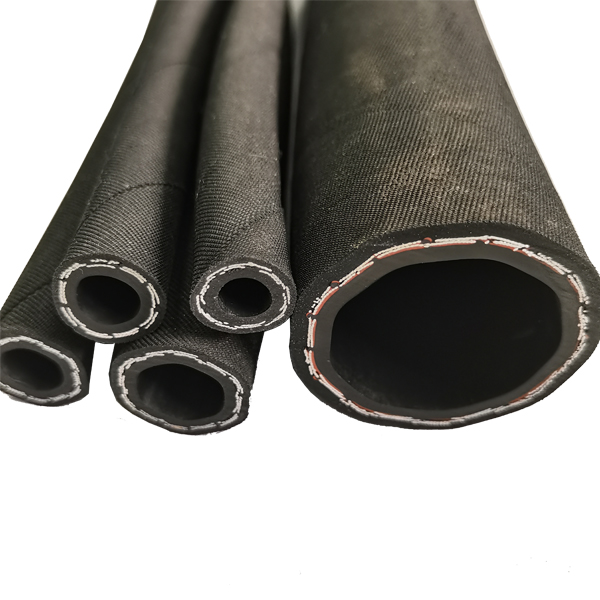
Steel braided Teflon hose represents a critical component in fluid transfer systems across numerous industrial applications, including automotive, aerospace, chemical processing, and oil & gas. This composite hose combines the chemical inertness of Teflon (Polytetrafluoroethylene - PTFE) with the high-pressure resistance and mechanical strength provided by a stainless steel wire braid. Its technical position in the industrial chain lies as a specialized intermediary between raw material suppliers (PTFE resins, stainless steel wire) and end-users requiring reliable, flexible, and chemically resistant fluid conveyance. Core performance characteristics center on maintaining fluid integrity, withstanding extreme temperatures and pressures, resisting corrosion, and providing long-term durability in harsh operating environments. The increasing demand for tighter emissions controls, coupled with the need for higher operational efficiencies, has driven adoption of these hoses as a superior alternative to traditional rubber and plastic counterparts. OEM supply focuses on customization of hose assemblies to meet precise application requirements, encompassing variations in hose diameter, length, end fitting types, and braid configurations.
Material Science & Manufacturing
The primary raw material, PTFE, exhibits exceptional chemical resistance due to the strong carbon-fluorine bonds, rendering it inert to most corrosive substances. Its low coefficient of friction minimizes flow restriction and enhances fluid transfer efficiency. However, PTFE is inherently flexible and requires reinforcement for pressure containment. The stainless steel braid, typically 304 or 316 grade austenitic stainless steel, provides this reinforcement. 316 stainless steel offers superior corrosion resistance, particularly in chloride-rich environments. Manufacturing involves several key stages. First, PTFE resin is processed via extrusion to form a seamless tube. Precise control of extrusion temperature and die geometry are critical to ensure dimensional accuracy and minimize defects. The steel braid is then helically wound around the PTFE tube, with braid pitch and coverage directly influencing the hose's pressure rating and flexibility. Following braiding, a sealant layer, often composed of PTFE or a compatible fluoropolymer, is applied to prevent fluid leakage between the braid and the tube. Finally, end fittings – typically stainless steel, carbon steel, or brass – are crimped or swaged onto the hose ends, creating a secure connection. Crimping parameters (force, die size) are crucial for maintaining the integrity of the connection and preventing premature failure. Quality control encompasses dimensional checks, pressure testing (hydrostatic and pneumatic), leak testing, and material certification.
Performance & Engineering
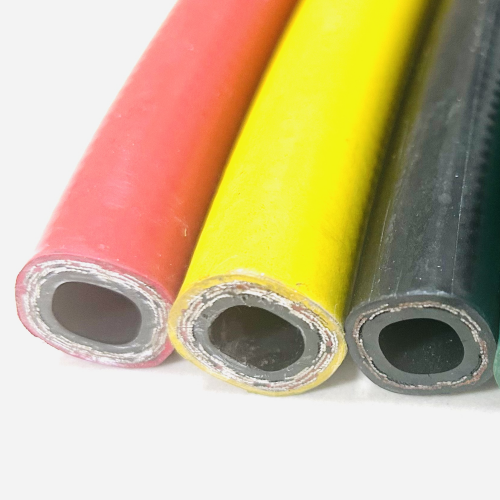
The performance of steel braided Teflon hose is governed by several engineering principles. Burst pressure is determined by the tensile strength of the braid material, the braid coverage percentage, the PTFE tube wall thickness, and the hose diameter. A higher braid coverage provides greater reinforcement, increasing the burst pressure. Flexibility, measured by bend radius, is influenced by the braid pitch and the PTFE tube’s inherent flexibility. A tighter braid pitch generally reduces flexibility but increases pressure resistance. Temperature resistance is a critical parameter; PTFE maintains its properties over a wide temperature range (-100°C to +260°C), but the end fittings may have limitations. Chemical compatibility is paramount; PTFE is generally compatible with most chemicals, but specific applications require verification. Fatigue life, the hose’s ability to withstand repeated pressure cycling, depends on the material properties, operating pressure, and temperature. Finite Element Analysis (FEA) is often employed to optimize hose designs and predict performance under various loading conditions. Compliance with industry standards, such as SAE J526 (for automotive applications) and ISO 6807 (for hydraulic applications), is essential to ensure safety and reliability. Consideration must also be given to potential electrostatic discharge (ESD) buildup, especially when handling flammable fluids; conductive PTFE liners or grounding braids can mitigate this risk.
Technical Specifications
| Parameter | Unit | Typical Value (3/8" ID Hose) | Testing Standard |
|---|---|---|---|
| Inner Diameter (ID) | mm | 9.5 | ASTM E283 |
| Outer Diameter (OD) | mm | 16.5 | ASTM E283 |
| Working Pressure | MPa | 20.7 | SAE J526 |
| Burst Pressure | MPa | 82.7 | SAE J526 |
| Temperature Range | °C | -65 to +260 | ASTM D348 |
| Braid Material | - | 304 Stainless Steel | ASTM A240 |
| PTFE Resin Type | - | Virgin PTFE | ASTM D3145 |
Failure Mode & Maintenance
Common failure modes in steel braided Teflon hose include braid fatigue cracking, PTFE tube degradation, end fitting failure, and permeation. Braid fatigue cracking typically occurs at points of high stress concentration, such as near end fittings or at sharp bends, resulting from repeated pressure cycling or mechanical abrasion. PTFE tube degradation can manifest as cracking, swelling, or discoloration due to exposure to incompatible chemicals or excessive temperatures. End fitting failures often arise from improper crimping, corrosion, or material incompatibility. Permeation, the diffusion of fluids through the PTFE tube wall, can occur with certain gases or low molecular weight liquids. Maintenance involves regular visual inspections for signs of damage, such as cracks, abrasions, or leaks. Pressure testing should be performed periodically to verify the hose's integrity. Proper routing and support are essential to prevent kinking and abrasion. Avoid exceeding the hose's maximum working pressure or temperature limits. If chemical compatibility is uncertain, conduct a compatibility test before use. Damaged hoses should be replaced immediately; attempting repairs can compromise the hose’s integrity. Proper storage is also crucial; hoses should be stored in a cool, dry place away from direct sunlight and corrosive substances.
Industry FAQ
Q: What is the impact of braid construction (single vs. double braid) on hose performance?
A: Double braid construction significantly increases the hose’s pressure rating and burst strength compared to single braid. The additional layer of braid provides greater reinforcement, allowing the hose to withstand higher pressures and more severe operating conditions. However, double braid hoses are generally less flexible than single braid hoses.
Q: How does the choice of end fitting material affect the overall hose system?
A: The end fitting material must be chemically compatible with both the hose and the fluid being conveyed. Stainless steel fittings offer excellent corrosion resistance and are suitable for most applications. Carbon steel fittings are cost-effective but may be susceptible to corrosion in certain environments. Brass fittings should be avoided with ammonia-based fluids as they can form explosive compounds.
Q: What considerations are important when selecting a hose for high-temperature applications?
A: Ensure the PTFE resin and end fitting materials are rated for the operating temperature. Consider the potential for thermal expansion and contraction, which can stress the hose connections. Verify the hose’s resistance to the fluid at elevated temperatures.
Q: What are the common causes of permeation in Teflon hose and how can it be mitigated?
A: Permeation is more likely to occur with gases or low molecular weight liquids. Using a thicker PTFE wall, selecting a higher-grade PTFE resin, or employing a multi-layer hose construction can reduce permeation rates. Conductive PTFE liners can also help dissipate static charges that contribute to permeation.
Q: How important is proper crimping during end fitting attachment?
A: Proper crimping is absolutely critical for ensuring a secure and leak-proof connection. Incorrect crimping force can result in loose fittings, premature failure, or hose damage. Crimping procedures should be validated and regularly inspected to maintain consistent quality.
Conclusion
Steel braided Teflon hose represents a robust and versatile solution for demanding fluid transfer applications. Its unique combination of chemical inertness, high-pressure resistance, and flexibility makes it superior to many traditional hose materials. Understanding the interplay between material properties, manufacturing processes, and engineering principles is crucial for selecting the optimal hose configuration for a given application. Careful attention to maintenance and proper operating procedures will maximize the hose’s lifespan and ensure reliable performance.
Looking ahead, advancements in PTFE resin technology and braid materials will continue to enhance the performance characteristics of these hoses. The development of smart hoses equipped with sensors for pressure, temperature, and leak detection will enable predictive maintenance and improve system safety. Furthermore, increased focus on sustainability will drive the development of environmentally friendly PTFE alternatives and recycling programs.