
Apr . 01, 2024 17:55 Back to list
oem steel braided teflon hose factories Performance Analysis

Introduction
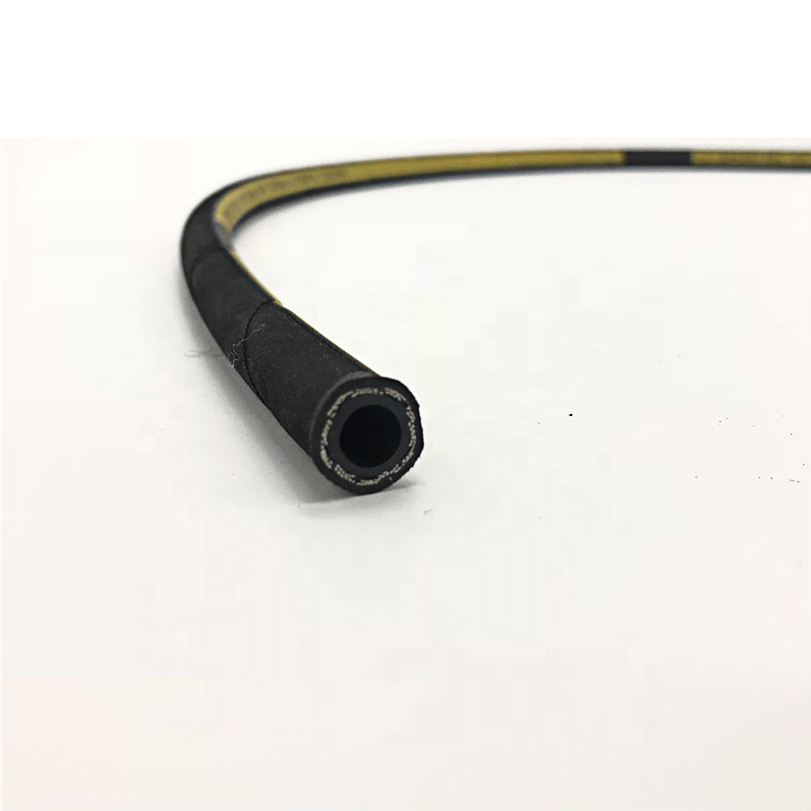
OEM steel braided Teflon hose represents a critical component in fluid transfer systems across diverse industries including automotive, aerospace, industrial machinery, and oil & gas. These hoses are engineered to provide a robust and reliable solution for conveying a wide range of media – from hydraulic fluids and fuels to aggressive chemicals and high-temperature gases – under extreme pressure and temperature conditions. Their construction, utilizing a PTFE (Polytetrafluoroethylene) inner core reinforced with a stainless steel braid, provides exceptional chemical inertness, low permeation rates, and high burst strength. This guide provides an in-depth technical overview of these hoses, covering material science, manufacturing processes, performance characteristics, failure modes, and relevant industry standards. The core pain point addressed by this technology is the need for reliable, leak-free fluid transfer in demanding environments where conventional rubber hoses are inadequate due to limitations in temperature resistance, chemical compatibility, or pressure capacity.
Material Science & Manufacturing
The performance of steel braided Teflon hose is fundamentally dictated by the properties of its constituent materials. The inner core utilizes PTFE, a fluoropolymer known for its exceptional chemical resistance, wide temperature operating range (-100°F to +500°F), and low coefficient of friction. PTFE’s inherent properties stem from its strong carbon-fluorine bonds, rendering it virtually impervious to most chemicals. However, PTFE exhibits creep under sustained loads, necessitating reinforcement. The reinforcing braid is typically constructed from Type 304 or 316 stainless steel, chosen for its high tensile strength, corrosion resistance, and flexibility. The steel is manufactured into wire, then braided using specialized machinery to achieve a desired coverage percentage (typically ranging from 40% to 60%). This coverage dictates the hose's burst pressure capability. Manufacturing processes involve extrusion of the PTFE core, followed by precise braiding of the steel reinforcement, and finally, the application of an outer protective layer, often composed of woven polyester or a fluoropolymer film. Critical parameters in the extrusion process include die temperature, screw speed, and material feed rate, all influencing the PTFE core's density and uniformity. Braid density, wire diameter, and braid angle are carefully controlled to achieve the specified pressure rating. Post-braiding, the hose undergoes rigorous testing to ensure dimensional accuracy, burst pressure, and leak tightness.
Performance & Engineering
The performance of steel braided Teflon hose is evaluated based on several key engineering parameters. Burst pressure, determined via hydrostatic testing according to SAE J526, is a primary metric, typically ranging from 200 PSI to 10,000 PSI or higher, dependent on braid construction and hose diameter. Tensile strength, assessed per ASTM D412, quantifies the hose's resistance to axial loading. Flex fatigue resistance, crucial for applications involving continuous bending, is evaluated through cyclic pressure and bending tests. Permeation rate, especially critical for fuel and refrigerant lines, is measured using SAE J1787 to quantify the rate at which fluids migrate through the hose wall. Environmental resistance encompasses performance under exposure to ultraviolet radiation, ozone, and various chemicals. Degradation, measured through changes in tensile strength and elongation, must be within acceptable limits. Force analysis considers hoop stress within the PTFE liner and shear stress within the steel braid under internal pressure. Finite element analysis (FEA) is often employed to optimize hose geometry and braid configuration for maximizing burst pressure and minimizing weight. Compliance requirements vary by industry and application; automotive hoses must meet FMVSS 106 standards for fuel lines, while aerospace hoses require adherence to AS9100 and related aerospace specifications.
Technical Specifications
| Parameter | Unit | Typical Value (1/2" ID Hose) | Test Standard |
|---|---|---|---|
| Working Pressure | PSI | 3000 | SAE J526 |
| Burst Pressure | PSI | 9000 | SAE J526 |
| Temperature Range | °F | -65 to +500 | ASTM D297 |
| Inner Diameter (ID) | inch | 0.5 | Dimensional Control |
| Outer Diameter (OD) | inch | 0.75 | Dimensional Control |
| Braid Coverage | % | 50 | Visual Inspection |
Failure Mode & Maintenance
Steel braided Teflon hose, despite its robust construction, is susceptible to several failure modes. Fatigue cracking, particularly at the hose ends due to flexing, is a common issue. This is exacerbated by improper crimping or incorrect fitting selection. Delamination, separation of the PTFE liner from the steel braid, can occur due to inadequate bonding during manufacturing or prolonged exposure to high temperatures and aggressive chemicals. Permeation-induced degradation of the PTFE liner, though slow, can lead to reduced chemical resistance and eventual failure. Oxidation of the stainless steel braid, while rare, can occur in highly corrosive environments. Maintenance primarily focuses on visual inspection for signs of cracking, abrasion, or swelling. Regular pressure testing is recommended for critical applications. Proper fitting installation, employing correctly sized crimp sleeves and calibrated crimping tools, is crucial. Avoid sharp bends or kinks, as these can compromise the hose's structural integrity. Storage should be in a cool, dry place, away from direct sunlight and chemicals. If damage is detected, the hose should be replaced immediately. Avoid attempting repairs, as these are generally unreliable and can compromise the system's safety.
Industry FAQ
Q: What is the impact of different stainless steel alloys (304 vs. 316) on hose performance?
A: While both 304 and 316 stainless steel offer excellent corrosion resistance, 316 contains molybdenum, enhancing its resistance to chloride-induced pitting corrosion. This makes 316 a superior choice for marine environments or applications involving exposure to saltwater or other chloride-containing fluids. The increased corrosion resistance of 316 comes at a slightly higher cost, so 304 is often suitable for less demanding applications.
Q: How does the braid angle affect the burst pressure of the hose?
A: A smaller braid angle (more closely wound braid) generally results in higher burst pressure. This is because a smaller angle distributes the load more evenly across the braid wires, increasing their resistance to deformation. However, a smaller braid angle can also reduce the hose's flexibility. Engineers must balance these competing factors when designing the hose.
Q: What is the significance of the PTFE's weight in determining its quality?
A: PTFE weight is directly correlated to its molecular weight and density. Higher molecular weight PTFE generally exhibits superior chemical resistance, lower permeability, and improved creep resistance. However, higher molecular weight PTFE can also be more difficult to process. Density variations can indicate porosity or inconsistencies in the extrusion process.
Q: What fitting types are most compatible with steel braided Teflon hose, and what are the critical considerations for installation?
A: Compression fittings, crimp fittings, and swaged fittings are commonly used. Crimp fittings, when properly installed with the correct die and sleeve, offer the most secure connection. Critical considerations include ensuring proper sleeve selection based on hose size and material, utilizing calibrated crimping tools, and performing pull tests to verify connection integrity. Avoid over-crimping, which can damage the hose, and under-crimping, which can lead to leaks.
Q: What are the limitations of using steel braided Teflon hose with certain types of fuels, such as those containing ethanol?
A: While PTFE is generally chemically resistant to most fuels, prolonged exposure to high concentrations of ethanol can cause swelling and permeation. This can lead to reduced hose life and potential fuel leakage. Hoses intended for use with ethanol-blended fuels should be specifically tested and certified for compatibility. Consider using hoses with an inner layer specifically designed for ethanol resistance in such applications.
Conclusion
OEM steel braided Teflon hose provides a superior solution for fluid transfer in demanding applications due to its combination of chemical inertness, high-pressure capability, and wide temperature range. The selection of appropriate materials – PTFE for the inner core and stainless steel for the braid – and precise control of manufacturing parameters are crucial for achieving optimal performance and reliability. Understanding the potential failure modes and implementing proper maintenance practices are essential for maximizing the hose’s lifespan and ensuring system safety.
Future advancements in this technology will likely focus on developing new PTFE formulations with improved creep resistance and lower permeability, as well as exploring alternative reinforcement materials such as aramid fibers to reduce weight and enhance flexibility. Continued adherence to stringent industry standards and a commitment to rigorous testing will be paramount in maintaining the quality and reliability of these critical components.