
Apr . 01, 2024 17:55 Back to list
oem steel braided hydraulic hose factory Performance Analysis
Introduction
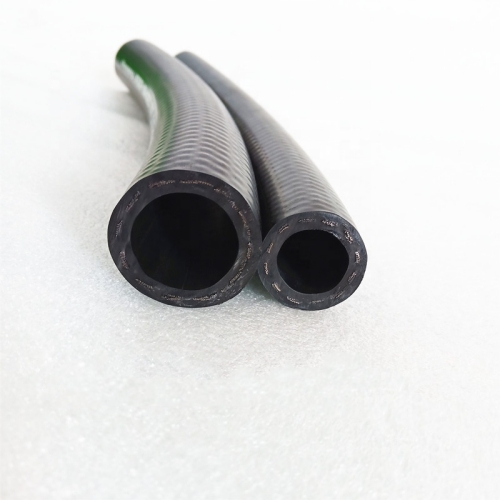
Steel braided hydraulic hoses represent a critical component in fluid power systems across a diverse range of industries including construction, agriculture, manufacturing, and automotive. These hoses are engineered to convey hydraulic fluid under high pressure and temperature conditions, offering superior performance compared to non-reinforced rubber hoses. An OEM (Original Equipment Manufacturer) steel braided hydraulic hose factory specializes in the design, manufacture, and quality control of these hoses, often tailoring specifications to meet the precise requirements of their client base. The core performance characteristics – pressure rating, burst pressure, impulse resistance, and fluid compatibility – dictate application suitability. This guide provides an in-depth technical overview of the material science, manufacturing processes, performance parameters, failure modes, and relevant industry standards governing oem steel braided hydraulic hose factory production and application.
Material Science & Manufacturing
The construction of a steel braided hydraulic hose relies on a precise combination of materials. The inner tube, typically composed of synthetic rubber compounds like nitrile (NBR), ethylene propylene diene monomer (EPDM), or fluorocarbon (FKM, Viton®), provides fluid resistance and flexibility. NBR is commonly used for petroleum-based fluids, EPDM for phosphate ester fluids, and FKM for high-temperature and aggressive chemical environments. The reinforcement layer consists of one or more braids of high-strength steel wire, often carbon steel or stainless steel, which provides the pressure containment capability. The outer cover, commonly made of chloroprene (CR) or polyurethane (PU), offers abrasion, ozone, and weather resistance. The steel wire used is typically drawn to precise dimensions to ensure consistent braid coverage and strength.
Manufacturing processes begin with inner tube extrusion, where the rubber compound is forced through a die to create a seamless tube. This tube is then carefully inspected for defects. The steel wire is then spirally wound around the inner tube using specialized braiding machines. The braid angle and wire density are critical parameters controlling the hose’s pressure rating. Following braiding, the outer cover is extruded over the steel wire reinforcement. Critical process parameters include temperature control during extrusion, precise braid tension, and adhesive application between layers to ensure bonding and prevent separation. Post-production, hoses undergo rigorous testing, including pressure testing to burst, impulse testing for fatigue life, and dimensional checks to verify conformance to specifications. Curing (vulcanization) of the rubber compounds is crucial to achieve the desired physical properties like tensile strength, elongation, and hardness.
Performance & Engineering
The performance of steel braided hydraulic hoses is governed by several engineering principles. Hose pressure ratings are determined by a formula considering the material tensile strength, braid angle, wire diameter, and number of braids. Burst pressure is typically 4:1 of the working pressure. Impulse pressure, the ability to withstand cyclical pressure fluctuations, is a critical factor in dynamic applications like hydraulic hammers. This is assessed through repetitive pressure cycling tests. Fatigue analysis, utilizing principles of stress-strain relationships and material fatigue curves, is employed to predict hose life under varying load conditions.
Environmental resistance is another key performance aspect. Exposure to extreme temperatures, UV radiation, ozone, and corrosive fluids can degrade the rubber compounds. Material selection, particularly for the outer cover, plays a crucial role in mitigating these effects. Fluid compatibility is paramount; incompatible fluids can cause swelling, softening, or cracking of the inner tube, leading to leakage and failure. Hose assemblies also incorporate end fittings, typically made of steel or stainless steel, which are crimped onto the hose using specialized machinery. The crimp quality is essential for a leak-proof connection and is subject to stringent quality control procedures. Compliance requirements, such as those outlined by SAE (Society of Automotive Engineers) and EN (European Norm) standards, dictate minimum performance criteria and testing protocols.
Technical Specifications
| Parameter | Unit | Typical Value (NBR Inner Tube, Steel Braid, CR Cover) | Testing Standard |
|---|---|---|---|
| Working Pressure | MPa | 25 | SAE J517 |
| Burst Pressure | MPa | 100 | SAE J517 |
| Impulse Cycles (R12) | Cycles | 200,000 | SAE J329 |
| Temperature Range | °C | -40 to +100 | SAE J517 |
| Outer Diameter | mm | 19 | Dimensional Control |
| Inner Diameter | mm | 13 | Dimensional Control |
Failure Mode & Maintenance
Steel braided hydraulic hoses are subject to various failure modes. Fatigue cracking, arising from repeated pressure and bending cycles, is a common failure mechanism. This is often initiated at points of stress concentration, such as near end fittings or at braid crossovers. Abrasion, caused by contact with abrasive surfaces, can wear away the outer cover, exposing the steel braid to corrosion. Corrosion, particularly in environments with salt spray or corrosive chemicals, can weaken the steel braid and lead to failure. Pinholes in the inner tube, often caused by contamination during manufacturing or by incompatible fluids, can result in leakage. Delamination, the separation of layers (inner tube, braid, outer cover), can occur due to inadequate bonding or exposure to extreme temperatures.
Preventive maintenance is crucial to maximize hose life. Regular visual inspections should be conducted to identify signs of abrasion, cracking, or leakage. Hoses should be replaced immediately if any damage is detected. Proper hose routing and support are essential to minimize bending and stress. Fluid cleanliness is critical; contaminants can accelerate wear and damage the inner tube. End fittings should be inspected for corrosion and proper crimping. Storage conditions should protect hoses from UV radiation, ozone, and extreme temperatures. The use of appropriate protective sleeves or guards can mitigate abrasion damage. Following manufacturer’s recommendations for hose assembly and installation is vital.
Industry FAQ
Q: What is the impact of different steel braid constructions (1SP, 2SP, 4SP) on hose performance?
A: The "SP" designation refers to the number of spiral layers of steel wire reinforcement. 1SP (single spiral) offers moderate pressure capability, suitable for lower-pressure applications. 2SP (double spiral) provides significantly increased pressure capacity and is commonly used in general-purpose hydraulic systems. 4SP (four spiral) delivers the highest pressure ratings and is employed in demanding applications such as heavy equipment and construction machinery. Increasing the number of braids increases the hose's tensile strength and resistance to deformation under pressure.
Q: How does fluid compatibility affect hose selection and lifespan?
A: Fluid compatibility is paramount. Using a hose with an incompatible inner tube material can lead to swelling, softening, cracking, or degradation, resulting in premature failure. For example, petroleum-based fluids typically require NBR inner tubes, while phosphate ester fluids require EPDM. Always consult a fluid compatibility chart to ensure the hose material is suitable for the intended fluid.
Q: What are the critical considerations for end fitting selection and crimping?
A: End fitting material must be compatible with both the hose and the fluid. Steel fittings are common, while stainless steel is preferred for corrosive environments. The crimp process must be performed using a calibrated crimping machine and the correct die set to ensure a leak-proof connection. An improperly crimped fitting can lead to leakage or hose separation under pressure.
Q: How do temperature extremes affect hose performance and longevity?
A: Extreme temperatures can significantly impact hose performance. High temperatures can cause rubber compounds to degrade and lose their flexibility. Low temperatures can cause brittleness and reduced impact resistance. Always select a hose with a temperature range suitable for the operating environment. Using specialized high-temperature or low-temperature rubber compounds may be necessary in extreme conditions.
Q: What are the common causes of hose twist and how can it be prevented?
A: Hose twist occurs when the hose rotates under pressure, often due to improper installation or hose routing. This can lead to stress on the hose and fittings, resulting in fatigue failure. Prevention involves using swivel fittings at hose ends, proper hose routing to avoid sharp bends and obstructions, and ensuring adequate hose length to accommodate system movement.
Conclusion
The selection, application, and maintenance of steel braided hydraulic hoses are critical for ensuring the reliability and safety of hydraulic systems. Understanding the interplay between material science, manufacturing processes, and performance characteristics is paramount for engineers and procurement professionals. Proper hose specification, based on operating pressure, fluid compatibility, temperature range, and environmental conditions, is essential to prevent premature failure and maintain system integrity.
Future advancements in hydraulic hose technology will likely focus on developing lighter-weight materials, improved abrasion resistance, and enhanced fluid compatibility. The integration of sensor technologies for real-time hose condition monitoring is also anticipated, enabling predictive maintenance and reducing downtime. Adhering to industry standards and best practices, coupled with a proactive maintenance approach, will continue to be vital for optimizing the performance and lifespan of oem steel braided hydraulic hose factory products.