
Apr . 01, 2024 17:55 Back to list
oem smooth cover steel wire braided hydraulic hose suppliers Performance Analysis
Introduction
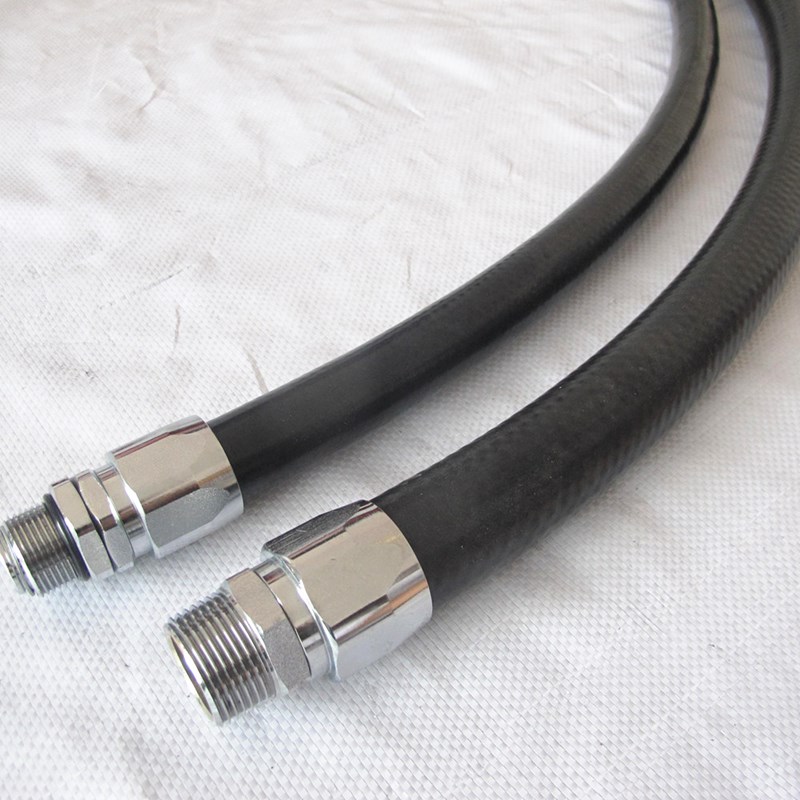
OEM smooth cover steel wire braided hydraulic hoses are critical components in fluid power systems across diverse industries including construction, agriculture, mining, and manufacturing. These hoses are engineered to transmit hydraulic fluid under high pressure, facilitating the operation of heavy machinery and critical processes. Their construction utilizes a multi-layered design: an inner tube providing fluid compatibility, multiple layers of high-tensile steel wire braid for reinforcement against pressure, and a smooth outer cover offering abrasion and weather resistance. This guide will provide an in-depth technical overview of these hoses, covering material science, manufacturing processes, performance characteristics, failure modes, and relevant industry standards. A key industry pain point is maintaining consistent performance and ensuring long service life under harsh operating conditions, including extreme temperatures, corrosive fluids, and mechanical stress. Selecting the appropriate hose for a specific application requires a thorough understanding of these factors.
Material Science & Manufacturing
The manufacturing of steel wire braided hydraulic hoses begins with the selection of appropriate raw materials. The inner tube is typically composed of synthetic rubber compounds, most commonly nitrile rubber (NBR), chlorinated polyethylene rubber (CM), or fluorocarbon rubber (FKM – Viton). NBR provides excellent resistance to petroleum-based fluids, CM offers improved heat and ozone resistance, and FKM provides superior resistance to aggressive chemicals and high temperatures. Steel wire used in the reinforcement braid is typically high-carbon steel, offering high tensile strength. The outer cover commonly uses a blend of synthetic rubbers like polyurethane or polyester polyurethane for abrasion resistance and weather protection.
The manufacturing process involves several key stages. First, the inner tube is extruded through a die to achieve the desired inner diameter and wall thickness. Next, the steel wire is spirally wound around the inner tube, forming the reinforcement braid. The wire tension and pitch are precisely controlled to achieve the desired pressure rating and flexibility. Subsequent layers of braid can be added for higher pressure applications. Following braiding, the outer cover is extruded over the braided structure. Critical process parameters include extrusion temperature, curing time and temperature, braid winding tension, and dimensional accuracy. Proper curing of the rubber compounds is crucial for achieving optimal mechanical properties and chemical resistance. Non-destructive testing, such as air pressure testing and eddy current testing, is employed to verify the integrity of the hose assembly.
Performance & Engineering
Performance analysis of steel wire braided hydraulic hoses centers on burst pressure, working pressure, and flexibility. Burst pressure is determined through hydrostatic testing, where the hose is pressurized until failure. Working pressure is typically specified as a fraction of the burst pressure, often 50% or 70%, providing a safety factor. Flexibility is crucial for ease of installation and operation, particularly in tight spaces. The number of steel wire braids directly impacts the hose’s pressure rating and stiffness; increasing braids enhances pressure capacity but reduces flexibility.
Environmental resistance is another critical performance factor. Hydraulic hoses are often exposed to extreme temperatures, ranging from -40°C to +120°C or higher depending on the application. Exposure to ultraviolet (UV) radiation, ozone, and corrosive fluids can also degrade the hose materials. The selection of appropriate rubber compounds is essential for ensuring long-term performance in these environments. Force analysis considers hoop stress within the hose wall due to internal pressure, longitudinal stress due to bending, and torsional stress due to twisting. Finite element analysis (FEA) is frequently used to optimize the hose design and predict its performance under various loading conditions. Compliance requirements often dictate specific testing procedures and performance criteria, such as those outlined by SAE International and EN standards.
Technical Specifications
| Parameter | Unit | Typical Value (NBR Inner Tube, 2 Wire Braid) | Typical Value (FKM Inner Tube, 4 Wire Braid) |
|---|---|---|---|
| Working Pressure | MPa | 20 | 35 |
| Burst Pressure | MPa | 80 | 140 |
| Inner Diameter | mm | 19 | 12.7 |
| Outer Diameter | mm | 29 | 22.2 |
| Minimum Bend Radius | mm | 150 | 88.9 |
| Temperature Range | °C | -40 to +100 | -20 to +150 |
Failure Mode & Maintenance
Common failure modes for steel wire braided hydraulic hoses include burst failure due to exceeding the working pressure, fatigue cracking due to repeated bending and flexing, abrasion of the outer cover, and degradation of the rubber compounds due to chemical attack or UV exposure. Fatigue cracking typically initiates at stress concentration points, such as at the hose ends or around fittings. Corrosion of the steel wire braid can also lead to premature failure. Burst failures are often catastrophic and can pose a safety hazard.
Preventative maintenance is crucial for maximizing hose life and preventing failures. Regular visual inspections should be conducted to check for signs of abrasion, cracking, swelling, or leaks. Hoses should be replaced if any damage is detected. Proper installation practices, including using the correct fittings and avoiding excessive bending, are essential. Fluid contamination can accelerate hose degradation, so maintaining clean hydraulic fluid is important. Periodic fluid analysis can help identify potential problems. When storing hoses, they should be protected from UV radiation and extreme temperatures. Proper hose routing minimizes stress and abrasion. A key maintenance consideration is the torque applied to the fittings during installation; over-tightening can damage the hose ends, while under-tightening can lead to leaks.
Industry FAQ
Q: What is the impact of impulse pressure on hydraulic hose life?
A: Impulse pressure, or pressure spikes, significantly reduces hose life. These pressure surges create dynamic stresses that accelerate fatigue failure. Hoses rated for higher impulse pressures, often utilizing specialized construction techniques like anti-kink sleeves or enhanced braid designs, are necessary for applications with frequent or high-magnitude impulse pressures.
Q: How does the selection of the inner tube material affect chemical compatibility?
A: The inner tube material must be compatible with the hydraulic fluid being used. NBR is suitable for petroleum-based fluids, but degrades rapidly when exposed to phosphate ester fluids. FKM offers broader chemical compatibility, including resistance to many aggressive chemicals, but is more expensive. Incorrect material selection leads to swelling, softening, or cracking of the inner tube, resulting in leaks and hose failure.
Q: What are the key considerations when selecting a hose fitting?
A: The fitting must be compatible with the hose type, the hydraulic fluid, and the operating pressure. The fitting material should resist corrosion and erosion. Proper crimping is critical for ensuring a secure and leak-free connection. Fittings should meet relevant industry standards, such as those established by SAE or DIN.
Q: How does temperature affect the performance of a hydraulic hose?
A: Temperature extremes can significantly impact hose performance. High temperatures accelerate the degradation of rubber compounds, reducing their elasticity and strength. Low temperatures can make the rubber brittle and prone to cracking. The specified temperature range for a hose must be observed to ensure safe and reliable operation. Fluid viscosity also changes with temperature, impacting flow rates and pressure drops.
Q: What is the role of steel wire braid in hose reinforcement?
A: The steel wire braid provides the primary reinforcement against internal pressure. The number of braid layers directly correlates to the hose’s pressure rating; more layers equate to a higher pressure capacity. The braid also contributes to the hose’s flexibility and resistance to kinking. The quality of the steel wire, its tensile strength, and the precision of the braid winding are all crucial factors affecting performance.
Conclusion
OEM smooth cover steel wire braided hydraulic hoses represent a complex interplay of material science, manufacturing precision, and engineering design. Selecting the appropriate hose for a specific application demands careful consideration of factors such as fluid compatibility, operating pressure, temperature range, and environmental conditions. Understanding the potential failure modes and implementing preventative maintenance practices are crucial for maximizing hose life and ensuring the safe and reliable operation of hydraulic systems.
Continued advancements in hose technology are focused on developing lighter-weight, more durable, and chemically resistant hoses. Future trends include the use of advanced rubber compounds, innovative braid construction techniques, and smart hose monitoring systems capable of detecting early signs of failure. Maintaining a thorough understanding of these advancements will be essential for engineers and procurement professionals seeking to optimize the performance and longevity of hydraulic hose systems.