
Apr . 01, 2024 17:55 Back to list
oem sae100r9 supplier Performance Analysis
Introduction
SAE 100R9 hose represents a critical component in hydraulic systems across a diverse range of industries, including construction, agriculture, material handling, and manufacturing. OEM suppliers specializing in SAE 100R9 hoses provide solutions for conveying hydraulic fluid under high pressure, typically utilized in applications such as hydraulic machinery, power steering, and fluid transfer systems. This guide provides an in-depth technical overview of SAE 100R9 hoses, focusing on material science, manufacturing processes, performance characteristics, potential failure modes, and relevant industry standards. The core performance attributes are defined by the ability to withstand specified pressure ratings, maintain flexibility under varying temperatures, and exhibit resistance to hydraulic fluid degradation. A key industry pain point is ensuring consistent quality and adherence to SAE standards, particularly concerning burst pressure and impulse performance, as failures can lead to significant downtime and safety hazards.
Material Science & Manufacturing
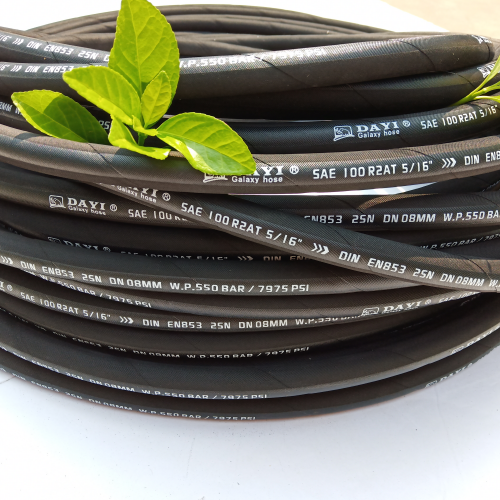
SAE 100R9 hoses are typically constructed of a multi-layered design. The inner tube is commonly composed of a synthetic rubber compound, frequently nitrile rubber (NBR) due to its excellent resistance to petroleum-based hydraulic fluids. NBR’s polymer structure provides inherent flexibility and resilience. Other materials, such as polychloroprene (CR) may be used for specific fluid compatibility requirements. The reinforcement layer is critical to pressure handling and typically consists of multiple spiraled steel wire layers. The steel wire used is high-tensile strength, often carbon steel, and its precise layering and winding angle significantly impact the hose’s burst pressure and impulse resistance. The outer cover is generally made of a synthetic rubber compound, often chloroprene or polyurethane, designed to provide abrasion, weathering, and chemical resistance.
Manufacturing involves several key processes. The inner tube is extruded through a die to achieve the desired inner diameter and wall thickness. The steel wire reinforcement is then spiraled onto the inner tube using specialized winding machines. Maintaining consistent tension and pitch during the winding process is paramount for achieving uniform pressure resistance. Finally, the outer cover is extruded over the reinforced inner tube. Post-extrusion processes include vulcanization (curing) to crosslink the rubber compounds, enhancing their physical properties. Quality control measures include dimensional checks, pressure testing, and visual inspection for defects. Controlling the sulfur content during vulcanization is critical as it impacts hardness and aging characteristics. Proper adhesion between layers is ensured through surface treatment and the selection of compatible rubber compounds.
Performance & Engineering
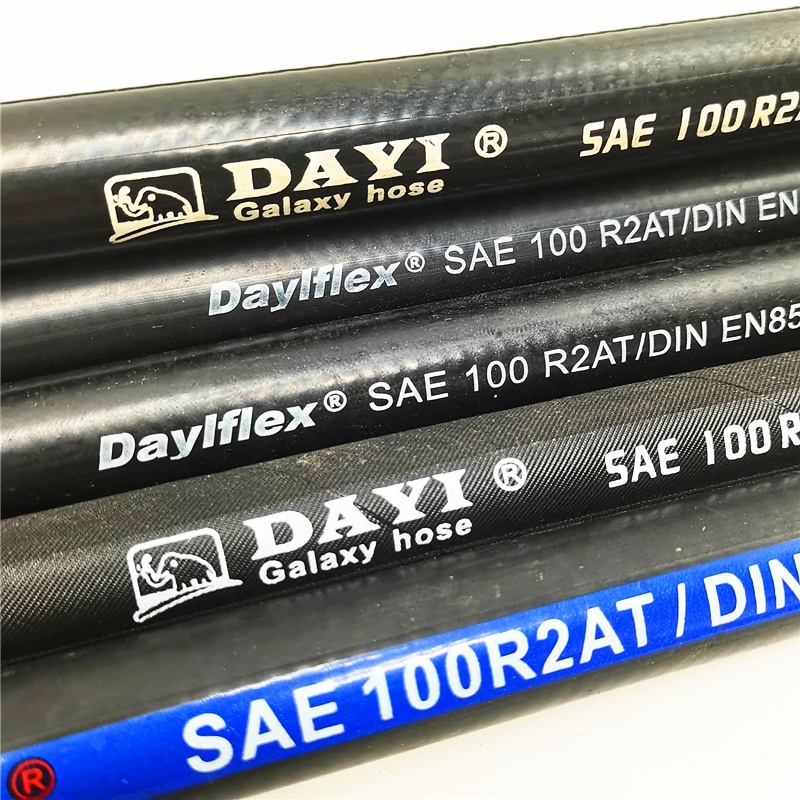
The performance of SAE 100R9 hoses is fundamentally dictated by their ability to withstand internal pressure and external stresses. Force analysis reveals that hoop stress within the hose wall increases linearly with pressure and radius. The steel wire reinforcement is engineered to counter this hoop stress, preventing hose expansion and failure. Impulse pressure testing simulates the pulsating pressures common in hydraulic systems, assessing the hose’s fatigue resistance. Flex fatigue is another critical performance factor, especially in applications with frequent bending. The materials and construction must maintain integrity under cyclic loading. Environmental resistance is vital, encompassing exposure to temperature extremes, ozone, ultraviolet radiation, and hydraulic fluids. Material degradation due to these factors can compromise the hose’s strength and flexibility.
Compliance requirements are stringent and governed by SAE J517, which defines the performance specifications for hydraulic hoses. This standard dictates minimum burst pressure ratings, working pressure ratings (based on a 4:1 safety factor), and impulse cycle life. Furthermore, adherence to RoHS and REACH regulations is crucial to ensure the absence of hazardous substances. Functional implementation requires careful consideration of hose bend radius to avoid kinking and premature failure. Proper fitting selection and installation are also essential; incorrect fittings can create stress concentrations and leak points. The hose's compatibility with the specific hydraulic fluid being used must be verified to prevent swelling, softening, or chemical attack of the rubber compounds.
Technical Specifications
| Parameter | Unit | SAE 100R9 Specification | Typical OEM Offering (Range) |
|---|---|---|---|
| Working Pressure | MPa | Minimum 20.7 | 21 - 35 |
| Burst Pressure | MPa | Minimum 82.7 | 85 - 140 |
| Temperature Range | °C | -40 to +100 | -40 to +120 |
| Inner Tube Material | - | Nitrile Rubber (NBR) | NBR, EPDM, CR |
| Reinforcement | Layers | Multiple Steel Wire Spiral | 4-6 Spiral |
| Outer Cover Material | - | Chloroprene or Polyurethane | Chloroprene, Polyurethane |
Failure Mode & Maintenance
SAE 100R9 hose failures can manifest in several ways. Fatigue cracking in the steel wire reinforcement is a common failure mode, particularly in applications with high impulse pressures and frequent bending. This typically initiates at stress concentrations near the fitting crimps. Delamination, or separation of the layers, can occur due to poor adhesion between the rubber compounds and reinforcement. This can lead to a weakening of the hose wall and eventual rupture. Degradation of the rubber compounds due to exposure to heat, ozone, or incompatible hydraulic fluids can cause hardening, cracking, and loss of flexibility. Oxidation and swelling are also common degradation mechanisms. Fitting failure, such as corrosion or loosening, can create leak paths and compromise system integrity.
Preventative maintenance is crucial to extend hose life. Regular visual inspections should be conducted to identify signs of wear, cracking, or swelling. Hose routing should be optimized to minimize bending and abrasion. Proper fitting torquing is essential to prevent loosening. Hydraulic fluid should be regularly analyzed to ensure it is clean and compatible with the hose materials. When replacing hoses, it is critical to use fittings specifically designed for SAE 100R9 hoses and to follow the manufacturer’s installation instructions. If a hose exhibits any signs of damage, it should be replaced immediately. Detailed records of hose replacement and maintenance should be maintained to track performance and identify potential systemic issues.
Industry FAQ
Q: What is the significance of the impulse rating in an SAE 100R9 hose?
A: The impulse rating defines the hose's ability to withstand repeated pressure surges or pulsations. A higher impulse rating indicates greater resistance to fatigue cracking and extends the hose's service life in dynamic hydraulic systems. Impulse testing is critical because real-world hydraulic systems rarely maintain perfectly constant pressure; pulsations are inherent to pump operation and valve switching.
Q: How does the steel wire reinforcement affect the hose's flexibility and burst pressure?
A: The number of steel wire spirals directly impacts both flexibility and burst pressure. Increasing the number of spirals increases burst pressure capability but reduces flexibility. Finding the optimal balance between these two properties is a key engineering challenge. The winding angle of the steel wire also influences performance, with tighter winding angles generally providing higher burst pressure but reduced flexibility.
Q: What are the common causes of hose leaks at the fitting interface?
A: Common causes include improper fitting crimping, corrosion of the fitting material, damage to the hose end during installation, and incompatibility between the fitting and hose material. Ensuring proper crimping techniques, selecting corrosion-resistant fittings, and protecting the hose ends from damage are critical to prevent leaks.
Q: What type of hydraulic fluid is most compatible with a standard NBR inner tube in an SAE 100R9 hose?
A: Nitrile Rubber (NBR) exhibits excellent compatibility with petroleum-based hydraulic fluids, including mineral oils and synthetic blends. However, it's crucial to avoid phosphate ester fluids, as they can cause NBR to swell and degrade. Always verify fluid compatibility with the hose manufacturer's specifications.
Q: What is the role of the outer cover in an SAE 100R9 hose, and what materials are typically used?
A: The outer cover protects the reinforcement layer from abrasion, weathering, ozone, and chemical exposure. It also provides a degree of UV resistance. Common materials include chloroprene (CR) and polyurethane (PU). Polyurethane offers superior abrasion resistance, while chloroprene provides better ozone and weathering resistance.
Conclusion
SAE 100R9 hoses are engineered to reliably convey hydraulic power under demanding conditions. Their performance relies on a complex interplay between material selection, manufacturing precision, and adherence to stringent industry standards. Understanding the critical parameters – working pressure, burst pressure, temperature range, and impulse rating – is paramount for proper hose selection and application. The continued evolution of hydraulic systems necessitates ongoing development of advanced hose materials and manufacturing techniques to meet increasing performance demands.
Selecting a qualified OEM supplier committed to quality control and adherence to SAE J517 is essential. Proper installation, preventative maintenance, and diligent monitoring of hose condition are vital to maximizing service life and minimizing the risk of catastrophic failure. By prioritizing these factors, industries can ensure the safe and efficient operation of their hydraulic systems, reducing downtime and enhancing overall productivity.

