
Apr . 01, 2024 17:55 Back to list
oem sae100r9 manufacturers Performance Engineering

Introduction
SAE 100R9 is a Society of Automotive Engineers (SAE) standard defining specifications for non-conductive, single-wire reinforced hydraulic hose. OEM SAE 100R9 manufacturers produce hoses critical to fluid power systems across diverse industries including construction, agriculture, mining, and manufacturing. These hoses are utilized for transferring hydraulic fluid under significant pressure, demanding robust performance and reliability. The technical position within the industry chain is vital; as a foundational component, hose quality directly impacts the efficiency, safety, and longevity of entire hydraulic systems. Core performance characteristics center around pressure capacity (typically rated to 1000 psi working pressure with a 4:1 burst pressure ratio), temperature range (-40°C to +100°C), and fluid compatibility. A key industry pain point is maintaining consistent quality across varying production volumes and ensuring material traceability to meet stringent safety and regulatory requirements. Further complexities arise from the need to optimize hose flexibility while maintaining structural integrity, a balancing act critical for demanding applications.
Material Science & Manufacturing
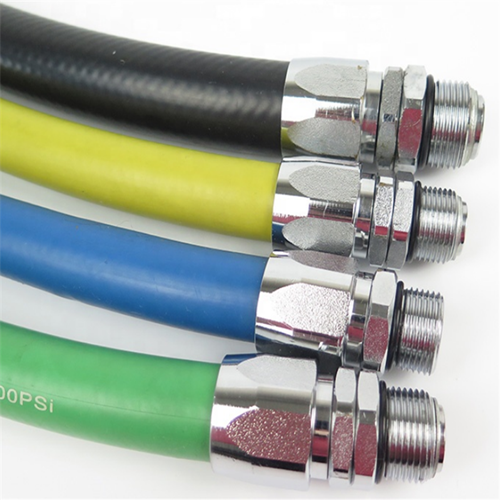
SAE 100R9 hoses are fundamentally constructed from three primary material components: the inner tube, the reinforcement layer, and the outer cover. The inner tube is typically composed of oil-resistant synthetic rubber, most commonly nitrile (NBR), due to its excellent resistance to petroleum-based fluids. However, other elastomers like chloroprene (CR) are employed for specialized applications requiring broader fluid compatibility. NBR’s physical properties are crucial – tensile strength (typically 15-25 MPa), elongation at break (200-400%), and hardness (60-70 Shore A) dictate its ability to withstand internal pressure and fluid attack. The reinforcement layer consists of a single braid of high-tensile steel wire. Wire diameter and braid angle are carefully controlled; smaller diameter wires offer greater flexibility, while tighter braid angles enhance pressure resistance. Steel wire used must meet stringent metallurgical specifications for tensile strength (at least 1770 MPa) and surface finish to prevent corrosion and fatigue. The outer cover is generally made from chloroprene rubber (CR) providing resistance to abrasion, weathering, and ozone exposure. Its hardness (60-70 Shore A) and tensile strength (10-20 MPa) protect the reinforcement layer from environmental damage. Manufacturing involves extrusion of the inner tube and outer cover, followed by precise winding of the steel wire reinforcement. Vulcanization – a chemical process involving heat and pressure – is critical to crosslink the rubber polymers, achieving desired elasticity and strength. Precise temperature and time control during vulcanization are vital; under-curing leads to weak bonds, while over-curing results in embrittlement.
Performance & Engineering
Performance of SAE 100R9 hoses is dictated by a complex interplay of internal pressure, temperature, and fluid properties. Force analysis involves calculating hoop stress in the hose wall, based on the working pressure and hose inner diameter, ensuring it remains within the material’s yield strength. Burst pressure testing, conducted to 4:1 the working pressure, verifies the hose’s ultimate strength. Temperature significantly affects rubber elasticity; increased temperature reduces tensile strength and elongation, while decreased temperature increases hardness and brittleness. Fluid compatibility is paramount; prolonged exposure to incompatible fluids can cause swelling, softening, or cracking of the inner tube. Hydraulic fluids commonly contain additives (e.g., anti-wear agents, corrosion inhibitors) that can interact with the rubber compounds. Environmental resistance encompasses protection against ozone degradation, UV exposure, and abrasion. Ozone cracking, a common failure mode, is mitigated by incorporating anti-ozonant additives into the rubber formulation. Flex fatigue resistance, crucial for dynamic applications, is assessed through repeated bending tests. Compliance requirements mandate adherence to SAE J517 standard for pressure ratings and performance characteristics, and potentially REACH and RoHS directives regarding restricted substances. Furthermore, proper end fitting crimping is critical; inadequate crimping can lead to leakage or hose separation under pressure. The correct crimp size is determined by hose inner diameter, reinforcement type, and fitting material.
Technical Specifications
| Parameter | Unit | Typical Value | Test Standard |
|---|---|---|---|
| Working Pressure | MPa | 7.0 | SAE J517 |
| Burst Pressure | MPa | 28.0 | SAE J517 |
| Temperature Range | °C | -40 to +100 | SAE J517 |
| Inner Tube Material | - | Nitrile Rubber (NBR) | ASTM D2000 |
| Reinforcement | - | Single Steel Wire Braid | SAE J517 |
| Outer Cover Material | - | Chloroprene Rubber (CR) | ASTM D2000 |
Failure Mode & Maintenance
Common failure modes in SAE 100R9 hoses include burst failure due to exceeding pressure limits, fatigue cracking from repeated bending and flexing, pinhole leaks caused by abrasion or damage to the inner tube, and degradation of the rubber compounds from exposure to incompatible fluids or extreme temperatures. Fatigue cracking typically initiates at stress concentration points, such as near fittings or where the hose is subjected to sharp bends. Burst failures are often preceded by gradual weakening of the reinforcement layer due to corrosion or wire breaks. Pinhole leaks can also result from internal corrosion initiated by water ingress. Degradation manifests as swelling, hardening, or cracking of the rubber. Preventive maintenance is crucial. Regular visual inspections should be conducted to identify signs of wear, damage, or leakage. Hoses should be replaced if any of these conditions are observed. Proper routing and support of the hose are essential to prevent abrasion and excessive bending. Avoid sharp bends and ensure the hose is not subjected to kinking or twisting. Correct fluid compatibility must be confirmed before operation. Storage of hoses should be in a cool, dry, and dark environment to minimize degradation. Avoid direct sunlight and exposure to ozone sources. For extended service life, consider implementing a scheduled hose replacement program based on operating conditions and industry best practices. Avoid using damaged or improperly installed fittings as these are major contributors to failures.
Industry FAQ
Q: What is the impact of hydraulic fluid type on the lifespan of an SAE 100R9 hose?
A: The hydraulic fluid’s chemical composition directly affects the hose’s longevity. Incompatible fluids can cause the rubber compounds to swell, soften, or crack, leading to premature failure. Petroleum-based fluids generally work well with NBR, but phosphate ester fluids require specialized hose materials like EPDM. Always verify fluid compatibility with the hose manufacturer's specifications.
Q: How does operating temperature affect the pressure rating of the hose?
A: Higher operating temperatures generally reduce the effective pressure rating of the hose. Rubber loses tensile strength at elevated temperatures. SAE J517 provides derating factors for various temperatures; exceeding the specified temperature limits will compromise the hose’s safety and performance.
Q: What are the common causes of hose fitting failure, and how can they be prevented?
A: Common causes include improper crimping, corrosion, and material incompatibility. Insufficient crimping leads to leakage; corrosion weakens the fitting; and mismatched materials can cause galvanic corrosion. Use properly sized fittings, ensure correct crimping procedures are followed, and select compatible materials.
Q: What are the key differences between SAE 100R9 and other hydraulic hose standards (e.g., EN 853)?
A: SAE 100R9 is specifically for non-conductive, single-wire reinforced hoses. EN 853 covers a broader range of hydraulic hose types, including those with multiple reinforcement layers and conductive liners. EN 853 hoses often have higher pressure ratings but may be less flexible.
Q: How can I determine the appropriate hose length for my application, and what considerations should I make?
A: Hose length should account for the total distance between connection points, plus allowances for bending radius and fitting insertion depth. Avoid excessive length, as it increases the risk of abrasion and fatigue. Maintain a minimum bend radius as specified by the manufacturer to prevent kinking. Factor in potential thermal expansion and contraction.
Conclusion
SAE 100R9 hydraulic hoses represent a critical component in numerous industrial applications. Their performance relies heavily on a carefully engineered combination of material selection, manufacturing precision, and adherence to rigorous industry standards. Understanding the underlying material science—specifically the properties of nitrile, chloroprene, and high-tensile steel—is paramount for ensuring optimal functionality and longevity.
Furthermore, proactive maintenance, encompassing regular inspections and adherence to fluid compatibility guidelines, is essential for mitigating potential failure modes such as fatigue cracking, burst failures, and degradation. As hydraulic systems continue to evolve, the demand for high-performance, reliable hoses like those conforming to SAE 100R9 will remain consistently high, driving continuous innovation in materials and manufacturing techniques.