
Apr . 01, 2024 17:55 Back to list
oem sae100r9 factory Performance Analysis
Introduction
SAE 100R9 hose represents a critical component in hydraulic systems across diverse industrial applications, encompassing construction machinery, agricultural equipment, and manufacturing processes. As an OEM supplier of SAE 100R9 hose, a factory’s role transcends simple manufacturing; it encompasses a commitment to precision, material integrity, and adherence to stringent industry standards. This technical guide delves into the intricacies of SAE 100R9 hose production, covering material science, manufacturing processes, performance characteristics, potential failure modes, and essential maintenance protocols. The core performance criteria revolve around pressure containment, flexibility under extreme temperatures, and resistance to hydraulic fluid degradation. The industry currently faces challenges regarding consistent quality control, particularly concerning synthetic rubber blends and reinforcement layer integrity. This guide aims to provide a comprehensive understanding of these aspects, enabling informed procurement decisions and optimized system performance. Understanding the nuances of SAE 100R9 hose production is paramount for preventing costly downtime, ensuring operational safety, and maximizing the lifespan of hydraulic machinery.
Material Science & Manufacturing
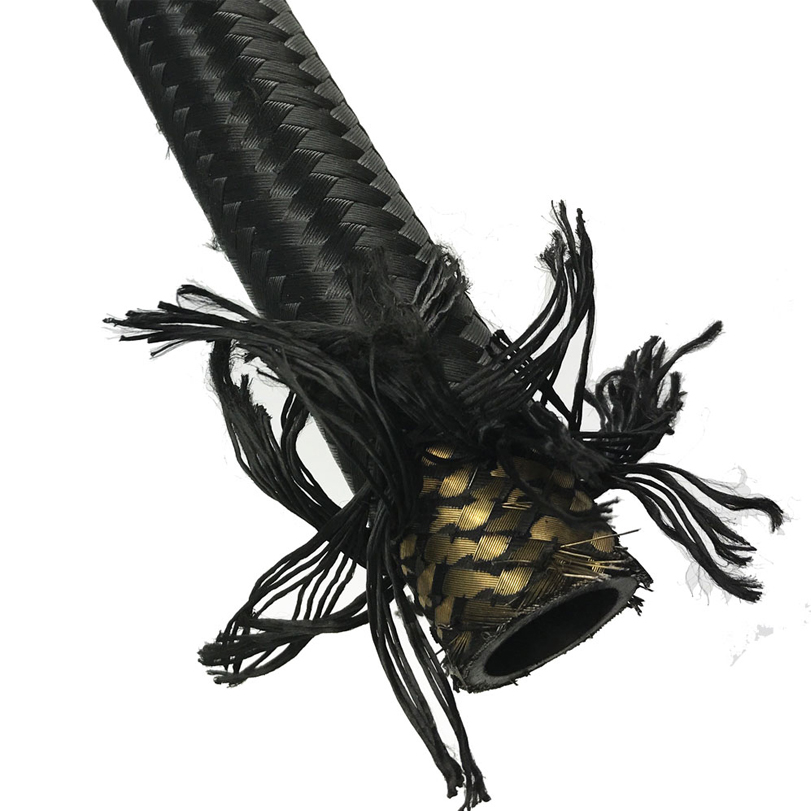
SAE 100R9 hose construction fundamentally relies on a multi-layered design. The inner tube is typically composed of a synthetic rubber compound, most commonly nitrile (NBR) due to its excellent resistance to petroleum-based hydraulic fluids. Alternative materials, such as chloroprene rubber (CR) are utilized for specialized applications requiring enhanced temperature resistance or compatibility with specific fluid types. The reinforcement layer is critical for pressure containment and typically consists of multiple braids of high-strength steel wire. The wire gauge and braid angle directly influence the hose's burst pressure and flexibility. The outer cover provides abrasion, ozone, and weathering protection, generally utilizing a synthetic rubber blend like polyurethane or a stabilized nitrile compound.
Manufacturing begins with rubber compounding, where raw polymers are blended with reinforcing fillers (carbon black, silica), plasticizers, antioxidants, and curatives. Precise control over these ingredient proportions and mixing parameters (temperature, time, shear rate) is crucial for achieving desired physical properties like tensile strength, elongation, and hardness. The inner tube is then extruded through a die, establishing the desired bore diameter and wall thickness. Following extrusion, the tube undergoes vulcanization – a chemical curing process utilizing heat and pressure – to crosslink the rubber molecules, imparting elasticity and durability. The reinforcement braids are then applied helically around the inner tube, followed by the outer cover extrusion and subsequent vulcanization. Critical parameters during braiding include wire tension and braid coverage, which directly affect burst pressure and fatigue life. Quality control checks at each stage encompass dimensional accuracy, visual inspection for defects, and material property testing (hardness, tensile strength, elongation). Improper vulcanization can lead to reversion (degradation of rubber properties) or incomplete curing (reduced strength and elasticity).
Performance & Engineering
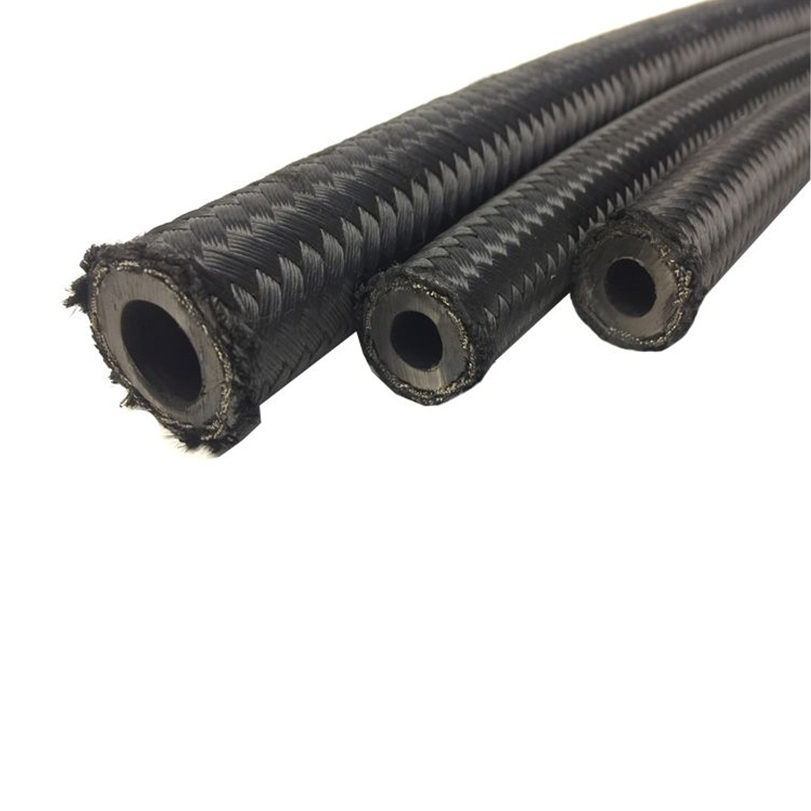
The performance of SAE 100R9 hose is dictated by several key engineering principles. Burst pressure, determined by the reinforcement layer configuration (wire gauge, braid angle, number of braids), represents the maximum pressure the hose can withstand before catastrophic failure. Working pressure is typically specified as a fraction (e.g., 1/4) of the burst pressure, providing a safety margin. Flexibility, essential for ease of installation and routing, is a function of the hose’s diameter, wall thickness, and the reinforcement layer’s construction. Temperature resistance is governed by the rubber compound's formulation; NBR typically operates effectively between -40°C and 100°C, while CR can withstand higher temperatures. Hydraulic fluid compatibility is paramount; improper fluid selection can cause swelling, degradation, or cracking of the inner tube.
Force analysis involves assessing the hoop stress within the hose wall under internal pressure. Finite Element Analysis (FEA) is frequently employed to optimize hose geometry and reinforcement layer design to minimize stress concentrations. Environmental resistance is a critical consideration, particularly for outdoor applications. Ozone exposure can cause cracking of unsaturated rubber compounds, necessitating the use of protective additives. UV radiation can degrade the outer cover, reducing its abrasion resistance. Compliance requirements, dictated by SAE J517 (specification for hydraulic hose) and regional regulations, mandate specific performance testing protocols, including burst pressure testing, impulse testing (cyclic pressure loading), and temperature cycling.
Technical Specifications
| Parameter | Unit | SAE 100R9 - 4SP | SAE 100R9 - 6SP |
|---|---|---|---|
| Working Pressure | MPa | 20.7 | 27.6 |
| Burst Pressure | MPa | 82.7 | 110.3 |
| Inner Diameter | mm | 12.7 | 19.05 |
| Outer Diameter | mm | 18.8 | 26.2 |
| Minimum Bend Radius | mm | 102 | 152 |
| Temperature Range | °C | -40 to +100 | -40 to +100 |
Failure Mode & Maintenance
Common failure modes in SAE 100R9 hose include burst failure due to exceeding the working pressure, fatigue cracking resulting from cyclic pressure loading, and degradation of the rubber compounds due to chemical incompatibility or environmental exposure. Pinholes in the inner tube can occur due to manufacturing defects or abrasion from internal fluid contaminants. Another failure mode is hose twist, which stresses the reinforcement layers and can lead to premature failure. External damage, such as abrasion, cuts, or crushing, can compromise the hose’s integrity.
Preventive maintenance is crucial for extending hose lifespan and ensuring operational safety. Regular visual inspections should be conducted to identify any signs of damage, such as cracks, bulges, or abrasion. Hose routing should be carefully planned to avoid sharp bends, excessive stretching, or contact with hot surfaces. Hydraulic fluid should be maintained within specified cleanliness levels to minimize abrasive wear. When replacing a hose, it is essential to use the correct specifications (size, pressure rating, fluid compatibility) and proper installation techniques. Avoid over-tightening fittings, which can damage the hose ends. Periodic pressure testing can help identify potential leaks or weaknesses before they lead to catastrophic failure. Proper storage of hoses in a cool, dry, and dark environment can prevent degradation of the rubber compounds.
Industry FAQ
Q: What is the significance of the "SP" designation in SAE 100R9 hose specifications?
A: The "SP" designation refers to the number of spiral reinforcement layers within the hose. "4SP" indicates four spiral layers of wire reinforcement, while "6SP" indicates six layers. Increasing the number of reinforcement layers directly increases the hose's burst pressure and resistance to impulse pressure.
Q: How does the choice of inner tube material affect hose performance?
A: The inner tube material must be compatible with the hydraulic fluid being used. Nitrile (NBR) is the most common choice for petroleum-based fluids, offering excellent resistance. However, for phosphate ester fluids, EPDM is a better choice. Using an incompatible material can lead to swelling, cracking, or degradation of the inner tube.
Q: What is the impact of exceeding the working pressure of a SAE 100R9 hose?
A: Exceeding the working pressure significantly reduces the hose’s lifespan and greatly increases the risk of catastrophic failure, potentially leading to injury or equipment damage. The hose may rupture violently, releasing pressurized fluid.
Q: How important is proper hose routing to prevent premature failure?
A: Proper hose routing is critical. Avoid sharp bends, which create stress concentrations. Ensure the hose is not subjected to excessive stretching or abrasion. Protect the hose from exposure to extreme temperatures or corrosive environments.
Q: What is the recommended procedure for inspecting a SAE 100R9 hose for potential failures?
A: Perform a visual inspection for cracks, bulges, abrasion, and leaks. Check the fittings for corrosion or damage. Gently flex the hose to identify any stiff areas or internal delamination. If any defects are found, replace the hose immediately.
Conclusion
SAE 100R9 hose remains a foundational element in hydraulic power transmission, requiring a comprehensive understanding of material science, manufacturing techniques, and performance characteristics. OEM manufacturers play a crucial role in ensuring consistent quality and adherence to rigorous industry standards. By prioritizing precise material selection, controlled vulcanization processes, and robust reinforcement layer construction, manufacturers can deliver hoses that withstand demanding operating conditions and provide reliable, long-lasting performance.
Looking forward, continued advancements in rubber compound technology and non-destructive testing methods will further enhance the durability and safety of SAE 100R9 hoses. The implementation of advanced monitoring systems, such as embedded sensors for pressure and temperature measurement, may allow for predictive maintenance and early detection of potential failures. The commitment to continuous improvement in manufacturing processes and quality control is paramount for maintaining the integrity of hydraulic systems and ensuring operational efficiency across diverse industrial sectors.

