
Apr . 01, 2024 17:55 Back to list
oem sae100r9 factories Performance Analysis
Introduction
SAE 100R9 hose represents a critical component in high-pressure fluid transfer systems, specifically engineered for hydraulic applications. OEM SAE 100R9 factories are central to supplying these hoses to a diverse range of industries, including construction, agriculture, manufacturing, and automotive. This guide provides an in-depth technical overview of SAE 100R9 hose, covering material science, manufacturing processes, performance characteristics, failure modes, and relevant industry standards. The core performance attributes of an SAE 100R9 hose revolve around its burst pressure, working pressure, temperature resistance, and compatibility with a wide spectrum of hydraulic fluids. The industry faces increasing demand for hoses with enhanced durability, reduced weight, and specialized fluid resistance, driving innovation in material selection and manufacturing techniques. Proper specification and implementation of SAE 100R9 hoses are vital for ensuring system reliability, safety, and longevity, minimizing downtime and operational costs. This document serves as a resource for engineers, procurement managers, and quality control personnel involved in the sourcing and application of these critical hydraulic components.
Material Science & Manufacturing
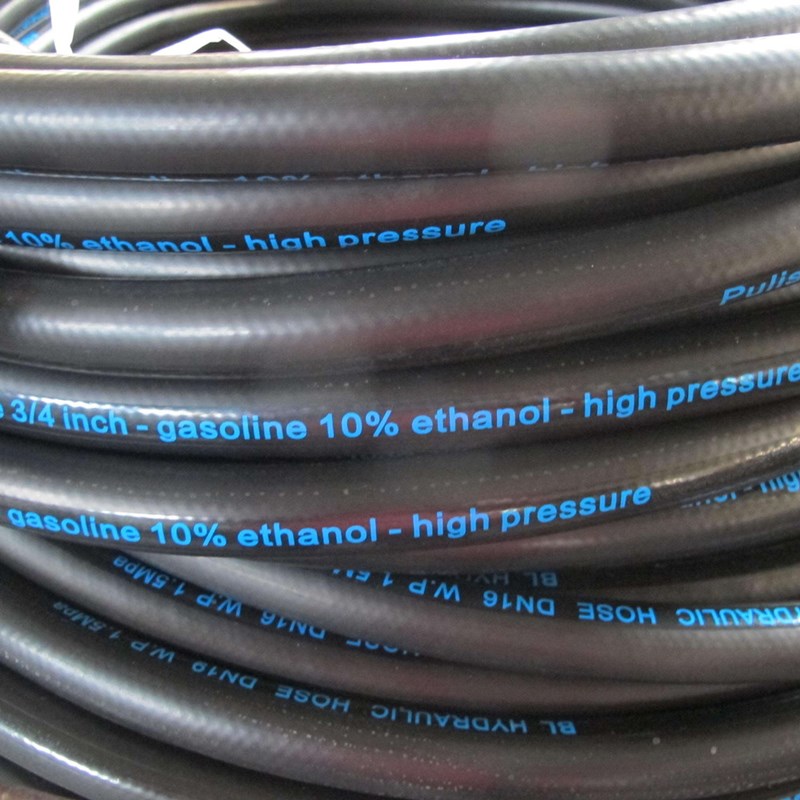
SAE 100R9 hose construction fundamentally relies on a multi-layered design. The inner tube, typically composed of oil-resistant synthetic rubber (typically nitrile rubber – NBR), provides a fluid barrier. NBR’s resistance to petroleum-based hydraulic fluids is paramount, with varying acrylonitrile content influencing performance; higher acrylonitrile content generally enhances oil resistance but reduces flexibility at low temperatures. The reinforcement layer is the critical structural element, usually consisting of multiple spiraled, high-tensile steel wire layers. The wire's tensile strength and yield strength are crucial parameters, with high-carbon steel wire commonly used. Steel wire surface treatment, such as zinc coating, is applied to improve adhesion to the rubber and enhance corrosion resistance. The outer cover, also synthetic rubber (often chloroprene – CR, also known as Neoprene), provides environmental protection against abrasion, ozone, weathering, and oil exposure. CR’s resistance to ozone and weathering is a significant advantage. Manufacturing involves extrusion of the inner tube and outer cover, followed by precise winding of the steel wire reinforcement. Critical parameters during extrusion include die temperature, screw speed, and material feed rate to ensure consistent wall thickness and void-free construction. The winding process must maintain precise tension and pitch of the steel wire to achieve the specified burst pressure. Curing (vulcanization) is essential to crosslink the rubber compounds, developing their mechanical properties. Curing time, temperature, and pressure are tightly controlled to optimize rubber hardness, tensile strength, and elongation. Post-curing processes include dimensional inspection, pressure testing, and visual inspection for defects.
Performance & Engineering
The primary engineering concern with SAE 100R9 hose is its ability to withstand high hydrostatic pressures without failure. Force analysis centers around hoop stress within the hose wall, calculated using the thin-walled cylinder formula (σ = PD/2t, where P is pressure, D is diameter, and t is wall thickness). The steel wire reinforcement bears the majority of the tensile load. Fatigue analysis is critical, as hoses are subjected to cyclical pressure fluctuations during operation. Factors influencing fatigue life include pressure amplitude, frequency of cycling, and the presence of defects. Environmental resistance is another key performance characteristic. Exposure to elevated temperatures reduces rubber elasticity and increases the risk of permeation. Exposure to chemicals, such as aggressive hydraulic fluids or cleaning agents, can cause swelling, degradation, and loss of mechanical properties. Compliance requirements dictate adherence to the SAE 100R9 specification, including specific performance requirements for burst pressure, working pressure, impulse pressure, temperature range, and fluid compatibility. Finite element analysis (FEA) is frequently employed during the design phase to optimize hose geometry, reinforcement configuration, and material selection for specific applications. Proper hose assembly, including the selection of appropriate fittings and crimping procedures, is crucial for maintaining the hose’s rated performance. Incorrect crimping can lead to premature failure due to fitting pullout or hose distortion.
Technical Specifications
| Parameter | Unit | Specification (Typical) | Test Method |
|---|---|---|---|
| Minimum Burst Pressure | MPa | 31.5 | SAE J514 |
| Working Pressure | MPa | 10.5 | Calculated as 1/3 of Burst Pressure |
| Temperature Range | °C | -40 to +100 | SAE J514 |
| Inner Tube Material | - | Nitrile Rubber (NBR) | ASTM D2000 |
| Reinforcement Material | - | High-Tensile Steel Wire (Spiral) | SAE J514 |
| Outer Cover Material | - | Chloroprene (CR) | ASTM D2000 |
Failure Mode & Maintenance
Common failure modes in SAE 100R9 hoses include burst failure due to exceeding the pressure rating, fatigue cracking from cyclical loading, fitting pullout from improper crimping, and degradation of the rubber compounds from exposure to heat, chemicals, or ozone. Burst failure typically occurs at the weakest point in the hose wall, often near a defect in the reinforcement or a thin spot in the rubber. Fatigue cracking initiates at stress concentrations, such as near fittings or surface imperfections, and propagates incrementally with each pressure cycle. Fitting pullout results from insufficient crimp force or the use of incompatible fittings. Rubber degradation manifests as hardening, cracking, swelling, or loss of elasticity. Failure analysis often involves visual inspection of the fractured surface, microscopic examination of the materials, and chemical analysis to identify the root cause. Preventative maintenance includes regular visual inspections for signs of damage, proper hose routing to avoid abrasion or kinking, and periodic pressure testing to verify integrity. Hoses should be replaced if any signs of damage or degradation are observed. Proper storage is also critical; hoses should be stored in a cool, dry, and dark environment, away from ozone sources and direct sunlight. Crimping procedures should be carefully controlled and regularly inspected to ensure consistency and compliance with manufacturer’s recommendations. The use of protective sleeves or guards can help prevent abrasion and impact damage.
Industry FAQ
Q: What is the significance of the impulse pressure rating for SAE 100R9 hose?
A: Impulse pressure rating defines the hose’s ability to withstand pressure spikes or surges. Unlike steady working pressure, impulse pressures are transient and occur frequently in hydraulic systems due to pump pulsations or valve operation. A higher impulse pressure rating indicates greater resistance to fatigue failure caused by these pressure fluctuations, ensuring longer hose life and reduced risk of catastrophic failure.
Q: How does temperature affect the performance of SAE 100R9 hose?
A: Elevated temperatures reduce the tensile strength and elasticity of the rubber compounds, decreasing the hose’s burst pressure and increasing its susceptibility to failure. Conversely, low temperatures can cause the rubber to become brittle and less flexible, increasing the risk of cracking. Maintaining operation within the specified temperature range is crucial for optimal performance and longevity.
Q: What is the role of zinc coating on the steel wire reinforcement?
A: Zinc coating provides corrosion protection to the steel wire, preventing rust and maintaining its tensile strength. Corrosion can significantly weaken the reinforcement, leading to premature failure. The zinc coating also improves the adhesion between the steel wire and the surrounding rubber compounds, enhancing the hose's structural integrity.
Q: What are the consequences of using an incompatible hydraulic fluid with SAE 100R9 hose?
A: Incompatible fluids can cause swelling, degradation, or softening of the rubber compounds, leading to loss of mechanical properties and premature failure. It’s crucial to verify the fluid compatibility of the hose’s inner tube material (typically NBR) with the hydraulic fluid being used. Using the wrong fluid can void the hose’s warranty and create a safety hazard.
Q: What are best practices for hose routing to maximize service life?
A: Avoid sharp bends, kinking, and abrasion. Secure the hose properly to prevent it from rubbing against other components or surfaces. Ensure sufficient clearance between the hose and moving parts. Use protective sleeves or guards in areas prone to abrasion or impact damage. Proper routing minimizes stress on the hose and prolongs its service life.
Conclusion
The SAE 100R9 hose standard remains a cornerstone of hydraulic fluid power systems, demanding a thorough understanding of material science, manufacturing precision, and operational constraints. OEMs specializing in these hoses must prioritize quality control throughout the entire production process, from raw material sourcing to final product testing, to ensure adherence to rigorous performance standards. The continuous pursuit of improved materials, optimized reinforcement configurations, and advanced manufacturing techniques will be critical for meeting the evolving demands of increasingly complex hydraulic applications.
Looking ahead, the industry is poised to benefit from advancements in polymer chemistry and composite materials, potentially leading to lighter, more durable, and more chemically resistant hoses. Further integration of data analytics and predictive maintenance technologies will enable more effective monitoring of hose health and proactive replacement strategies, minimizing downtime and maximizing system reliability. A commitment to ongoing research and development will be essential for maintaining the performance and safety of SAE 100R9 hose in the face of ever-increasing operational demands.

