
Apr . 01, 2024 17:55 Back to list
oem sae100r6 supplier Performance Analysis
Introduction
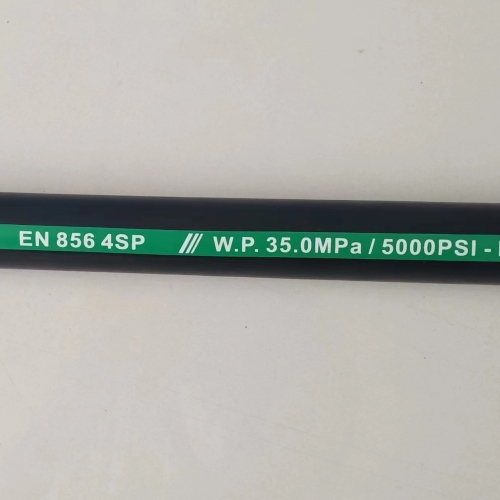
SAE 100R6 hose, commonly referred to as hydraulic hose, represents a critical component in fluid power systems across diverse industrial applications. OEM suppliers of SAE 100R6 hose are foundational to industries including construction, agriculture, mining, and manufacturing, providing the essential conduits for transmitting hydraulic fluid to actuators and machinery. This guide provides an in-depth technical overview of SAE 100R6 hose, encompassing material science, manufacturing processes, performance characteristics, failure modes, and relevant industry standards. The core challenge facing procurement managers and engineers is ensuring consistent quality, reliable performance under demanding conditions, and adherence to stringent safety regulations. SAE 100R6 hoses are categorized by pressure ratings, construction types (braided or spiral wound), and fluid compatibility, necessitating a detailed understanding of these parameters for appropriate application selection. Successful implementation relies on not only selecting the correct hose but also incorporating compatible fittings and adhering to recommended maintenance protocols.
Material Science & Manufacturing
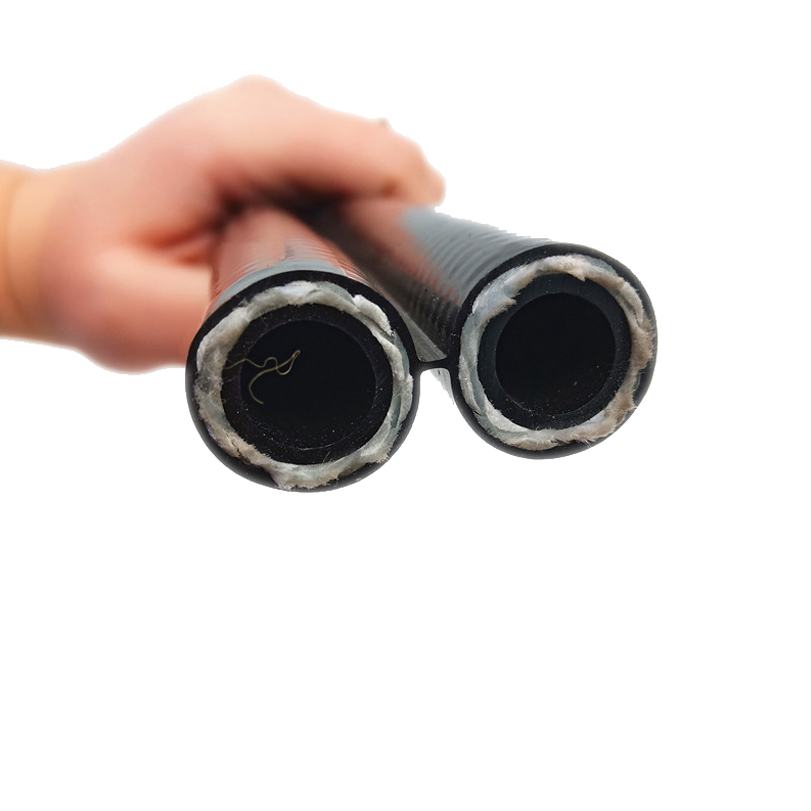
SAE 100R6 hose construction fundamentally relies on a layered architecture. The innermost layer, or tube, is typically composed of a synthetic rubber compound – commonly nitrile rubber (NBR) for petroleum-based fluids, or ethylene-propylenediene monomer (EPDM) for phosphate ester-based fluids. NBR exhibits excellent resistance to abrasion, oil, and fuels, while EPDM provides superior resistance to heat, ozone, and weathering. The reinforcement layer dictates the pressure rating and flexibility of the hose. Braided constructions employ multiple layers of high-tensile steel wire, with the number of braids directly correlating to pressure capacity. Spiral wound constructions utilize a single wire spiraled around the tube, offering higher pressure ratings and increased flexibility. The outer cover, providing environmental protection and abrasion resistance, is generally a synthetic rubber such as Chloroprene (Neoprene). Critical manufacturing parameters include rubber compound formulation, wire tensile strength and coating, braid angle precision, and proper vulcanization processes. Vulcanization, or curing, is essential for achieving desired physical properties like elasticity, strength, and resistance to degradation. Precise temperature and time control during vulcanization is paramount to prevent under-curing (resulting in low strength) or over-curing (leading to brittleness). Material compatibility testing is also crucial; improper material selection can lead to swelling, cracking, and ultimately, hose failure.
Performance & Engineering
The performance of SAE 100R6 hose is critically governed by burst pressure, working pressure, and impulse pressure ratings. Burst pressure represents the maximum pressure the hose can withstand before catastrophic failure, typically tested hydrostatically. Working pressure is a fraction of the burst pressure (typically 50-60%) and represents the safe operating pressure. Impulse pressure, often overlooked, is the ability of the hose to withstand pressure spikes and pulsations without failure. Finite element analysis (FEA) is frequently employed in the design phase to optimize reinforcement layer configurations and predict stress distributions under various loading conditions. Environmental resistance is another key performance metric. Exposure to extreme temperatures, UV radiation, and corrosive chemicals can significantly degrade the hose material, reducing its lifespan and compromising its integrity. Hose bend radius is crucial; exceeding the minimum bend radius induces stress concentration, accelerating fatigue failure. Compliance with SAE J517 standard is non-negotiable, ensuring consistent performance and interchangeability. This standard dictates hose construction, testing procedures, and performance criteria. Furthermore, consideration must be given to fluid velocity; high velocities can cause erosion and increased pressure drop, potentially leading to cavitation and hose damage.
Technical Specifications
| Parameter | Unit | SAE 100R6 Type A | SAE 100R6 Type B |
|---|---|---|---|
| Working Pressure | PSI | 600 | 1000 |
| Burst Pressure | PSI | 2400 | 4000 |
| Reinforcement | - | Single Wire Braid | Double Wire Braid |
| Tube Material | - | NBR (Nitrile Rubber) | NBR (Nitrile Rubber) |
| Cover Material | - | Neoprene | Neoprene |
| Temperature Range | °F | -40 to +212 | -40 to +212 |
Failure Mode & Maintenance
Common failure modes in SAE 100R6 hose include fatigue cracking, abrasion, pinholes, and end separation. Fatigue cracking, often initiated at the point of maximum stress (e.g., near fittings or tight bends), is a progressive process caused by cyclic loading. Abrasion, resulting from external contact with abrasive surfaces, degrades the outer cover, exposing the reinforcement layer. Pinholes, caused by localized damage or manufacturing defects, lead to fluid leakage. End separation occurs when the hose detaches from the fitting, typically due to inadequate crimping or corrosion. Failure analysis frequently reveals root causes related to improper installation, exceeding pressure limits, incompatible fluids, or inadequate maintenance. Preventative maintenance is crucial. Regular visual inspections for cracks, abrasions, bulges, and leaks are essential. Hose routing should avoid sharp bends and contact with hot surfaces or abrasive materials. Proper fitting selection and crimping procedures are paramount. The use of protective sleeves can mitigate abrasion damage. Periodic fluid analysis can detect contamination that could accelerate hose degradation. Adhering to a scheduled replacement program, based on operating conditions and manufacturer recommendations, can proactively prevent catastrophic failures.
Industry FAQ
Q: What is the significance of the dash number in an SAE 100R6 hose designation (e.g., -6, -8, -10)?
A: The dash number indicates the inner diameter of the hose in sixteenths of an inch. For example, a -6 hose has a 6/16" (or 3/8") inner diameter, a -8 hose has an 8/16" (or 1/2") inner diameter, and so on. This is critical for ensuring proper flow rates and minimizing pressure drop within the hydraulic system. Selecting the correct dash size is directly related to the system’s flow requirements and pump output.
Q: How does the number of braids in a hose affect its pressure rating and flexibility?
A: Increasing the number of braids significantly increases the hose’s pressure rating. Each additional braid layer provides more reinforcement, enabling the hose to withstand higher pressures. However, more braids also reduce flexibility. Single-braid hoses are more flexible but have lower pressure ratings, while double-braid hoses offer higher pressure capacity but are less flexible. Spiral-wound hoses provide a balance between pressure and flexibility.
Q: What are the implications of using a hose with an incompatible fluid?
A: Using a hose with an incompatible fluid can lead to rapid degradation of the tube material. This can manifest as swelling, softening, cracking, or erosion. Swelling can reduce the inner diameter, restricting flow. Cracking and erosion lead to leakage and potential system failure. Always verify fluid compatibility with the hose manufacturer’s specifications before installation.
Q: What is the correct procedure for crimping hose fittings?
A: Correct crimping is essential for a leak-free and reliable connection. The crimp must be sufficient to create a secure bond between the hose and the fitting, but not so tight as to damage the hose reinforcement. Using the correct die size and crimping machine settings, specified by the fitting manufacturer, is crucial. Incorrect crimping can lead to premature failure, potentially resulting in fluid ejection and injury.
Q: How often should SAE 100R6 hoses be inspected and replaced?
A: Inspection frequency depends on the severity of the operating environment. In critical applications or harsh environments, monthly inspections are recommended. Regular inspections should include a visual check for cracks, abrasions, leaks, and damaged fittings. Hoses should be replaced immediately if any defects are detected. Even without visible defects, hoses should be replaced on a scheduled basis (e.g., every 5 years) as a preventative measure.
Conclusion
The selection, installation, and maintenance of SAE 100R6 hose represent a critical aspect of hydraulic system reliability and safety. Understanding the underlying material science, manufacturing processes, and performance characteristics is essential for ensuring optimal performance and preventing costly failures. Proper specification requires careful consideration of pressure requirements, fluid compatibility, environmental conditions, and application-specific needs.
Future trends in SAE 100R6 hose technology are focused on developing lighter-weight materials, improving chemical resistance, and enhancing durability. Advanced reinforcement materials, such as synthetic fibers, are being explored to reduce hose weight without compromising strength. Smart hoses, incorporating sensors for pressure, temperature, and leak detection, are also emerging as a potential solution for proactive maintenance and improved system monitoring. Consistent adherence to industry standards and best practices remains paramount for ensuring the long-term integrity and safe operation of hydraulic systems.

