
Apr . 01, 2024 17:55 Back to list
oem sae100r6 manufacturers Performance Analysis

Introduction
SAE 100R6 hose represents a critical component in hydraulic fluid conveyance systems across numerous industrial applications. OEM SAE 100R6 manufacturers provide hoses constructed to meet the Society of Automotive Engineers (SAE) J517 standard, specifically R6, denoting a non-reinforced rubber hose suitable for low-pressure applications. These hoses are vital in transmitting hydraulic power in machinery such as agricultural equipment, construction machinery, and various industrial systems. The core performance characteristics center around burst pressure, working pressure, temperature range, and fluid compatibility. A key pain point within the industry is ensuring consistent quality control across manufacturing batches to meet the stringent performance requirements dictated by SAE standards and customer specifications. Furthermore, manufacturers face challenges in adapting to evolving fluid formulations and the demand for increased chemical resistance. This guide provides a comprehensive technical overview of SAE 100R6 hose, covering material science, manufacturing processes, performance parameters, failure modes, and relevant industry standards.
Material Science & Manufacturing
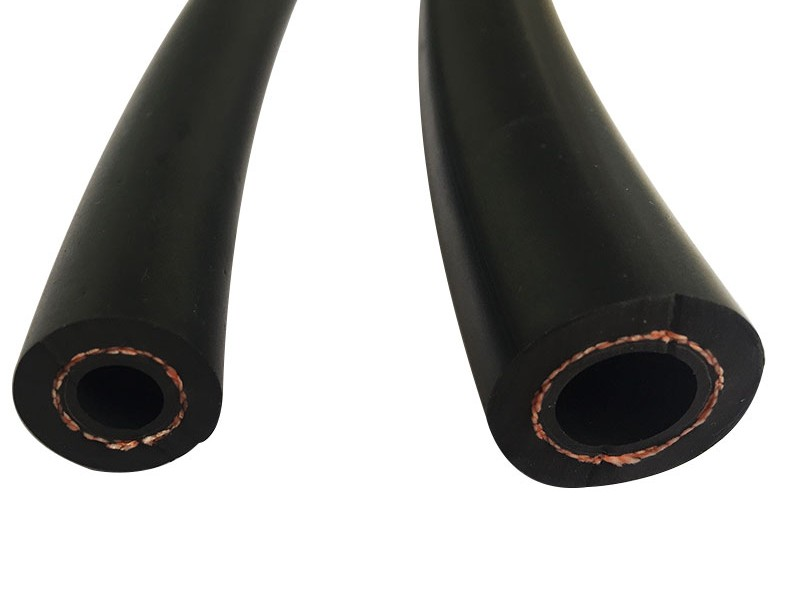
The core material for SAE 100R6 hose is typically a synthetic rubber compound. Most commonly, this comprises a blend of Nitrile (NBR), also known as Buna-N, due to its excellent resistance to petroleum-based hydraulic fluids. However, depending on the application and fluid compatibility requirements, other elastomers such as Ethylene Propylene Diene Monomer (EPDM) – providing superior heat and ozone resistance – or Chloroprene (CR, Neoprene) – offering good abrasion resistance and moderate oil resistance – may be utilized. The selection of the elastomer dictates the hose's performance envelope. NBR, for example, exhibits a temperature range of -40°C to 121°C, while EPDM can extend to -54°C to 150°C. The rubber compound is formulated with fillers (carbon black for reinforcement, processing aids, and plasticizers) and curing agents (sulfur-based systems are common) to achieve the desired physical properties, including tensile strength, elongation at break, and hardness (measured via Shore A durometer). Manufacturing typically involves extrusion. The rubber compound is fed into an extruder, which forces it through a die to form a seamless tube. This tube is then vulcanized (cured) using heat and pressure to crosslink the polymer chains, imparting elasticity and strength. Critical parameters during extrusion include die temperature, screw speed, and extrusion pressure. Maintaining consistent temperatures and pressures is crucial for ensuring uniform wall thickness and eliminating defects like voids or porosity. Post-extrusion, the hose undergoes quality control inspections for dimensional accuracy and visual defects. The hose ends are typically cut square to facilitate fitting attachment.
Performance & Engineering
The engineering performance of SAE 100R6 hose is primarily characterized by its pressure ratings and temperature limits. Burst pressure is defined as the pressure at which the hose fails catastrophically, typically tested hydrostatically. Working pressure is a fraction of the burst pressure – commonly a 4:1 safety factor – and represents the maximum continuous operating pressure. A critical aspect of engineering design is selecting a hose with a working pressure exceeding the maximum system pressure, accounting for pressure spikes and dynamic loads. Finite element analysis (FEA) is often employed to model stress distributions within the hose wall under various loading conditions. Another critical performance aspect is fluid compatibility. NBR offers good compatibility with many hydraulic fluids, but long-term exposure to phosphate ester fluids can cause swelling and degradation. EPDM offers better resistance to these fluids. Environmental resistance, including resistance to ozone, UV radiation, and abrasion, is also crucial. Ozone cracking is a common failure mode for unsaturated elastomers like NBR, especially in outdoor applications. Abrasion resistance is important in applications where the hose is subjected to rubbing or contact with abrasive surfaces. Compliance requirements are dictated by SAE J517, which specifies test methods and acceptance criteria for various performance parameters. Hose manufacturers must demonstrate adherence to these standards through rigorous testing and documentation.
Technical Specifications
| Parameter | Unit | Typical Value (NBR) | Typical Value (EPDM) |
|---|---|---|---|
| Working Pressure | psi | 200 | 200 |
| Burst Pressure | psi | 800 | 800 |
| Temperature Range | °C | -40 to +121 | -54 to +150 |
| Inner Diameter | inch | 0.25 - 1.0 | 0.25 - 1.0 |
| Outer Diameter | inch | 0.375 - 1.25 | 0.375 - 1.25 |
| Tensile Strength | MPa | 10-14 | 12-16 |
Failure Mode & Maintenance
SAE 100R6 hoses are susceptible to several failure modes. Fatigue cracking, caused by repeated flexing and pressure cycling, is a common issue, particularly near fittings. This is exacerbated by improper installation (excessive bending radius) and exposure to corrosive environments. Swelling and degradation due to incompatible hydraulic fluids can compromise the hose's strength and flexibility. Ozone cracking, as mentioned previously, affects NBR hoses exposed to atmospheric ozone. Abrasion damage can occur due to rubbing against other components or abrasive surfaces. Internal degradation, caused by fluid breakdown or contamination, can lead to hose softening and eventual failure. Maintenance practices are crucial for extending hose life. Regular visual inspections should be conducted to identify signs of cracking, swelling, or abrasion. Hoses should be replaced if any defects are detected. Proper fitting selection and installation are essential to prevent premature failure. The bend radius should adhere to manufacturer's specifications. Hydraulic fluid should be regularly analyzed for contamination and degradation. Systems should be flushed periodically to remove debris and maintain fluid quality. Hoses should be stored in a cool, dry place away from direct sunlight and ozone sources.
Industry FAQ
Q: What is the primary difference between SAE 100R6 and SAE 100R7 hose?
A: The key difference lies in reinforcement. SAE 100R6 is a non-reinforced hose, while SAE 100R7 incorporates a single or multiple braided textile reinforcement layers. This reinforcement significantly increases the burst pressure and working pressure capabilities of R7 hoses, making them suitable for higher-pressure applications. R7 also generally offers improved abrasion resistance.
Q: How does fluid type affect the service life of an SAE 100R6 hose?
A: Fluid compatibility is paramount. Using a hose with an incompatible fluid can lead to swelling, softening, and premature failure. For example, NBR hoses are not recommended for phosphate ester fluids, while EPDM provides superior resistance. Contaminated fluids containing abrasive particles can also accelerate wear and reduce hose life.
Q: What is the acceptable bend radius for an SAE 100R6 hose?
A: The acceptable bend radius is typically specified by the hose manufacturer and should be strictly adhered to. Exceeding the minimum bend radius creates stress concentrations in the hose wall, increasing the risk of fatigue cracking. A common guideline is a minimum bend radius of 6-8 times the inner diameter.
Q: How can I identify potential failure points in an SAE 100R6 hose during inspection?
A: Focus on areas near fittings, as these are subject to the highest stress. Look for cracks, swelling, abrasion, and discoloration. Pay attention to any signs of leaks or fluid seepage. Check the hose for stiffness or brittleness, which may indicate internal degradation.
Q: What are the implications of using a hose with a working pressure lower than the system's maximum operating pressure?
A: This is extremely dangerous and can lead to catastrophic hose failure, resulting in injury or damage to equipment. The working pressure of the hose must always exceed the maximum system pressure, with a suitable safety factor (typically 4:1), to account for pressure spikes and dynamic loads.
Conclusion
SAE 100R6 hose, while a relatively simple component, plays a crucial role in many hydraulic systems. Its performance is heavily reliant on material selection, manufacturing precision, and adherence to industry standards. Understanding the material properties of elastomers like NBR and EPDM, coupled with diligent inspection and maintenance practices, is essential for ensuring safe and reliable operation. Careful consideration of fluid compatibility, pressure ratings, and environmental factors will maximize the service life of these hoses.
Looking forward, advancements in rubber compounding and extrusion technologies will likely lead to improved hose performance and durability. The increasing demand for more chemically resistant hoses will drive innovation in elastomer formulations. Furthermore, the implementation of predictive maintenance strategies, utilizing sensor technology to monitor hose condition in real-time, may become more prevalent, enabling proactive replacement before failure occurs. Continued adherence to and refinement of standards like SAE J517 will be vital in maintaining consistent quality and safety within the industry.