
Apr . 01, 2024 17:55 Back to list
oem sae100r6 factory Performance Analysis
Introduction
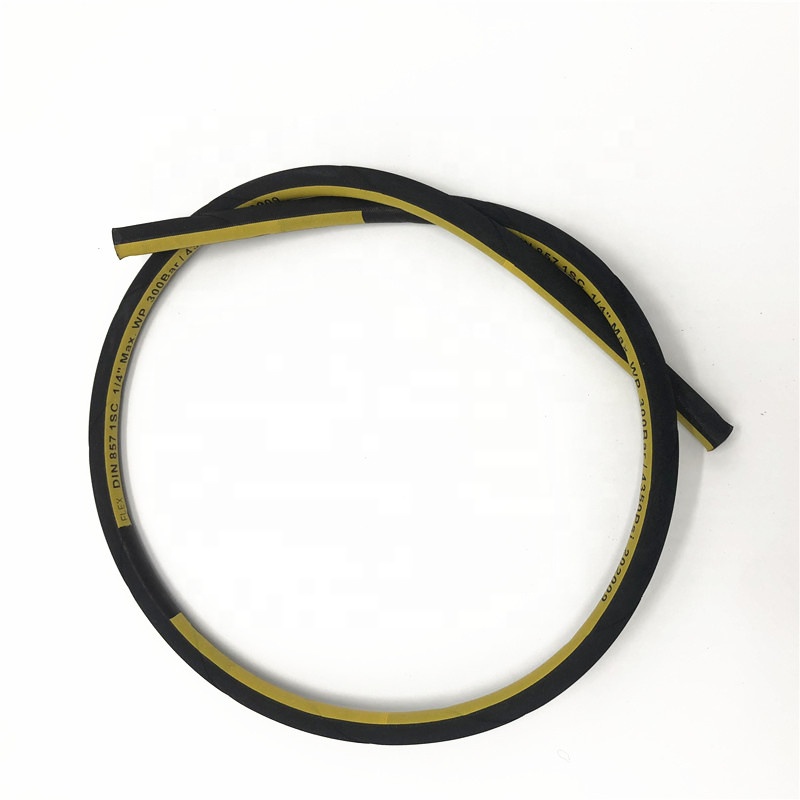
SAE 100R6 hose represents a critical component in hydraulic fluid conveyance systems across a diverse range of industrial and mobile applications. It is a non-reinforced rubber hose specifically designed for medium-pressure hydraulic systems. This guide provides a comprehensive technical overview of SAE 100R6 hose, focusing on OEM manufacturing considerations, material properties, performance characteristics, failure modes, and relevant industry standards. The OEM market for SAE 100R6 focuses on consistent quality, dimensional accuracy, and adherence to stringent specifications to ensure reliable operation in end-use applications such as agricultural machinery, construction equipment, and industrial machinery. Key performance parameters include pressure rating (typically up to 3000 PSI), temperature range (-40°C to +100°C), and fluid compatibility. Understanding these aspects is crucial for procurement managers, design engineers, and maintenance personnel involved in hydraulic system design and implementation.
Material Science & Manufacturing
SAE 100R6 hose is predominantly constructed from a synthetic rubber compound, typically a blend of nitrile rubber (NBR) due to its excellent resistance to petroleum-based hydraulic fluids. The NBR compound's properties are carefully tailored to meet the specific performance requirements of the hose, including tensile strength, elongation at break, and hardness (measured using the Shore A scale). Other polymers such as SBR may be included to adjust specific properties. Manufacturing begins with the compounding of the rubber, incorporating reinforcing fillers like carbon black to enhance strength and abrasion resistance, plasticizers to improve flexibility, and curing agents to initiate vulcanization. The compound is then extruded through a die to create a seamless tube. Critical process parameters include extrusion temperature, screw speed, and die design, all of which impact the hose's dimensional accuracy and surface finish. Following extrusion, the hose undergoes a vulcanization process – typically hot air vulcanization – to crosslink the rubber molecules, improving its elasticity, strength, and resistance to degradation. Precise control of time and temperature during vulcanization is essential to achieve optimal physical properties. Post-vulcanization, the hose is inspected for defects and dimensional compliance before being cut to length and prepared for end fitting attachment.
Performance & Engineering
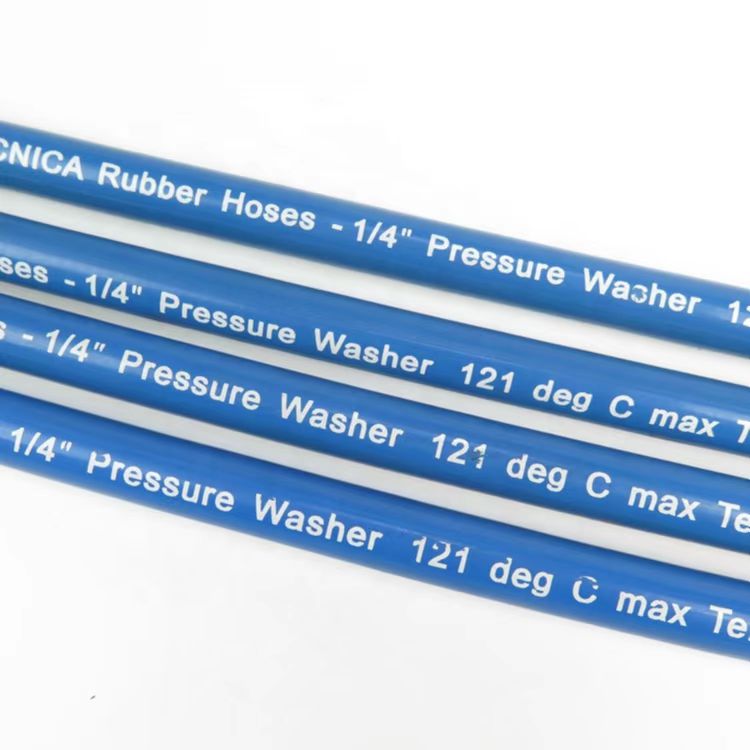
The performance of SAE 100R6 hose is governed by several key engineering principles. Hydrostatic pressure testing, conducted according to SAE J517 standards, verifies the hose’s ability to withstand the specified working pressure with an adequate safety factor. Burst pressure, which is significantly higher than the working pressure, is also tested to determine the hose’s ultimate strength. Fatigue testing, involving cyclical pressure application, assesses the hose’s resistance to failure under repeated loading conditions. Temperature cycling tests simulate the thermal stresses encountered in real-world applications, evaluating the hose’s performance across its specified temperature range. Fluid compatibility is crucial; prolonged exposure to incompatible fluids can cause swelling, softening, or cracking of the rubber compound. The hose’s flexibility and bend radius are also important considerations, influencing its ease of installation and resistance to kinking. The wall thickness of the hose directly influences its pressure rating and resistance to permeation. Finite element analysis (FEA) is often employed in the design phase to optimize the hose’s geometry and material selection for specific applications, ensuring structural integrity and minimizing stress concentrations. Adherence to SAE J518 standards for reinforcement identification is not applicable as 100R6 is non-reinforced.
Technical Specifications
| Parameter | Unit | SAE 100R6 Specification | Typical OEM Tolerance |
|---|---|---|---|
| Working Pressure | PSI | Up to 3000 | ± 10% |
| Burst Pressure | PSI | Minimum 9000 | N/A (Destructive Test) |
| Temperature Range | °C | -40 to +100 | ± 5°C |
| Inner Tube Material | - | Nitrile Rubber (NBR) | NBR Blend (Specific Formulation Varies) |
| Outer Cover Material | - | Nitrile Rubber (NBR) | NBR Blend (Specific Formulation Varies) |
| Tensile Strength | MPa | Minimum 14 | 14 ± 1 |
Failure Mode & Maintenance
Common failure modes in SAE 100R6 hose include pinhole leaks caused by internal pressure exceeding the hose’s rating, abrasion from external contact, and cracking due to ozone degradation or UV exposure. Swelling or softening of the rubber compound can occur with prolonged exposure to incompatible fluids. Fatigue cracking can initiate at points of high stress concentration, such as near fittings or sharp bends. Delamination, though less common in non-reinforced hose, can occur if the rubber compound is poorly bonded during vulcanization. Regular inspection is crucial for identifying potential problems. This includes visual checks for cracks, abrasions, and leaks. The hose should be replaced if any signs of damage are observed. Proper installation practices, such as avoiding sharp bends and ensuring correct fitting attachment, can significantly extend hose life. Avoid direct exposure to ozone sources and UV radiation. When not in use, store the hose in a cool, dry place away from direct sunlight. Hydraulic fluid contamination can accelerate hose degradation; implementing a robust fluid filtration system is essential. Hose routing should prevent rubbing or abrasion against other components. Avoid exceeding the hose’s specified pressure and temperature limits. Properly torqued fittings are vital to prevent leakage and premature failure.
Industry FAQ
Q: What is the primary difference between SAE 100R6 and SAE 100R7 hose?
A: The fundamental difference lies in reinforcement. SAE 100R6 is a non-reinforced hose, suitable for lower-pressure applications. SAE 100R7 incorporates a single steel wire braid reinforcement, significantly increasing its pressure rating and burst strength. Consequently, R7 is utilized in more demanding hydraulic systems.
Q: How does fluid compatibility affect the lifespan of an SAE 100R6 hose?
A: Incompatible fluids can cause the NBR rubber compound to swell, soften, or crack, leading to premature failure. Petroleum-based hydraulic fluids are generally compatible, but exposure to acids, ketones, or certain synthetic fluids can cause rapid degradation.
Q: What is the recommended minimum bend radius for SAE 100R6 hose?
A: The minimum bend radius typically ranges from 6 to 8 times the hose's inside diameter. Exceeding this limit can cause kinking and localized stress concentrations, reducing the hose’s lifespan and potentially leading to failure.
Q: How is the working pressure of an SAE 100R6 hose determined?
A: The working pressure is established through hydrostatic testing, adhering to SAE J517 standards. The hose is pressurized to several times its rated working pressure and held for a specified duration to verify its integrity. The working pressure is then calculated based on the test results and a defined safety factor.
Q: What role does vulcanization play in the manufacturing of SAE 100R6 hose?
A: Vulcanization is a critical process that crosslinks the rubber polymer chains, transforming the raw rubber compound into a durable, elastic material. This process improves tensile strength, elongation, and resistance to environmental degradation, ensuring the hose can withstand the stresses of hydraulic system operation.
Conclusion
SAE 100R6 hose remains a vital component in numerous hydraulic systems, offering a cost-effective solution for medium-pressure applications. Understanding its material science, manufacturing processes, performance characteristics, and potential failure modes is paramount for engineers and procurement professionals. Consistent adherence to SAE standards and rigorous quality control during OEM manufacturing are essential to ensure reliability and longevity.
The selection of appropriate hose materials, coupled with proper installation and maintenance practices, are crucial for maximizing the service life and minimizing the risk of catastrophic failure. Ongoing research and development continue to refine NBR formulations and extrusion techniques, further enhancing the performance and durability of SAE 100R6 hose in demanding industrial environments.

