
Apr . 01, 2024 17:55 Back to list
oem sae100r17 supplier Hydraulic Hose Performance Analysis
Introduction
SAE 100R17 hose, commonly referred to as hydraulic hose, represents a critical component in fluid power systems across diverse industrial applications, including construction, agriculture, manufacturing, and automotive. As an OEM supplier of SAE 100R17 hose, adherence to stringent manufacturing specifications and quality control is paramount. This guide provides a detailed technical overview of SAE 100R17 hose, covering material science, manufacturing processes, performance characteristics, failure modes, and industry standards. The core performance is defined by its ability to safely and reliably transmit hydraulic fluid under high pressure and varying environmental conditions. The increasing demand for higher operating pressures, coupled with stricter environmental regulations concerning fluid leakage and material durability, necessitates a comprehensive understanding of SAE 100R17 hose technology for both manufacturers and end-users. This guide addresses the key pain points associated with hose selection, installation, maintenance, and potential failure analysis, ultimately aiming to enhance system reliability and minimize operational downtime.
Material Science & Manufacturing
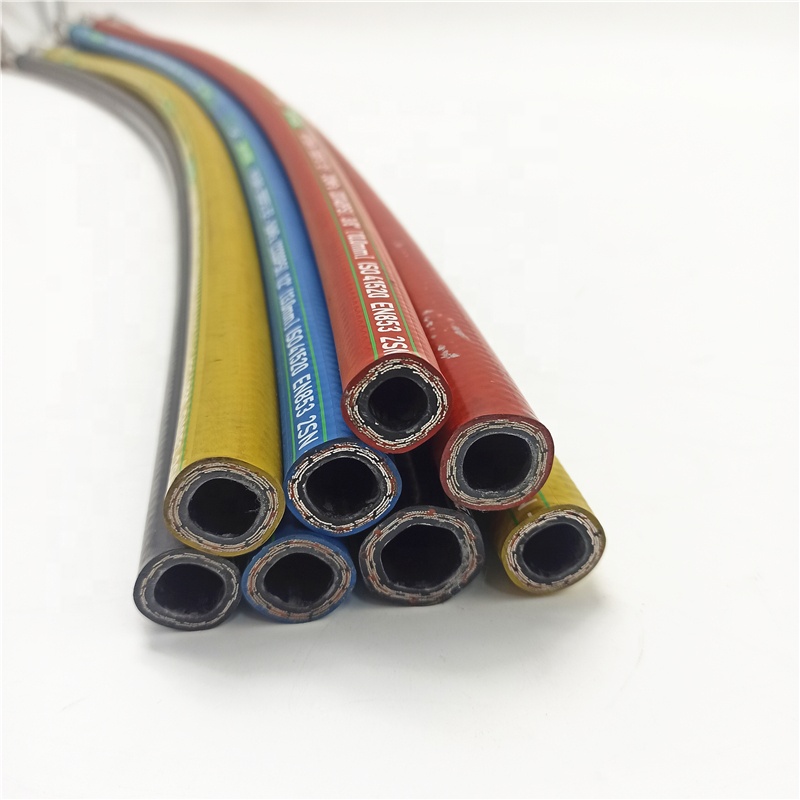
SAE 100R17 hose construction typically involves four primary layers: the inner tube, reinforcement layers, and the outer cover. The inner tube is commonly composed of synthetic rubbers, notably nitrile (NBR) for petroleum-based hydraulic fluids, or fluoroelastomers (FKM/Viton) for compatibility with aggressive fluids like phosphate esters. NBR offers good abrasion resistance and cost-effectiveness, while FKM provides superior resistance to heat, chemicals, and oils, albeit at a higher cost. Reinforcement layers traditionally consist of multiple braids of high-tensile steel wire. The number of braids directly correlates with the hose’s working pressure capacity; a six-spiral construction is typical for higher-pressure applications. The outer cover is usually made of synthetic rubber, such as chloroprene (CR) for abrasion, ozone, and weather resistance. Manufacturing begins with extrusion of the inner tube and outer cover. Precise control of extrusion temperatures, die design, and cure rates is crucial to ensure dimensional accuracy and consistent rubber properties. The steel wire is spirally wound onto the inner tube, followed by the application of the outer cover. Curing is a critical step, typically employing heat and pressure to vulcanize the rubber compounds, establishing the final physical and chemical characteristics. Key parameter control includes monitoring rubber hardness (durometer), tensile strength, elongation at break, and fluid resistance. Steel wire surface treatment (zinc coating) is essential to prevent corrosion and ensure adequate adhesion with the rubber matrix. Deviation from optimal curing parameters can lead to issues such as reversion (loss of properties), scorch (premature vulcanization), or incomplete cure, all of which compromise hose performance and longevity.
Performance & Engineering
The performance of SAE 100R17 hose is dictated by its ability to withstand internal pressure, external pressure, temperature fluctuations, and mechanical stress. Force analysis is crucial in determining the required reinforcement layer configuration. Hoop stress, the tensile stress acting circumferentially within the hose wall due to internal pressure, is a primary design consideration. The steel wire reinforcement must effectively counteract this stress to prevent hose rupture. External pressure resistance is particularly important in suction applications, where the hose wall can collapse under vacuum. Temperature resistance is determined by the rubber compounds used in the inner tube and outer cover. NBR typically operates effectively within a range of -40°C to +100°C, while FKM can withstand temperatures up to +150°C or higher. Flexing fatigue is a significant failure mechanism, especially in dynamic applications involving repeated bending. The hose must maintain its structural integrity after numerous flex cycles. Compliance requirements are defined by SAE International (J517 standard specifies pressure ratings and performance characteristics). Proper installation techniques, including correct hose bending radius and fitting selection, are vital to prevent premature failure. Incorrectly installed hoses are prone to kinking, abrasion, and fatigue cracking. Furthermore, proper fluid compatibility is crucial; using incompatible fluids can cause swelling, degradation, or cracking of the inner tube. Finite element analysis (FEA) is commonly employed during the design phase to simulate stress distribution and optimize hose geometry for maximum performance and durability.
Technical Specifications
| Parameter | Unit | SAE 100R17 Specification | Typical OEM Supplier Range |
|---|---|---|---|
| Working Pressure | MPa | Up to 35 | 20 – 35 |
| Burst Pressure | MPa | ≥ 3 x Working Pressure | 2.5 – 3.5 x Working Pressure |
| Inner Tube Material | - | NBR, FKM | NBR, FKM, EPDM |
| Reinforcement | Layers | Multiple Steel Wire Braids | 4-6 Steel Wire Braids |
| Outer Cover Material | - | CR | CR, Polyurethane |
| Temperature Range | °C | -40 to +100 (NBR), -40 to +150 (FKM) | -40 to +120 (NBR), -40 to +160 (FKM) |
Failure Mode & Maintenance
Common failure modes in SAE 100R17 hose include burst failure due to exceeding the working pressure, extrusion failure (inner tube rupture due to high pressure and/or incompatibility), abrasion (outer cover wear leading to reinforcement exposure), kinking (restricted flow and potential damage), and fatigue cracking (initiated by repeated flexing and stress concentration). Failure analysis often reveals the root cause, such as improper installation, fluid incompatibility, exceeding pressure limits, or mechanical damage. Fatigue cracking typically starts at the inner radius of a bend and propagates through the reinforcement layers. Delamination, the separation of rubber layers, can occur due to poor adhesion or environmental degradation. Oxidation of the rubber compounds can lead to hardening, cracking, and loss of flexibility. Maintenance procedures include regular visual inspections for abrasion, cracking, and leaks. Hose should be replaced if any signs of damage are observed. Fluid analysis can identify contaminants or incompatible fluids that may contribute to hose degradation. Proper hose routing and support are essential to prevent kinking and abrasion. Avoid sharp bends and ensure adequate clearance from moving parts. When replacing a hose, always use fittings that are specifically designed for SAE 100R17 hose and are properly crimped to ensure a secure connection. Record keeping of hose replacement dates and operational conditions can help identify patterns and prevent future failures.
Industry FAQ
Q: What is the significance of the ‘dash size’ designation (e.g., -4, -6, -8) in SAE 100R17 hose?
A: The dash size refers to the inner diameter of the hose in sixteenths of an inch. For example, a -6 hose has a 6/16 inch (or 3/8 inch) inner diameter. This designation is critical for ensuring compatibility with fittings and hydraulic system components. The dash size dictates the flow capacity of the hose, and selecting the incorrect size can lead to reduced performance or system damage.
Q: How does temperature affect the performance and lifespan of SAE 100R17 hose?
A: Temperature extremes significantly impact hose performance. High temperatures can accelerate rubber degradation, reducing flexibility and increasing the risk of cracking. Low temperatures can cause the rubber to stiffen, increasing the risk of kinking and reducing flexibility. Operating outside the specified temperature range for the hose material (NBR or FKM) will dramatically reduce its lifespan.
Q: What are the key considerations when selecting fittings for SAE 100R17 hose?
A: Fittings must be specifically designed and rated for SAE 100R17 hose and the intended operating pressure. The fitting material must be compatible with the hydraulic fluid. Proper crimping is critical to ensure a leak-free and reliable connection. Using incorrect fittings or improper crimping techniques can lead to premature failure.
Q: How can I identify potential problems with a hydraulic hose before it fails completely?
A: Regular visual inspections are crucial. Look for signs of abrasion, cracking, swelling, discoloration, or leaks. Pay close attention to areas near fittings and bends. A hose that feels excessively stiff or pliable may indicate degradation. Any observed damage warrants immediate hose replacement.
Q: What is the role of steel wire reinforcement in SAE 100R17 hose, and how does the number of braids affect performance?
A: Steel wire reinforcement provides the structural integrity necessary to withstand high internal pressures. The number of braids directly correlates with the hose’s pressure rating. More braids provide greater resistance to hoop stress and allow for higher working pressures. However, increasing the number of braids also reduces the hose’s flexibility.
Conclusion
SAE 100R17 hose is a foundational component in hydraulic power transmission, demanding a thorough understanding of its material science, manufacturing intricacies, and performance limitations. Selecting the appropriate hose construction – inner tube material, reinforcement configuration, and outer cover – is crucial for ensuring optimal performance, reliability, and longevity within a given application. Adhering to stringent manufacturing standards, coupled with proactive maintenance and diligent failure analysis, is paramount for mitigating risks and maximizing operational efficiency.
The continuous drive for increased system pressures, enhanced fluid compatibility, and improved environmental sustainability will continue to shape the evolution of SAE 100R17 hose technology. Future developments may include the incorporation of advanced materials, such as thermoplastic composites, to reduce weight and enhance corrosion resistance. Predictive maintenance strategies, leveraging sensor technology and data analytics, will play an increasingly important role in proactively identifying potential failures and optimizing hose replacement schedules. This will ultimately lead to reduced downtime, lower maintenance costs, and improved overall system reliability.