
Apr . 01, 2024 17:55 Back to list
oem sae100r17 manufacturer Performance Analysis
Introduction
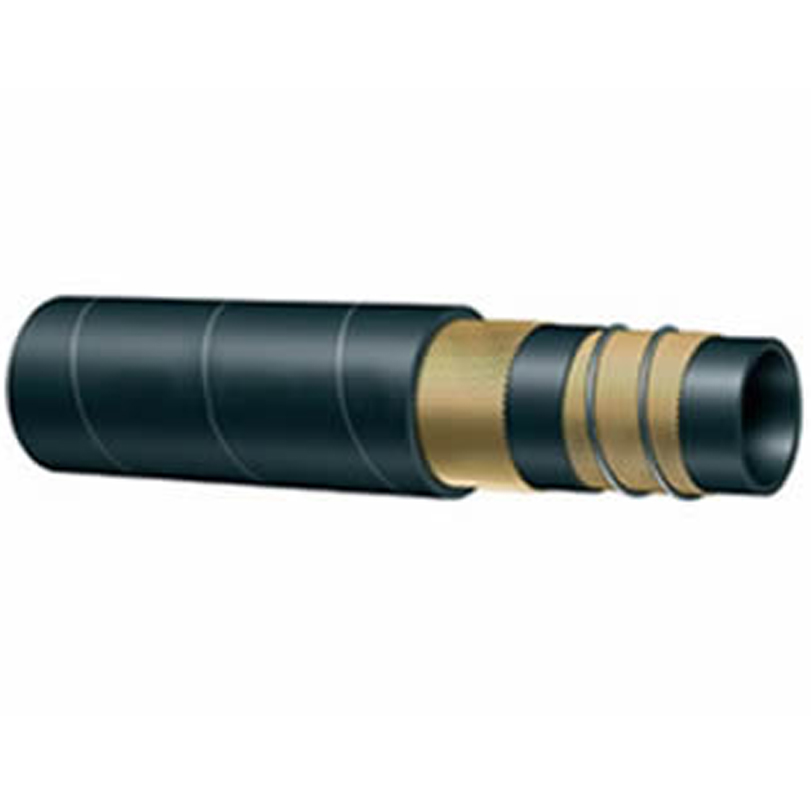
SAE 100R17 rubber hose represents a critical component within fluid conveyance systems across numerous industrial sectors, including automotive, agriculture, construction, and general industrial machinery. This specification defines requirements for non-reinforced rubber hose intended for the conveyance of petroleum-based fluids, including fuels, lubricating oils, and hydraulic fluids. OEM production of SAE 100R17 hoses necessitates rigorous adherence to dimensional accuracy, material composition, and performance criteria. The core performance characteristic is the ability to safely and reliably transport fluids under specified pressure, temperature, and environmental conditions. A primary industry pain point lies in maintaining consistent quality across large production volumes while controlling costs. Furthermore, ensuring chemical compatibility with increasingly diverse fluids and meeting evolving environmental regulations are substantial ongoing challenges for manufacturers.
Material Science & Manufacturing
The primary material component of SAE 100R17 hose is a synthetic rubber compound, commonly utilizing nitrile rubber (NBR) due to its excellent resistance to petroleum-based fluids. NBR’s acrylonitrile content directly influences its fuel and oil resistance; higher content provides greater resistance but reduces low-temperature flexibility. Other potential elastomers include chloroprene rubber (CR) for improved weathering and ozone resistance, and ethylene propylene diene monomer (EPDM) for enhanced heat and chemical resistance, though these are less common in standard 100R17 applications. Manufacturing typically involves extrusion of the rubber compound through a die to achieve the desired inner diameter and wall thickness. Following extrusion, the hose undergoes vulcanization (curing) – a crucial process involving heating the rubber with sulfur or peroxide-based curing agents to induce cross-linking. This cross-linking enhances the rubber’s tensile strength, elasticity, and resistance to degradation. Key parameters controlled during vulcanization include temperature, pressure, and curing time; deviations from optimal parameters can result in under-cured (weak) or over-cured (brittle) hose. Post-curing processes include dimensional inspection, pressure testing, and surface treatment for appearance and friction reduction. The reinforcement layer, though absent in 100R17 itself, impacts selection of compounds for fittings and related hose types, creating material compatibility considerations. Careful control of batch-to-batch consistency of the rubber compound is essential for maintaining uniform properties and performance.

Performance & Engineering
SAE 100R17 hose performance is dictated by several engineering considerations. Burst pressure is a critical parameter, determined through hydrostatic testing as defined in the SAE J302 standard. Working pressure is typically calculated as 1/4 of the burst pressure, providing a safety factor. The hose must withstand these pressures without exhibiting leakage, deformation, or rupture. Temperature range is also paramount; NBR’s performance degrades at elevated temperatures and stiffens at low temperatures. The standard specifies temperature ranges, and OEM manufacturers must verify performance across this spectrum. Flexibility, expressed as bend radius, is important for installation and operation. Tight bend radii can induce stress concentrations and accelerate fatigue failure. Chemical compatibility is rigorously tested, exposing the hose to various fluids to assess swelling, hardening, and degradation. Environmental resistance, including ozone exposure, UV radiation, and weathering, is crucial for outdoor applications. Fatigue testing, involving repeated pressure cycling, assesses the hose’s endurance and resistance to cracking. Failure analysis methodologies, including finite element analysis (FEA), are employed to predict stress distributions and optimize hose design for prolonged service life. Compliance with REACH and RoHS regulations is increasingly important, requiring manufacturers to ensure the absence of restricted substances in their products.
Technical Specifications
| Parameter | Unit | Specification (Typical) | Test Standard |
|---|---|---|---|
| Inner Diameter | mm | 6.35 – 25.4 | SAE J302 |
| Working Pressure | MPa | 0.7 – 2.1 | SAE J302 |
| Burst Pressure | MPa | 2.8 – 8.4 | SAE J302 |
| Temperature Range | °C | -40 to +100 | SAE J302 |
| Elongation at Break | % | >300 | ASTM D412 |
| Tensile Strength | MPa | >10 | ASTM D412 |
Failure Mode & Maintenance
Common failure modes in SAE 100R17 hoses include fatigue cracking, particularly at fitting interfaces or areas subjected to repeated bending. This is exacerbated by improper installation (excessive bend radius) or exposure to pulsating pressures. Chemical attack, resulting from incompatibility with the conveyed fluid, can cause swelling, softening, and eventual failure. Ozone cracking, prevalent in outdoor applications, manifests as surface cracks due to ozone exposure. Abrasion from contact with surrounding surfaces can erode the outer cover, weakening the hose. Internal degradation of the rubber compound due to prolonged exposure to high temperatures or reactive fluids can lead to loss of flexibility and eventual rupture. Maintenance primarily focuses on preventative measures. Regular visual inspection for cracks, abrasions, and leaks is critical. Avoiding excessive bending and kinking during installation and operation extends service life. Ensuring fluid compatibility is paramount; using the hose with fluids outside its specified range will accelerate degradation. Proper storage, avoiding direct sunlight and extreme temperatures, is essential. When replacing the hose, use only fittings specifically designed for SAE 100R17 to ensure a secure and leak-proof connection. A proactive fluid analysis program can detect contaminants or changes in fluid composition that could compromise hose integrity.
Industry FAQ
Q: What is the significance of the acrylonitrile content in NBR rubber used for SAE 100R17 hoses?
A: Acrylonitrile content directly correlates with fuel and oil resistance. Higher content improves resistance to petroleum-based fluids but reduces flexibility at low temperatures. Manufacturers balance these properties to meet specific application requirements.
Q: How does temperature affect the performance and lifespan of an SAE 100R17 hose?
A: Elevated temperatures accelerate the degradation of NBR, reducing its flexibility and tensile strength. Low temperatures can cause the rubber to stiffen, increasing the risk of cracking during bending. Operating within the specified temperature range is crucial for maximizing service life.
Q: What are the key considerations for ensuring chemical compatibility between the hose and the conveyed fluid?
A: Thorough testing is essential. The hose material must be resistant to swelling, hardening, and degradation when exposed to the fluid. Fluid analysis can help identify potential incompatibility issues. Referencing chemical resistance charts for NBR and other elastomers is a good starting point.
Q: What preventative measures can be taken to mitigate fatigue failure in SAE 100R17 hoses?
A: Avoid excessive bending and kinking during installation and operation. Ensure proper routing to minimize stress concentrations. Use fittings that provide a secure and vibration-resistant connection. Regularly inspect for cracks, especially near fittings.
Q: What standards govern the testing and certification of SAE 100R17 hoses?
A: SAE J302 is the primary standard for testing and performance requirements. ASTM D412 is commonly used for material property testing, such as tensile strength and elongation. Compliance with REACH and RoHS regulations is also increasingly important.
Conclusion
SAE 100R17 rubber hoses are fundamental components in fluid power systems, demanding careful material selection, precise manufacturing control, and diligent maintenance. The selection of appropriate NBR compounds, coupled with rigorous vulcanization processes, is critical for achieving the specified performance characteristics, particularly burst pressure, temperature resistance, and fluid compatibility. Addressing industry pain points—maintaining quality in high-volume production and ensuring compliance with evolving regulations—requires continuous investment in advanced testing methodologies and quality control systems.
Future trends will likely focus on developing more sustainable rubber compounds, improving hose durability through advanced reinforcement technologies, and integrating smart sensors for real-time monitoring of hose condition. Ultimately, a comprehensive understanding of the interplay between material science, engineering principles, and industry standards is essential for OEM manufacturers to deliver reliable and long-lasting SAE 100R17 hoses.