
Apr . 01, 2024 17:55 Back to list
oem sae100r17 factory Performance Analysis
Introduction
SAE 100R17 hose represents a critical component within the fluid power transmission industry, specifically designed for hydraulic systems operating at moderate to high pressures. This standard, developed by the Society of Automotive Engineers (SAE), defines the dimensional, material, and performance characteristics of non-metallic, single-reinforcement hydraulic hose. OEM SAE 100R17 factories specialize in the production of these hoses, catering primarily to Original Equipment Manufacturers (OEMs) across diverse sectors including construction machinery, agricultural equipment, industrial hydraulics, and automotive applications. The core performance of SAE 100R17 lies in its ability to reliably convey hydraulic fluid under demanding conditions, exhibiting resistance to pressure, temperature fluctuations, and fluid compatibility. The increasing demand for hydraulic systems in mobile equipment and industrial automation drives the continued relevance and expansion of the OEM SAE 100R17 manufacturing sector. A key industry pain point revolves around consistently achieving tight dimensional tolerances, maintaining consistent rubber compound quality, and ensuring adherence to rigorous burst pressure and impulse testing requirements. Furthermore, global supply chain dynamics and fluctuating raw material costs pose ongoing challenges to manufacturers.
Material Science & Manufacturing
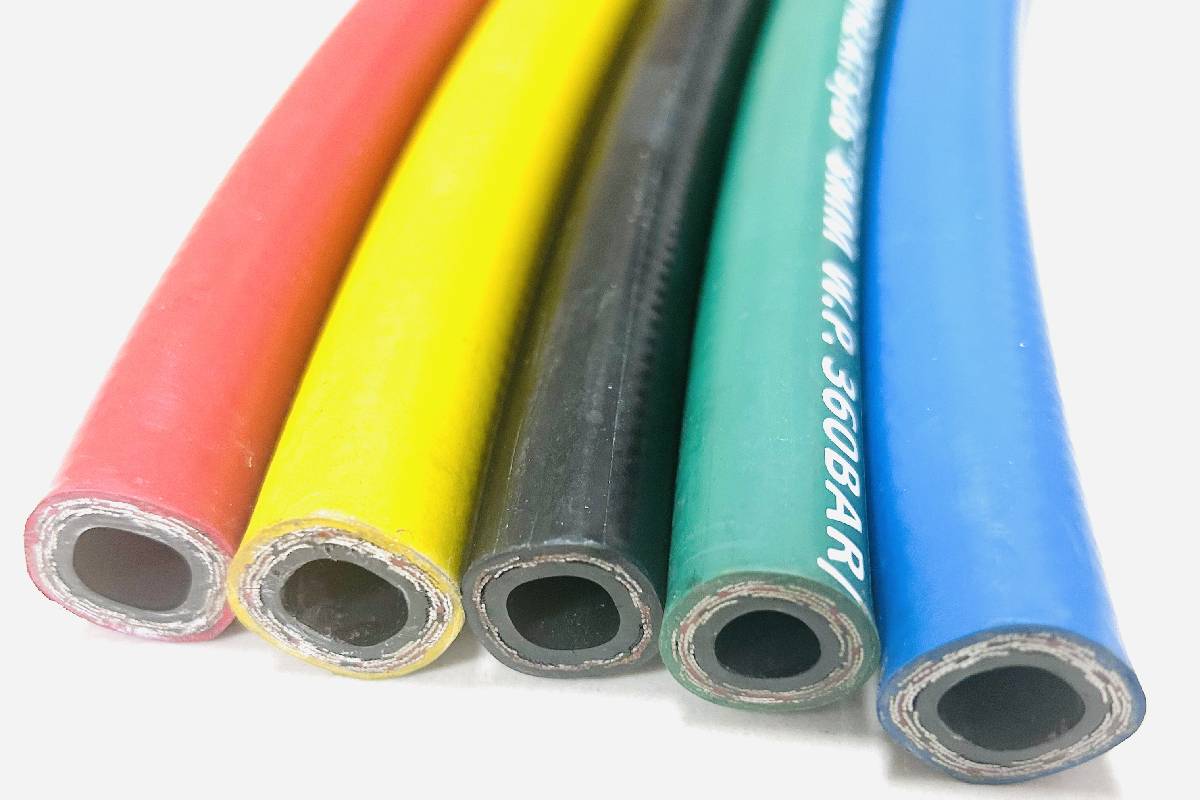
The construction of SAE 100R17 hose typically involves four key layers: an inner tube, reinforcement layer, outer cover, and bonding agents. The inner tube is commonly composed of synthetic rubbers like Nitrile (NBR) due to its excellent oil resistance, though other polymers such as Ethylene Propylene Diene Monomer (EPDM) are used for applications requiring compatibility with specific fluids like phosphate ester-based hydraulic fluids. NBR exhibits a glass transition temperature (Tg) around -28°C, influencing its flexibility at lower temperatures. The reinforcement layer traditionally consists of a single braid of high-tensile steel wire, providing the hose with its pressure-withstanding capability. Wire diameter and braid angle are critical parameters affecting burst pressure and flexibility. Manufacturing this braid requires precision winding techniques. The outer cover is typically made from Chloroprene (CR) rubber, offering abrasion, weather, and ozone resistance. CR’s inherent resilience contributes to the hose’s long-term durability. Bonding agents, crucial for interlayer adhesion, are usually polyether-based adhesives selected for compatibility with the rubber compounds. The manufacturing process begins with extrusion of the inner tube and outer cover. The reinforcement braid is then applied, followed by vulcanization – a curing process using heat and pressure to crosslink the rubber polymers, enhancing their strength, elasticity, and resistance to degradation. Key parameters during vulcanization include temperature, pressure, and time, all tightly controlled to achieve optimal physical properties. Post-vulcanization, hoses undergo rigorous dimensional inspection and pressure testing.
Performance & Engineering
The performance of SAE 100R17 hose is fundamentally governed by its ability to withstand internal pressure and external forces. Burst pressure, a critical specification, is determined through hydrostatic testing, where the hose is subjected to increasing pressure until failure. Minimum burst pressure is typically four times the working pressure, as defined by SAE standards. Impulse testing simulates the pressure pulsations inherent in hydraulic systems, assessing the hose’s resistance to fatigue failure. The number of cycles to failure at a specified pressure and temperature indicates the hose’s lifespan. Tensile strength and elongation at break characterize the rubber compounds’ mechanical properties, influencing the hose’s resistance to tearing and stretching. Environmental resistance is also paramount; exposure to ozone, UV radiation, and extreme temperatures can degrade the rubber compounds, leading to reduced performance. Finite Element Analysis (FEA) is routinely employed during the design phase to optimize hose geometry and reinforcement configuration for specific applications. This allows engineers to predict stress distributions and identify potential failure points. Furthermore, fluid compatibility assessments are conducted to ensure the hose material doesn't swell, soften, or degrade when exposed to the intended hydraulic fluid. Compliance with SAE 100R17 requires adherence to specific dimensional tolerances, material specifications, and performance criteria, verified through independent laboratory testing.
Technical Specifications
| Parameter | Unit | SAE 100R17 Specification | Typical OEM Range |
|---|---|---|---|
| Working Pressure | MPa | Up to 21 | 10 - 20 |
| Burst Pressure | MPa | ≥ 84 | ≥ 105 |
| Temperature Range | °C | -40 to +100 | -40 to +120 |
| Inner Tube Material | - | NBR (Standard), EPDM | NBR, EPDM, HNBR |
| Reinforcement | - | Single Steel Wire Braid | Single/Double Steel Wire Braid |
| Outer Cover Material | - | CR (Chloroprene) | CR, CSM |
Failure Mode & Maintenance
SAE 100R17 hoses are susceptible to several failure modes, each with distinct causes and preventative measures. Fatigue cracking, a common issue, arises from repeated flexing and pressure pulsations, eventually leading to crack initiation and propagation in the reinforcement layer or hose wall. This is exacerbated by excessive bending radius and improper routing. Another failure mode is abrasion, particularly in exposed areas, caused by contact with abrasive surfaces. Oil degradation and incompatibility can lead to swelling, softening, and cracking of the inner tube, compromising its integrity. Ozone cracking, prevalent in outdoor applications, occurs when ozone attacks the unsaturated bonds in the rubber compounds. Finally, localized pressure spikes due to sudden valve closures or pump malfunctions can exceed the hose’s pressure rating, resulting in immediate rupture. Maintenance involves regular visual inspection for cracks, abrasions, and swelling. Bending radius should be strictly adhered to, minimizing stress concentrations. Hoses should be protected from direct sunlight and abrasive contact. Fluid compatibility should be verified to ensure no adverse reactions occur. Periodic pressure testing can identify hoses nearing the end of their service life. Replacement should occur at the first sign of damage or when the hose reaches its recommended service interval, as determined by application severity and operating conditions. Proper hose assembly, utilizing correctly sized fittings and torquing to specified values, is essential to prevent premature failure.
Industry FAQ
Q: What is the significance of the dash size (e.g., -6, -8, -10) in SAE 100R17 hose specifications?
A: The dash size directly correlates to the inner diameter of the hose in sixteenths of an inch. For example, a -6 hose has a 6/16 inch (3/8 inch) inner diameter. The dash size is critical for selecting the correct hose to match the flow requirements of the hydraulic system. Using an undersized hose will result in excessive pressure drop and reduced system efficiency, while an oversized hose may not seal properly.
Q: How does the choice of inner tube material (NBR vs. EPDM) impact hose performance?
A: NBR offers superior resistance to petroleum-based hydraulic fluids, making it the standard choice for most applications. EPDM provides excellent compatibility with phosphate ester-based fluids and offers better heat and ozone resistance, but typically has lower oil resistance. The choice depends on the specific fluid being conveyed.
Q: What are the key considerations when selecting fittings for SAE 100R17 hose?
A: Fittings must be specifically designed for SAE 100R17 hose and must match the hose dash size. The fitting material must be compatible with the hose and the hydraulic fluid. Proper crimping is critical to ensure a leak-free seal. Using incorrect fittings or improper crimping can lead to catastrophic failure.
Q: What is the impact of exceeding the minimum bend radius on hose lifespan?
A: Exceeding the minimum bend radius creates excessive stress on the reinforcement layer, accelerating fatigue failure. Repeated bending beyond the specified radius causes microscopic cracks to initiate and propagate, eventually leading to hose rupture. Proper hose routing and support are crucial.
Q: How often should SAE 100R17 hoses be replaced as a preventative measure?
A: Replacement frequency depends on the application severity and operating conditions. As a general guideline, hoses should be replaced every 5 years, or sooner if exposed to harsh environments or subjected to frequent flexing. Regular inspection is essential to identify hoses nearing the end of their service life.
Conclusion
The SAE 100R17 hydraulic hose standard represents a cornerstone of fluid power technology, providing a well-defined framework for the design, manufacture, and performance of these critical components. Understanding the underlying material science, manufacturing processes, and potential failure modes is essential for ensuring reliable and safe operation of hydraulic systems. OEMs and end-users alike benefit from adhering to the stringent specifications outlined in the standard, maximizing hose lifespan and minimizing the risk of costly downtime.
Moving forward, advancements in rubber compounding, reinforcement materials (such as spiral wire reinforcement), and manufacturing techniques will likely lead to improved hose performance and durability. Increased focus on sustainability and environmentally friendly materials will also drive innovation in the industry. Continuous monitoring and adherence to updated SAE standards will remain crucial for maintaining the integrity and reliability of hydraulic systems across diverse industrial applications.

