
Apr . 01, 2024 17:55 Back to list
oem sae100r15 factories Performance Analysis

Introduction
SAE 100R15 rubber hose represents a critical component in hydraulic fluid power systems, specifically designed for high-pressure applications. OEM SAE 100R15 factories are key players in supplying this hose to diverse industries including construction, agriculture, manufacturing, and oil & gas. The technical position of this hose within the supply chain is as a direct replacement or integral part of hydraulic machinery. Core performance characteristics revolve around burst pressure, working pressure, temperature resistance, and fluid compatibility. Unlike earlier hose standards, SAE 100R15 incorporates a multi-steel wire reinforcement layer, providing significantly enhanced pressure handling capabilities, addressing a major pain point in demanding hydraulic systems. This guide provides an in-depth technical analysis of SAE 100R15 hose, covering material science, manufacturing, performance, failure modes, and industry standards, intended for procurement managers and engineering professionals.
Material Science & Manufacturing
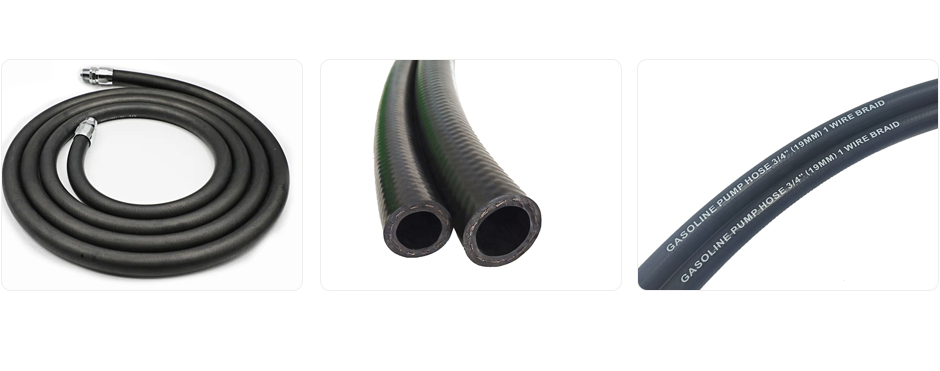
The core materials in SAE 100R15 hose construction dictate its performance. The inner tube is typically constructed from a synthetic rubber compound, most commonly nitrile rubber (NBR) due to its excellent resistance to petroleum-based hydraulic fluids. Alternatives like ethylene propylene diene monomer (EPDM) are used for compatibility with phosphate ester fluids. The reinforcement layer is critical and comprises multiple layers of high-tensile steel wire, spirally wound. Steel wire specification is paramount; high carbon steel conforming to ASTM A228 is generally employed to achieve the requisite tensile strength and flexibility. The outer cover utilizes a synthetic rubber blend, often a combination of chloroprene rubber (CR) for weathering and abrasion resistance, and NBR for oil resistance. Manufacturing processes involve extrusion of the inner tube and outer cover, followed by precise winding of the steel wire reinforcement. Parameter control during extrusion is vital – temperature, screw speed, and die geometry all impact dimensional accuracy and material homogeneity. Steel wire winding tension must be carefully monitored to ensure consistent reinforcement density. Post-extrusion, the hose undergoes vulcanization (curing) to crosslink the rubber polymers, imparting elasticity, strength, and chemical resistance. Cure time and temperature are critical process parameters. Quality control includes burst pressure testing, impulse testing, dimensional inspection, and fluid compatibility testing per SAE J517 standards.
Performance & Engineering
SAE 100R15 hose performance is primarily defined by its pressure capabilities and environmental resistance. Force analysis during operation involves internal hydraulic pressure acting radially on the inner tube, countered by the tensile strength of the steel wire reinforcement. The outer cover provides abrasion protection and resistance to external forces. Burst pressure, typically ranging from 4800 to 6000 psi, represents the maximum pressure the hose can withstand before catastrophic failure. Working pressure is typically 1/4 of the burst pressure. Temperature range is a crucial performance factor; SAE 100R15 hoses are generally rated for -40°C to +100°C (-40°F to +212°F), though specialized formulations may offer wider ranges. Environmental resistance encompasses exposure to ozone, UV radiation, and chemicals. Degradation due to ozone cracking is mitigated by using protective additives in the rubber compound. Hydraulic fluid compatibility is paramount; using incompatible fluids can lead to swelling, softening, and premature failure of the inner tube. Compliance with SAE J517 (hydraulic hose) and SAE J1926 (flange fittings) is mandatory for safety and performance. Proper hose assembly, utilizing correctly crimped fittings, is critical. Improper crimping can lead to fitting blow-off or hose failure at reduced pressures. Impulse testing simulates the effects of pressure pulsations in hydraulic systems, assessing the hose's fatigue resistance.
Technical Specifications
| Parameter | Unit | Typical Value (SAE 100R15) | Test Standard |
|---|---|---|---|
| Working Pressure | psi | 1200 - 2000 | SAE J517 |
| Burst Pressure | psi | 4800 - 6000 | SAE J517 |
| Temperature Range | °C | -40 to +100 | SAE J517 |
| Inner Tube Material | - | Nitrile Rubber (NBR) | ASTM D2000 |
| Reinforcement | Layers | 4 - 6 | SAE J517 |
| Outer Cover Material | - | Chloroprene Rubber (CR) | ASTM D2000 |
Failure Mode & Maintenance
SAE 100R15 hose failure modes are diverse and often interrelated. Fatigue cracking, induced by repeated pressure cycles and vibration, is a common issue, particularly near fittings. Delamination of the reinforcement layers can occur due to improper bonding during vulcanization or exposure to extreme temperatures. Internal degradation of the inner tube can result from fluid incompatibility, leading to swelling, softening, and eventual cracking. External degradation is caused by ozone cracking, UV exposure, and abrasion. Oxidation of the rubber compounds contributes to embrittlement and loss of elasticity. Fitting-related failures include blow-off due to improper crimping, and corrosion of the fitting material. Maintenance recommendations include regular visual inspection for cracks, abrasions, and leaks. Hose should be replaced if any damage is observed. Fluid compatibility must be verified before use. Avoid sharp bends and kinks, as they can stress the reinforcement. Proper routing and support are essential to prevent chafing and abrasion. Periodic pressure testing can help identify potential weaknesses before catastrophic failure. Storage should be in a cool, dry, dark environment to minimize degradation.
Industry FAQ
Q: What is the primary difference between SAE 100R15 and SAE 100R12 hose?
A: The key difference lies in the reinforcement structure and resulting pressure capacity. SAE 100R15 utilizes multiple layers of spirally wound steel wire, offering significantly higher burst pressures (4800-6000 psi) compared to SAE 100R12 (typically 1200-1500 psi), which utilizes a single layer of steel wire. This makes SAE 100R15 suitable for higher-pressure hydraulic systems.
Q: How does fluid compatibility affect the lifespan of SAE 100R15 hose?
A: Incorrect fluid compatibility can severely reduce hose lifespan. Using fluids incompatible with the inner tube material (typically NBR) can cause swelling, softening, and cracking. This compromises the hose's structural integrity and leads to premature failure. Always verify fluid compatibility before operation.
Q: What are the critical factors to consider when selecting fittings for SAE 100R15 hose?
A: Fittings must be specifically designed for SAE 100R15 hose and conform to SAE J1926 standards. Proper crimping is crucial. Under-crimping can lead to fitting blow-off, while over-crimping can damage the hose reinforcement. The fitting material must be compatible with both the hose and the hydraulic fluid.
Q: What preventative measures can be taken to mitigate ozone cracking in the outer cover?
A: The outer cover material (typically CR) is susceptible to ozone cracking. Using a hose with a higher concentration of protective additives in the CR formulation can help. Additionally, minimizing exposure to ozone-rich environments and applying a protective coating can reduce cracking.
Q: How frequently should SAE 100R15 hose be inspected for wear and tear?
A: Inspection frequency depends on the severity of the operating conditions. As a general guideline, a thorough visual inspection should be performed monthly, or more frequently in high-stress applications. Look for cracks, abrasions, leaks, and any signs of degradation. Replace the hose immediately if any damage is detected.
Conclusion
SAE 100R15 hose represents a robust and reliable solution for high-pressure hydraulic fluid transfer. Understanding the underlying material science, manufacturing processes, and performance characteristics is crucial for ensuring optimal system operation and longevity. The multi-layered steel wire reinforcement provides superior pressure handling capabilities, but proper selection of fittings, fluid compatibility verification, and regular maintenance are paramount to prevent premature failure and ensure safe operation.
The future of SAE 100R15 technology may see advancements in rubber compound formulations to enhance resistance to extreme temperatures and aggressive fluids. Further development in non-destructive testing methods could enable more accurate assessment of hose condition, improving preventative maintenance strategies. Adherence to established industry standards like SAE J517 and J1926 remains critical for maintaining quality and safety within the hydraulic systems landscape.