
Apr . 01, 2024 17:55 Back to list
oem sae100r12 suppliers Performance Analysis
Introduction
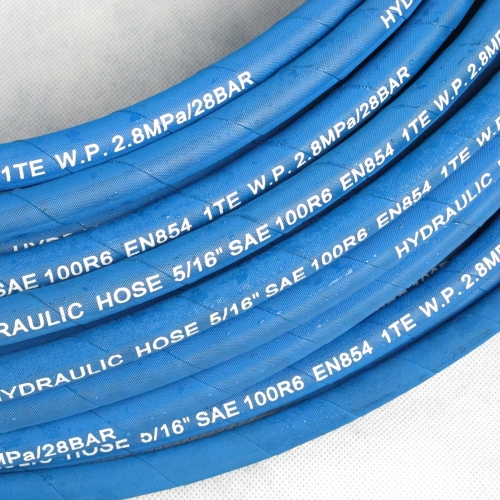
SAE 100R12 rubber hose represents a critical component in hydraulic fluid power systems across diverse industries, including construction, agriculture, manufacturing, and automotive. This specification, established by the Society of Automotive Engineers (SAE), defines the dimensional, performance, and marking requirements for non-reinforced rubber hose intended for use with hydraulic fluids. OEM suppliers of SAE 100R12 hose face increasingly stringent demands for consistent quality, reliable performance, and adherence to evolving industry standards. The core performance attributes—pressure rating, temperature range, and fluid compatibility—are paramount. Failure to meet these criteria can result in catastrophic system failure, leading to downtime, safety hazards, and significant financial losses. This guide provides a comprehensive technical overview of SAE 100R12 hose, covering material science, manufacturing processes, performance characteristics, failure modes, and relevant industry standards, targeting procurement managers and engineers involved in selecting and utilizing these critical components. The key industry pain point centers around consistently obtaining hose that meets stated specifications and demonstrates long-term durability in challenging operational environments.
Material Science & Manufacturing
SAE 100R12 hose is primarily constructed from a synthetic rubber compound, typically a blend of nitrile rubber (NBR) for oil resistance, and potentially other elastomers like styrene-butadiene rubber (SBR) to enhance physical properties. NBR provides excellent resistance to petroleum-based hydraulic fluids, but its low-temperature flexibility can be a limitation. The specific formulation is proprietary to each OEM supplier, but key parameters include acrylonitrile content (affecting oil resistance), filler type and loading (influencing tensile strength and abrasion resistance), and plasticizer selection (impacts flexibility and low-temperature performance). Manufacturing begins with compounding the rubber blend using Banbury mixers or two-roll mills, ensuring homogenous dispersion of all ingredients. The compound is then extruded through a die to form the hose tube. Critical extrusion parameters include die temperature, screw speed, and back pressure, which directly affect dimensional accuracy and surface finish. Following extrusion, the hose is typically cured (vulcanized) using heat and pressure in an autoclave or continuous vulcanizing press. Vulcanization crosslinks the rubber molecules, imparting elasticity, strength, and resistance to degradation. Quality control during manufacturing emphasizes precise dimensional control (inner diameter, outer diameter, wall thickness) and thorough testing of physical properties (tensile strength, elongation at break, hardness) according to SAE J517 standards. Post-curing, the hose undergoes inspection for surface defects, dimensional compliance, and proper marking. Improper curing can lead to reversion (loss of properties) or insufficient crosslinking (reduced strength and durability).

Performance & Engineering
The performance of SAE 100R12 hose is dictated by its ability to withstand internal pressure, external pressure, temperature fluctuations, and fluid compatibility. Force analysis focuses on hoop stress within the hose wall due to internal pressure, calculated using the Barlow formula (σ = PD/2t, where σ is hoop stress, P is internal pressure, D is inner diameter, and t is wall thickness). Engineering considerations include the hose’s bend radius, which impacts stress concentration and fatigue life. Too small a bend radius can induce localized stress exceeding the material’s yield strength, leading to cracking. Environmental resistance is critical; prolonged exposure to ozone, UV radiation, and extreme temperatures can cause rubber degradation. Fluid compatibility must be rigorously assessed; incompatible fluids can cause swelling, softening, or cracking of the rubber. Compliance requirements necessitate adherence to SAE J517 testing protocols, which include pressure testing at various temperatures, impulse testing (simulating pressure surges), and dimensional verification. Furthermore, many applications demand compliance with REACH and RoHS regulations, restricting the use of hazardous substances. The hose’s construction does not include steel wire reinforcement, which distinguishes it from higher-pressure hose specifications like SAE 100R1AT. Therefore, operational parameters must remain within the specified pressure and temperature limits to avoid catastrophic failure. Burst pressure is typically four times the working pressure, providing a safety factor.
Technical Specifications
| Parameter | Unit | SAE 100R12 Specification | Typical OEM Supplier Range |
|---|---|---|---|
| Working Pressure | PSI | 1000 | 1000-1200 |
| Burst Pressure | PSI | 4000 | 4000-4800 |
| Temperature Range | °F | -40 to +212 | -40 to +225 |
| Inner Diameter | inches | 0.25 – 2.0 | 0.25 – 2.5 |
| Outer Diameter | inches | Varies with ID | Varies with ID +0.05/-0.03 |
| Tensile Strength | MPa | 10.5 | 11 – 12.5 |
Failure Mode & Maintenance
SAE 100R12 hose is susceptible to several failure modes. Fatigue cracking, initiated by repeated bending and pressure cycling, is a common cause of failure, particularly near fittings. Delamination, the separation of rubber layers, can occur due to inadequate bonding during vulcanization or exposure to incompatible fluids. Oxidation and ozone cracking degrade the rubber surface, reducing its strength and flexibility. Abrasion, caused by contact with abrasive surfaces, can wear through the hose wall. Chemical degradation results from exposure to fluids not compatible with the NBR compound. Failure analysis often reveals that a combination of factors contributes to failure. Preventive maintenance is crucial. Regular visual inspections should identify cracks, abrasions, swelling, or discoloration. Hose should be replaced if any signs of damage are observed. Proper installation, avoiding sharp bends and excessive strain on fittings, is essential. Hose should be stored in a cool, dry place away from direct sunlight and ozone sources. Flushing the system periodically to remove contaminants can extend hose life. When replacing hose, ensure the replacement meets or exceeds the original specifications. Incorrectly sized or specified hose can lead to premature failure. Proper torqueing of fittings is vital; over-torquing can damage the fittings or hose, while under-torquing can lead to leaks.
Industry FAQ
Q: What is the primary difference between SAE 100R12 and SAE 100R1AT hose?
A: The key difference is reinforcement. SAE 100R12 is non-reinforced, utilizing only rubber layers for pressure containment, whereas SAE 100R1AT incorporates a single steel wire braid for significantly higher pressure ratings and burst strength. Consequently, 100R1AT hoses are suitable for more demanding applications.
Q: How does temperature affect the working pressure rating of SAE 100R12 hose?
A: Higher temperatures generally reduce the working pressure rating. The rubber compound loses strength and elasticity at elevated temperatures, diminishing its ability to withstand internal pressure. SAE J517 specifies pressure testing at varying temperatures to establish derating factors.
Q: What fluids are generally compatible with SAE 100R12 hose?
A: SAE 100R12 hose is generally compatible with petroleum-based hydraulic fluids, mineral oils, and water-glycol fluids. However, compatibility with specific fluids should always be verified by consulting the hose manufacturer’s data sheet, as some fluids can cause degradation.
Q: What are the critical considerations for selecting the correct inner diameter of SAE 100R12 hose?
A: Inner diameter impacts flow rate and pressure drop. A smaller diameter increases flow velocity, leading to higher pressure drop and potential erosion. A larger diameter reduces flow velocity but may increase hose weight and cost. Selection should be based on system flow requirements and pressure limitations.
Q: How can I identify a potentially counterfeit SAE 100R12 hose?
A: Look for clear and accurate markings indicating the manufacturer, hose size, working pressure, and SAE specification. Verify the manufacturer's reputation and check for inconsistencies in material quality or dimensions. A significantly lower price than comparable hoses should raise suspicion.
Conclusion
SAE 100R12 rubber hose remains a fundamental component in a wide array of hydraulic systems. Understanding its material properties, manufacturing processes, performance characteristics, and potential failure modes is crucial for ensuring reliable operation and minimizing downtime. Careful consideration of fluid compatibility, temperature limitations, and proper installation practices are paramount. Selecting a reputable OEM supplier committed to stringent quality control and adherence to industry standards is essential for obtaining consistently performing and durable hose.
The future of SAE 100R12 hose development likely involves advancements in rubber compound formulations to enhance temperature resistance, ozone protection, and compatibility with emerging environmentally friendly hydraulic fluids. Furthermore, improved manufacturing techniques focused on dimensional precision and bonding strength will contribute to increased hose longevity and reduced failure rates. Proactive maintenance programs, incorporating regular inspections and timely replacements, will remain critical for maximizing the lifespan and safety of hydraulic systems utilizing this ubiquitous component.

