
Apr . 01, 2024 17:55 Back to list
oem sae100r12 supplier Performance Analysis

Introduction
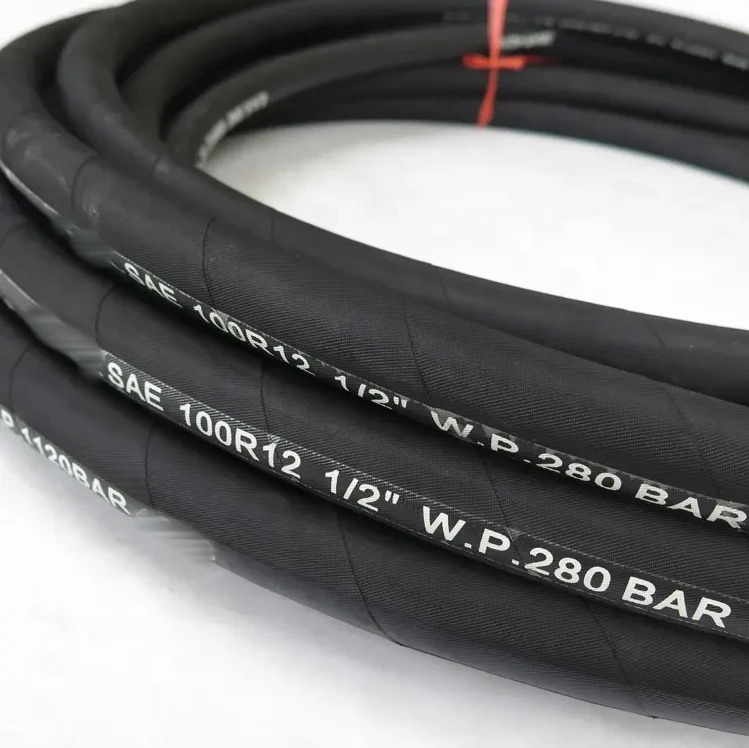
SAE 100R12 hose, as supplied by OEMs, represents a critical component in hydraulic systems across diverse industrial sectors. Positioned within the fluid power transmission chain, it functions as a flexible conduit for conveying pressurized hydraulic fluid, enabling the operation of machinery in applications ranging from construction equipment and agricultural machinery to industrial manufacturing and aerospace. The core performance characteristics of SAE 100R12 hose, stemming from its multi-layered construction, center around its ability to withstand high pressures, resist abrasion, maintain flexibility over a wide temperature range, and prevent fluid leakage. A significant industry pain point revolves around inconsistent quality from suppliers, leading to premature failure, downtime, and potential safety hazards. The focus on reliable sourcing of materials conforming to stringent specifications is paramount to mitigate these risks. This guide provides an in-depth technical overview of SAE 100R12 hose, covering material science, manufacturing processes, performance parameters, failure modes, and relevant industry standards, aiming to empower procurement and engineering professionals with the knowledge needed for informed decision-making.
Material Science & Manufacturing
SAE 100R12 hose construction typically involves four key layers: the inner tube, the reinforcement layer(s), the cover, and potentially an adhesive bonding layer between these components. The inner tube is commonly composed of synthetic rubber, specifically nitrile rubber (NBR) due to its excellent resistance to petroleum-based hydraulic fluids. NBR exhibits a glass transition temperature (Tg) around -28°C, providing flexibility at low temperatures, and a tensile strength ranging from 17 to 35 MPa. Manufacturing this layer involves extrusion, a process where heated NBR is forced through a die to form a continuous tube. Precise temperature control during extrusion is crucial to ensure consistent wall thickness and avoid degradation of the rubber. The reinforcement layer(s) are critical for pressure containment. These typically consist of multiple layers of high-tensile steel wire, braided in a specific pattern. The wire is typically carbon steel, requiring a passivation treatment to minimize corrosion. Braiding parameters – wire diameter, braid angle, and layer count – directly influence the hose’s burst pressure rating. The cover, usually composed of Chloroprene rubber (CR) or a blend of CR and NBR, provides environmental protection against abrasion, ozone, UV radiation, and oil. CR offers superior weathering resistance. Thermoforming processes shape the cover around the reinforced core. Adhesives, typically epoxy-based, are used to promote bonding between layers, enhancing structural integrity. Key parameter control during manufacturing includes maintaining consistent layer thicknesses, proper wire tension during braiding, and accurate vulcanization (curing) times and temperatures to achieve optimal rubber properties. Batch traceability of raw material lot numbers is also vital.
Performance & Engineering
The performance of SAE 100R12 hose is fundamentally governed by its ability to withstand internal pressure without failure. Burst pressure, defined as the pressure at which the hose ruptures, is a key specification. Working pressure, typically a fraction (e.g., 1/4) of the burst pressure, represents the maximum recommended operating pressure. Force analysis considers hoop stress (tangential stress acting on the hose wall) and longitudinal stress (axial stress due to pressure). These stresses are calculated using thin-walled pressure vessel theory, accounting for hose diameter and wall thickness. Fatigue life is another critical parameter; repetitive pressure cycling can lead to fatigue cracking in the reinforcement layers. Environmental resistance is essential. Hose performance degrades with exposure to extreme temperatures, chemicals (fuels, oils, corrosive fluids), and UV radiation. Testing to SAE J517 standard evaluates fluid resistance. Compliance requirements are dictated by SAE J517 (hose specifications) and SAE J1926 (connection performance). Functional implementation requires correct hose assembly with appropriate fittings. Incorrect fitting installation (over-tightening, improper crimping) can significantly reduce hose lifespan and create leak paths. Proper selection of fitting materials (steel, brass, stainless steel) is crucial to ensure compatibility with the hose and the hydraulic fluid.
Technical Specifications
| Parameter | Unit | SAE 100R12 Standard | Typical OEM Specification Range |
|---|---|---|---|
| Working Pressure | MPa | Minimum 10.5 | 10.5 – 21 |
| Burst Pressure | MPa | Minimum 31.5 | 31.5 – 63 |
| Inner Tube Material | - | Nitrile Rubber (NBR) | NBR, or HNBR for high temp. |
| Reinforcement | Layers | Multiple Steel Wire Braid | 2-6 wire braid layers |
| Cover Material | - | Chloroprene Rubber (CR) | CR, or CR/NBR Blend |
| Temperature Range | °C | -40 to +100 | -40 to +121 |
Failure Mode & Maintenance
Common failure modes in SAE 100R12 hose include: 1) Fatigue Cracking: Repeated flexing and pressure cycling can initiate cracks in the steel wire reinforcement. Failure analysis reveals crack propagation often starts at points of high stress concentration, such as near fittings. 2) Abrasion: External abrasion from contact with abrasive surfaces (e.g., machinery, rocks) can wear through the cover, exposing the reinforcement to corrosion. 3) Corrosion: Exposure to moisture and corrosive fluids can cause corrosion of the steel wire reinforcement, reducing its strength. 4) Pinholes/Leaks: Degradation of the inner tube or cover can lead to pinhole leaks, resulting in fluid loss. 5) Delamination: Poor adhesion between layers can cause delamination, weakening the hose structure. 6) Oxidation: Exposure to high temperatures and oxygen can cause oxidation of the rubber compounds, leading to hardening and cracking. Maintenance strategies include: 1) Regular Visual Inspection: Inspect hoses for signs of abrasion, cracking, swelling, or leaks. 2) Pressure Testing: Periodically test hoses for leaks under pressure. 3) Proper Routing: Ensure hoses are routed to avoid sharp bends, abrasion, and exposure to extreme temperatures. 4) Correct Fitting Installation: Verify fittings are correctly installed and tightened. 5) Fluid Compatibility Check: Ensure the hydraulic fluid is compatible with the hose materials. 6) Hose Replacement: Replace hoses at recommended intervals or when signs of degradation are observed. Employing Non-Destructive Testing (NDT) methods like ultrasonic testing can detect internal flaws before catastrophic failure.
Industry FAQ
Q: What is the significance of the "dash size" designation (e.g., -12) in SAE 100R12 hose specifications?
A: The dash size refers to the inner diameter of the hose in sixteenths of an inch. For example, a -12 hose has an inner diameter of 12/16 inch, or 3/4 inch. It is a critical parameter for ensuring appropriate flow rates and pressure drop within the hydraulic system. Mismatched dash sizes can lead to inefficient system operation or damage to components.
Q: How does temperature affect the working pressure rating of SAE 100R12 hose?
A: Generally, the working pressure rating decreases with increasing temperature. Elevated temperatures can reduce the tensile strength and elasticity of the rubber compounds, making the hose more susceptible to failure. Manufacturers provide derating factors to adjust the working pressure based on operating temperature. Exceeding the derated pressure can lead to premature failure.
Q: What is the role of the steel wire braid in determining the hose's pressure capacity?
A: The steel wire braid provides the primary structural support to withstand internal pressure. The number of braid layers, the wire diameter, and the braid angle all contribute to the hose’s burst pressure. More layers and larger diameter wires increase the pressure capacity, but also reduce flexibility. The braid angle influences how the stress is distributed within the hose wall.
Q: What are the key differences between NBR and HNBR inner tube materials?
A: While both are nitrile-based rubbers, Hydrogenated Nitrile Butadiene Rubber (HNBR) offers superior resistance to heat, oil, and abrasion compared to standard NBR. HNBR maintains its physical properties at higher temperatures, making it suitable for demanding applications. However, HNBR is generally more expensive than NBR.
Q: What are the consequences of using incompatible hydraulic fluid with SAE 100R12 hose?
A: Incompatible fluids can cause swelling, softening, or degradation of the rubber compounds in the inner tube and cover. This leads to leaks, reduced pressure capacity, and premature hose failure. It’s essential to consult the hose manufacturer’s compatibility chart to ensure the hydraulic fluid is suitable for use with SAE 100R12 hose.
Conclusion
SAE 100R12 hose is a foundational element in hydraulic power transmission, demanding meticulous attention to material selection, manufacturing precision, and operational practices. The multi-layered construction, involving specific rubber compounds and high-strength steel wire reinforcement, dictates its performance characteristics and susceptibility to failure. Understanding the interplay between internal pressure, temperature, fluid compatibility, and environmental factors is crucial for ensuring reliable operation and maximizing hose lifespan.
Procurement professionals and engineers must prioritize sourcing from reputable OEMs who demonstrate adherence to stringent quality control processes and international standards. Implementing a proactive maintenance program, incorporating regular inspections, pressure testing, and timely replacement of worn hoses, is vital for preventing costly downtime and ensuring operational safety. Continuous monitoring of industry best practices and advancements in hose technology will further optimize system performance and longevity.

