
Apr . 01, 2024 17:55 Back to list
oem red high pressure hydraulic hose manufacturers Performance Analysis

Introduction
OEM red high-pressure hydraulic hoses are critical components in fluid power systems across a diverse range of industries, including construction, agriculture, manufacturing, and automotive. These hoses are engineered to safely transmit hydraulic fluid under extreme pressure and challenging environmental conditions. Their technical position within the industry chain lies between hydraulic pump/valve manufacturers and the end-user equipment. Core performance characteristics center around pressure rating, temperature resistance, fluid compatibility, and burst strength, all directly impacting system reliability and operator safety. The red color is commonly used for identification purposes, often denoting specific pressure ratings or fluid types. Understanding the nuances of their construction, material science, and performance limits is paramount for selecting the appropriate hose for a given application and ensuring long-term operational integrity. The industry faces persistent challenges related to hose lifespan, failure analysis, and maintaining compliance with evolving safety standards, driving demand for advanced materials and manufacturing techniques.
Material Science & Manufacturing
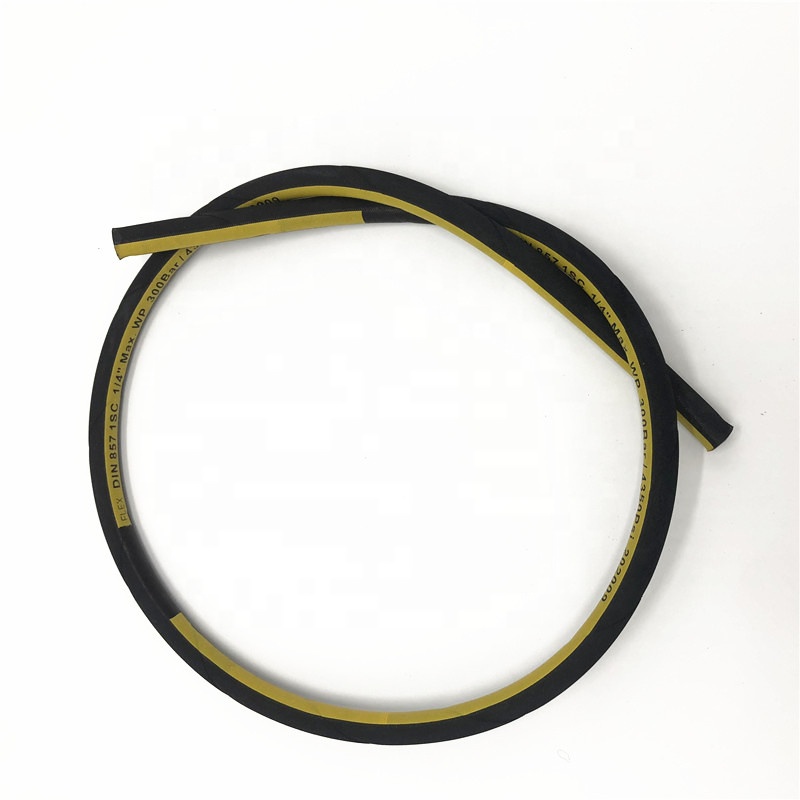
The construction of a high-pressure hydraulic hose involves several key material components and manufacturing processes. The innermost layer, the tube, is typically made of synthetic rubbers such as nitrile (NBR), chlorinated polyethylene (CPE), or polytetrafluoroethylene (PTFE) depending on fluid compatibility requirements. NBR offers good resistance to petroleum-based fluids, CPE excels in saltwater environments, and PTFE is suitable for aggressive chemicals. Reinforcement layers are crucial for withstanding high pressure. These layers usually consist of multiple braids of high-tensile steel wire, sometimes incorporating spiral-wound steel wire for increased flexibility and burst strength. The outer cover, providing abrasion and weather resistance, is commonly composed of synthetic rubbers like polyurethane (PU) or CPE.
Manufacturing begins with the extrusion of the inner tube to precise dimensions. The reinforcement layers are then braided or wound onto the tube using automated machinery. Maintaining consistent tension and helix angle during reinforcement application is critical to achieving uniform pressure ratings. Following reinforcement, the outer cover is extruded, and the hose is vulcanized (cured) to cross-link the rubber compounds, enhancing their strength and elasticity. Critical parameters during vulcanization include temperature, pressure, and curing time. Post-curing processes include dimensional inspection, pressure testing (to at least 1.5 times the working pressure), and end fitting attachment, which often involves swaging or crimping. Quality control measures throughout the process are vital to prevent defects like porosity, incomplete curing, and reinforcement irregularities.
Performance & Engineering
The performance of a high-pressure hydraulic hose is governed by a complex interplay of factors. Force analysis is central, specifically relating to internal pressure and the tensile strength of the reinforcement layers. Hoop stress within the tube increases proportionally with pressure, necessitating robust reinforcement to prevent bursting. Bend radius is another critical parameter; exceeding the minimum bend radius induces stress concentration, leading to premature failure. Environmental resistance is equally important. Exposure to extreme temperatures, UV radiation, ozone, and chemicals can degrade the rubber compounds, reducing flexibility and strength.
Compliance requirements are stringent. Hoses must adhere to standards set by organizations like SAE (Society of Automotive Engineers) and EN (European Norms), dictating minimum pressure ratings, burst pressures, temperature ranges, and fluid compatibility. Fatigue resistance is a crucial design consideration, particularly in applications involving repetitive flexing. Finite element analysis (FEA) is frequently employed to simulate stress distribution under various loading conditions, optimizing hose design and predicting lifespan. The selection of end fittings is also critical. Fittings must be compatible with the hose material and capable of withstanding the anticipated pressures and loads without leaking or failing.
Technical Specifications
| Parameter | Unit | Typical Value (DN13 - 1/2" ID) | Test Standard |
|---|---|---|---|
| Working Pressure | MPa | 20 | SAE J517 |
| Burst Pressure | MPa | 80 | SAE J517 |
| Temperature Range | °C | -40 to +100 | SAE J517 |
| Inner Tube Material | - | NBR | ASTM D2000 |
| Reinforcement | Layers | 2 Steel Wire Braid | SAE J517 |
| Outer Cover Material | - | CPE | ASTM D2000 |
Failure Mode & Maintenance
High-pressure hydraulic hoses are susceptible to several failure modes. Fatigue cracking, initiated by repeated flexing and stress concentration, is a common cause of failure. Delamination, the separation of reinforcement layers, can occur due to improper bonding or exposure to harsh environments. Abrasion from external sources can compromise the outer cover, leading to reinforcement corrosion and eventual failure. Internal degradation of the tube material, caused by chemical incompatibility or high temperatures, results in loss of flexibility and increased susceptibility to bursting. Oxidation, particularly in CPE covers, can cause hardening and cracking.
Preventive maintenance is crucial. Regular visual inspections should be conducted to identify signs of abrasion, cracking, blistering, or leaks. Hoses should be routed to avoid sharp bends, contact with hot surfaces, and exposure to corrosive chemicals. Proper end fitting installation is essential; over-tightening or improper crimping can damage the hose. Flush the hydraulic system periodically to remove contaminants that can accelerate wear. When replacing a hose, always use a hose with a pressure rating equal to or greater than the original. Record keeping of hose replacement dates and maintenance activities can help identify potential systemic issues.
Industry FAQ
Q: What is the impact of fluid velocity on hose lifespan?
A: Increased fluid velocity generates higher internal pressure drops and contributes to erosion of the inner tube, particularly when abrasive particles are present. This accelerates wear and reduces hose lifespan. Optimizing system design to minimize flow velocity and employing filtration systems are crucial mitigation strategies.
Q: How does temperature affect the performance of hydraulic hoses?
A: High temperatures can degrade the rubber compounds, reducing their elasticity and strength. Low temperatures can decrease flexibility, increasing the risk of cracking during bending. Exceeding the specified temperature range reduces the hose’s working pressure capacity and accelerates failure.
Q: What are the key considerations when selecting a hose for a specific hydraulic fluid?
A: Fluid compatibility is paramount. The inner tube material must be resistant to chemical attack from the fluid. Incompatible fluids can cause swelling, softening, or hardening of the tube, leading to leaks or bursts. Refer to fluid compatibility charts provided by hose manufacturers.
Q: What is the best practice for storing hydraulic hoses?
A: Hoses should be stored in a cool, dry, and dark location, away from direct sunlight, ozone sources, and extreme temperatures. They should be stored coiled loosely to prevent kinking or stress. Protect them from physical damage and contaminants.
Q: What are the implications of using non-SAE certified hoses?
A: Non-SAE certified hoses may not meet the required performance and safety standards. They may have lower burst pressures, inferior material properties, and inadequate testing. Using non-certified hoses can increase the risk of catastrophic failure and compromise system reliability.
Conclusion
The selection and maintenance of OEM red high-pressure hydraulic hoses are critical for ensuring the safe and reliable operation of hydraulic systems. Understanding the material science, manufacturing processes, and performance characteristics of these components is essential for engineers and procurement professionals. Adherence to industry standards, coupled with proactive maintenance practices, significantly extends hose lifespan and minimizes the risk of costly failures.
Future advancements in hydraulic hose technology will likely focus on the development of new materials with improved temperature resistance, chemical compatibility, and fatigue life. The integration of sensor technology for real-time condition monitoring will also play an increasingly important role in predictive maintenance and optimizing system performance. Continuous improvement in manufacturing processes and quality control will remain paramount to delivering high-performance, reliable hydraulic hose solutions.