
Apr . 01, 2024 17:55 Back to list
oem ptfe stainless braided hose supplier Performance Analysis
Introduction
PTFE (Polytetrafluoroethylene) stainless steel braided hose represents a critical component in fluid transfer systems across diverse industrial applications. This guide details the construction, performance characteristics, failure modes, and maintenance protocols associated with these hoses, specifically from the perspective of an OEM supplier. These hoses are engineered to provide a robust, chemically inert, and high-pressure capable solution for conveying a wide range of fluids, including aggressive chemicals, high-purity media, and high-temperature substances. Their position within the industrial chain is primarily as a specialized fluid handling solution, replacing traditional rubber or metallic hoses in demanding environments. Core performance factors include burst pressure, temperature resistance, chemical compatibility, and permeation resistance, all contributing to prolonged operational life and reduced risk of failure in critical processes. Understanding these factors is crucial for procurement managers and engineers seeking reliable fluid transfer solutions.
Material Science & Manufacturing
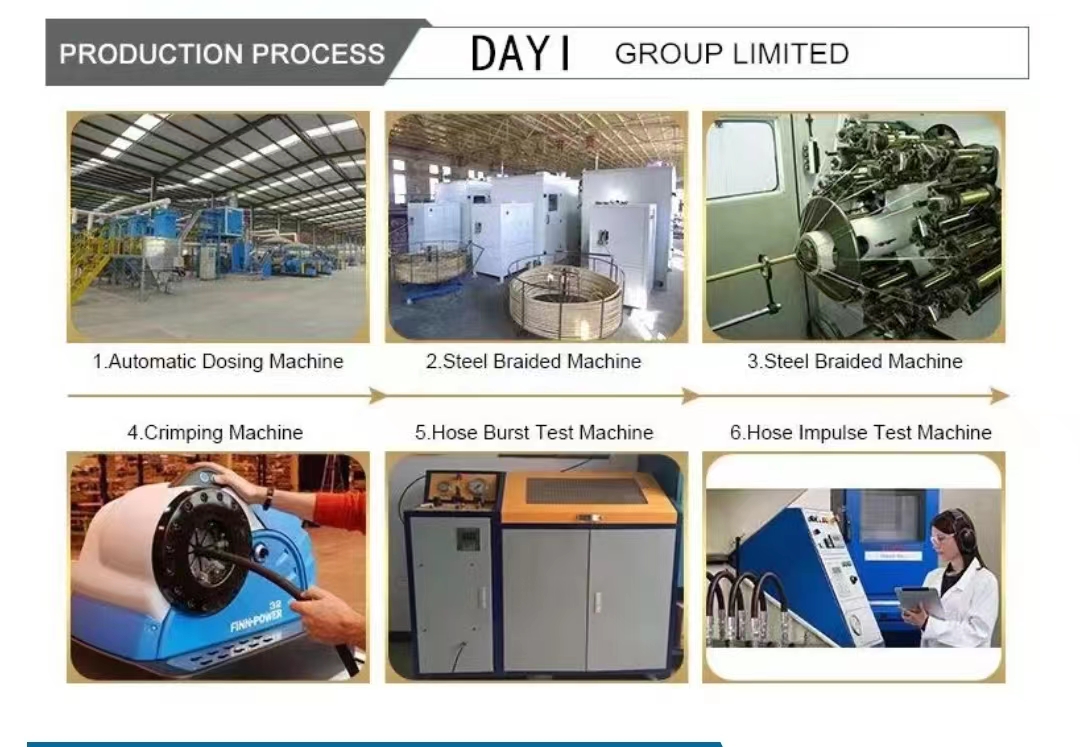
The composition of PTFE stainless steel braided hose centers around two primary materials: PTFE for the inner core and 304/316 stainless steel for the reinforcement braid. PTFE, a fluoropolymer, exhibits exceptional chemical inertness, a low coefficient of friction, and a wide temperature operating range (-200°C to +260°C). Its inherent properties stem from the strong carbon-fluorine bonds, rendering it resistant to virtually all chemicals. However, PTFE possesses relatively low tensile strength and creep resistance. This is addressed through the stainless steel braid. 304/316 stainless steel provides significant burst strength and pressure resistance. 316 stainless steel offers superior corrosion resistance, particularly in chloride-rich environments, compared to 304. Manufacturing involves extrusion of the PTFE inner core, followed by the precision braiding of the stainless steel wire around it. Critical parameters during extrusion include die temperature, screw speed, and haul-off speed, impacting wall thickness and uniformity. Braid coverage (the percentage of the hose surface covered by the steel wires) directly correlates to pressure capacity; higher coverage equates to higher pressure ratings. Post-braiding processes include annealing to relieve residual stresses from the braiding process and quality control inspections to verify dimensions and braid integrity. The selection of stainless steel wire diameter and braiding pattern (e.g., single, double, or multi-layer) are crucial engineering decisions affecting hose performance. Further, end fitting attachment techniques (crimping, swaging, or threading) must be carefully controlled to maintain hose integrity and prevent leaks.

Performance & Engineering
The performance of PTFE stainless steel braided hose is governed by several engineering principles. Burst pressure is calculated based on the tensile strength of the stainless steel braid, braid coverage, and the inner diameter of the hose. A common design factor of 4:1 is applied to establish the working pressure. Temperature fluctuations impact both the PTFE and the stainless steel. Elevated temperatures reduce the burst pressure of the hose due to a decrease in the material strength. Cyclic pressure loading can induce fatigue failure in the stainless steel braid, particularly at the crimped connections. Therefore, fatigue life analysis is crucial for applications involving pulsating flow. Chemical compatibility is paramount; while PTFE is highly inert, the end fittings must also be compatible with the conveyed fluid. Permeation, the diffusion of fluids through the hose wall, is another critical consideration, especially for applications involving hazardous or high-purity fluids. Permeation rates are influenced by temperature, pressure, and the chemical properties of the fluid. Finite Element Analysis (FEA) is frequently employed to model stress distributions within the hose under various loading conditions, optimizing design for maximum performance and longevity. Compliance requirements such as FDA standards for food-grade applications or USP Class VI standards for pharmaceutical applications dictate material selection and manufacturing processes.
Technical Specifications
| Parameter | Unit | Typical Value (3/8" ID Hose) | Test Standard |
|---|---|---|---|
| Inner Diameter | inch | 0.375 | ASTM E2837 |
| Outer Diameter | inch | 0.56 | ASTM E2837 |
| Working Pressure | psi | 3000 | ASTM D395 |
| Burst Pressure | psi | 12000 | ASTM D395 |
| Temperature Range | °F | -100 to +450 | ASTM D395 |
| Braid Coverage | % | 95 | Visual Inspection |
| Chemical Resistance | - | Excellent to most chemicals | ASTM D543 |
Failure Mode & Maintenance
Failure modes in PTFE stainless steel braided hoses can be attributed to several factors. Fatigue cracking in the stainless steel braid is common in applications with cyclic pressure. Corrosion, particularly pitting corrosion in the stainless steel, can occur in aggressive environments. PTFE degradation, while slow, can occur at elevated temperatures or with prolonged exposure to specific chemicals (e.g., molten alkali metals). Delamination, the separation of the PTFE core from the stainless steel braid, can result from improper end fitting attachment or excessive bending. Permeation-induced swelling of the PTFE can also lead to dimensional changes and eventual failure. Maintenance involves regular visual inspections for signs of cracking, corrosion, or delamination. Hose connections should be inspected for leaks and proper crimp integrity. Avoid sharp bends or kinks, as these can weaken the braid and accelerate fatigue failure. When handling corrosive fluids, verify the chemical compatibility of both the hose and end fittings. Periodic pressure testing can help identify potential weaknesses before catastrophic failure. Proper storage is crucial; avoid exposure to direct sunlight, ozone, and extreme temperatures. If damage is detected, the hose should be replaced immediately. Avoid attempting repairs, as these are generally not reliable and can compromise the hose's integrity.
Industry FAQ
Q: What is the impact of different stainless steel alloys (304 vs. 316) on hose lifespan in a seawater application?
A: 316 stainless steel is significantly more resistant to chloride-induced pitting corrosion than 304. Seawater's high chloride content makes 304 susceptible to localized corrosion, drastically reducing hose lifespan. 316 offers substantially improved corrosion resistance, extending the hose’s operational life in marine environments.
Q: How does hose diameter affect pressure capacity and flow rate?
A: Increasing hose diameter generally reduces pressure capacity for a given braid construction due to the larger surface area subjected to pressure. However, a larger diameter will increase flow rate, reducing frictional losses. Selecting the appropriate diameter involves balancing pressure requirements with desired flow characteristics.
Q: What is the acceptable bend radius for a PTFE stainless steel braided hose to avoid kinking and braid damage?
A: A general rule of thumb is a minimum bend radius of 6-8 times the outer diameter of the hose. Exceeding this limit can cause kinking, strain the stainless steel braid, and potentially lead to premature failure. Consult the manufacturer's specifications for specific recommendations.
Q: How do different end fitting materials (e.g., stainless steel, carbon steel) affect the overall system performance and corrosion potential?
A: End fitting material compatibility with the hose and conveyed fluid is critical. Dissimilar metals can create galvanic corrosion cells, accelerating corrosion of the less noble metal. Stainless steel end fittings are generally preferred for PTFE hoses to minimize corrosion potential. Carbon steel fittings require protective coatings to prevent corrosion.
Q: What quality control measures are implemented during the manufacturing process to ensure consistent performance and prevent defects?
A: Rigorous quality control measures include dimensional inspections of the PTFE core and braid, burst pressure testing, leak testing, and visual inspection for defects. Braid coverage is verified, and material certifications are obtained for both the PTFE and stainless steel. Statistical Process Control (SPC) is used to monitor critical manufacturing parameters.
Conclusion
PTFE stainless steel braided hoses offer a compelling solution for demanding fluid transfer applications requiring chemical inertness, high-pressure capability, and temperature resistance. Successful implementation hinges on a thorough understanding of the material properties, manufacturing processes, and potential failure modes. Proper selection of materials, adherence to design best practices, and diligent maintenance are essential for maximizing hose lifespan and ensuring operational reliability.
The continued advancement in materials science and manufacturing techniques will likely lead to even more robust and specialized PTFE braided hose designs, catering to increasingly complex industrial needs. Future developments may include the incorporation of new alloy compositions for enhanced corrosion resistance, improved braiding techniques for higher pressure ratings, and innovative end fitting technologies for leak-free connections. Ongoing research and development will undoubtedly solidify the position of PTFE stainless steel braided hoses as a cornerstone of modern fluid handling systems.