
Apr . 01, 2024 17:55 Back to list
oem ptfe stainless braided hose factories Performance Analysis
Introduction
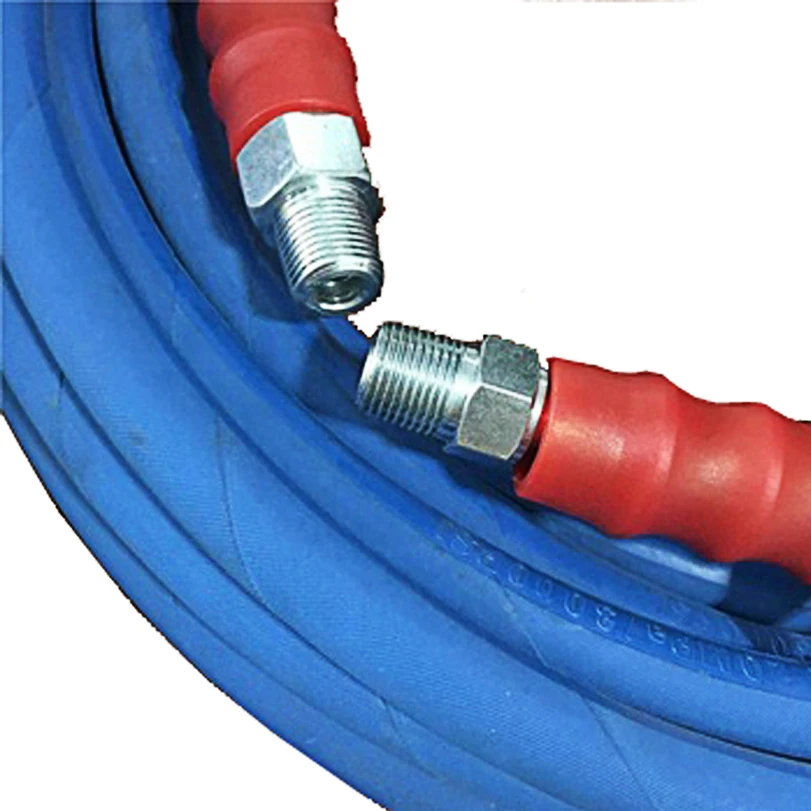
PTFE (Polytetrafluoroethylene) stainless steel braided hoses are critical components in a diverse range of industrial applications, including fluid transfer, hydraulic systems, and automotive applications. These hoses are engineered to withstand extreme temperatures, aggressive chemicals, and high pressures while maintaining flexibility and reliability. OEM (Original Equipment Manufacturer) ptfe stainless braided hose factories specialize in the custom design and production of these hoses to meet specific client requirements. The core performance characteristics – pressure resistance, chemical inertness, and temperature stability – define their utility and place them as a preferred solution where standard rubber or plastic hoses are inadequate. This guide provides an in-depth technical overview of these hoses, covering material science, manufacturing processes, performance parameters, failure modes, and relevant industry standards.
Material Science & Manufacturing
The construction of a PTFE stainless steel braided hose involves several key material choices. The inner core is typically composed of PTFE, selected for its exceptional chemical resistance and low coefficient of friction. PTFE's crystalline structure results in high thermal stability (-200°C to +260°C) and dielectric properties. However, PTFE exhibits creep under load, which is addressed by the supporting layers. The reinforcing braid is typically 304 or 316 stainless steel, providing exceptional tensile strength and resistance to corrosion. The stainless steel is chosen for its ability to withstand high pressures and maintain dimensional stability. Between the PTFE core and the stainless steel braid, a bonding layer (often a modified PTFE compound) is applied to ensure adhesion and prevent extrusion of the PTFE under pressure.
Manufacturing involves a multi-stage process. First, PTFE resin is processed via ram extrusion or paste extrusion to create a seamless tube. Critical parameters during extrusion include temperature control (typically between 327°C and 387°C) and die design to ensure consistent wall thickness and minimize defects. Following extrusion, the PTFE tube is sintered to enhance its mechanical properties. Next, the stainless steel wire is helically wound around the PTFE tube using a high-speed braiding machine. The braid angle and wire tension are precisely controlled to achieve the desired pressure rating and flexibility. Finally, the bonding layer is applied and the hose is cured under controlled temperature and pressure. Quality control measures include hydrostatic testing to verify pressure integrity, dimensional checks to ensure consistency, and chemical resistance testing to confirm material compatibility. The process demands precise control of resin molecular weight, sintering temperature, braid coverage, and bonding agent formulation.
Performance & Engineering
The performance of a PTFE stainless steel braided hose is governed by several engineering principles. Pressure rating is determined by the tensile strength of the stainless steel braid, the thickness of the PTFE liner, and the braid angle. A higher braid angle generally results in increased pressure capacity but reduced flexibility. Burst pressure is typically four times the working pressure, ensuring a significant safety margin. Flexibility is crucial for ease of installation and maneuverability in confined spaces. The PTFE liner’s low coefficient of friction minimizes flow resistance, contributing to efficient fluid transfer. Environmental resistance is paramount; PTFE’s chemical inertness ensures compatibility with a wide range of aggressive media, including acids, bases, and solvents. However, prolonged exposure to certain halogenated hydrocarbons can cause swelling of the PTFE. Temperature fluctuations induce thermal expansion and contraction, which the hose must accommodate without compromising integrity. Stress analysis using Finite Element Analysis (FEA) is employed during the design phase to optimize hose geometry and material selection for specific applications, predicting stress concentrations and potential failure points. The hoses must conform to industry standards regarding leakage, permeation, and material traceability.
Technical Specifications
| Parameter | Unit | Standard Specification | Typical Value |
|---|---|---|---|
| Working Pressure | MPa | SAE J517 | Up to 420 |
| Burst Pressure | MPa | SAE J517 | Up to 1680 |
| Temperature Range | °C | ASTM D395 | -200 to +260 |
| Inner Diameter | mm | ISO 1307 | 3.2 – 50.8 |
| Outer Diameter | mm | ISO 1307 | 6.4 – 63.5 |
| Braid Material | - | ASTM A240 | 304/316 Stainless Steel |
Failure Mode & Maintenance
Failure modes in PTFE stainless steel braided hoses are typically attributable to a combination of factors including pressure cycling, temperature extremes, chemical attack, and mechanical damage. Fatigue cracking in the stainless steel braid is a common failure mode, initiated by repeated stress cycles. This is often observed near crimp points or areas of high stress concentration. PTFE degradation can occur with prolonged exposure to high temperatures or aggressive chemicals, leading to embrittlement and loss of sealing capability. Permeation of fluids through the PTFE liner can also occur, particularly with low-molecular-weight gases. Delamination between the PTFE liner and the stainless steel braid can result from inadequate bonding or thermal expansion mismatches. Mechanical damage, such as abrasion, cuts, or kinks, can compromise the hose’s integrity.
Preventive maintenance is crucial for extending hose lifespan. Regular visual inspections should be conducted to identify any signs of damage, such as cracks, abrasions, or swelling. Pressure testing should be performed periodically to verify the hose’s integrity. Proper installation is essential; avoid sharp bends, excessive twisting, and direct contact with abrasive surfaces. Chemical compatibility should be verified before use. When handling aggressive chemicals, ensure the hose is compatible with the specific medium. Storage should be in a cool, dry environment, away from direct sunlight and extreme temperatures. In the event of a failure, the hose should be replaced immediately. Avoid attempting repairs, as they are generally unreliable. Proper disposal procedures should be followed, adhering to local environmental regulations.
Industry FAQ
Q: What is the impact of different stainless steel alloys (304 vs. 316) on the hose's corrosion resistance?
A: While both 304 and 316 stainless steel provide excellent corrosion resistance, 316 contains molybdenum, which significantly enhances its resistance to chloride corrosion. In environments with high chloride concentrations (such as marine applications or those involving saltwater exposure), 316 stainless steel is the preferred choice to prevent pitting and crevice corrosion.
Q: How does the braid angle affect the hose’s flexibility and pressure rating?
A: A smaller braid angle (steeper helix) generally results in increased flexibility but a lower pressure rating. A larger braid angle (shallower helix) provides a higher pressure rating but reduces flexibility. The optimal braid angle is a compromise between these two factors, tailored to the specific application requirements.
Q: What are the limitations of PTFE in terms of chemical compatibility?
A: While PTFE is remarkably chemically inert, it can be affected by certain halogenated hydrocarbons, which can cause swelling and reduce its mechanical properties. It's also susceptible to attack by molten alkali metals. Detailed chemical compatibility charts should be consulted before using PTFE hoses in specific applications.
Q: What is the typical service life of a PTFE stainless steel braided hose under normal operating conditions?
A: The service life varies depending on the operating conditions, including pressure, temperature, chemical exposure, and mechanical stress. However, under normal operating conditions, a properly maintained PTFE stainless steel braided hose can typically last for 5-10 years. Regular inspections and adherence to recommended maintenance procedures are crucial for maximizing service life.
Q: How does temperature cycling affect the performance of the hose?
A: Temperature cycling induces thermal expansion and contraction of the PTFE liner and stainless steel braid. This can lead to stress at the bonding interface and potential delamination over time. Proper hose design and material selection are critical for mitigating the effects of temperature cycling. Maintaining the hose within the specified temperature range is also essential.
Conclusion
PTFE stainless steel braided hoses represent a robust and reliable solution for fluid transfer in demanding industrial applications. Their unique combination of chemical inertness, high-temperature resistance, and mechanical strength makes them indispensable in various sectors. The performance of these hoses is intricately linked to material selection, manufacturing precision, and adherence to relevant industry standards. Understanding the potential failure modes and implementing proactive maintenance strategies are crucial for maximizing hose lifespan and ensuring operational safety.
Future advancements in hose technology may focus on developing new bonding agents with improved thermal stability and chemical resistance, as well as exploring alternative materials for the braid that offer enhanced strength-to-weight ratios. Furthermore, integrating sensor technology into the hose construction could enable real-time monitoring of pressure, temperature, and chemical exposure, providing valuable data for predictive maintenance and optimizing performance. The continued refinement of these technologies will further solidify the role of PTFE stainless steel braided hoses as a critical component in modern industrial systems.