
Apr . 01, 2024 17:55 Back to list
oem profession manufacturer hydraulic hose supplier Technical Analysis

Introduction
Hydraulic hoses are critical components in fluid power systems, responsible for transmitting hydraulic fluid to actuators and other components. OEM professional hydraulic hose suppliers cater to Original Equipment Manufacturers, providing customized hose assemblies and components meeting stringent specifications. The industry chain positions these suppliers between raw material providers (rubber, steel, polymers) and end-users across diverse sectors including construction, agriculture, manufacturing, and aerospace. Core performance characteristics include pressure rating, temperature resistance, fluid compatibility, burst pressure, and service life. A key pain point for OEMs is ensuring consistent quality and traceability, particularly given the high-stakes nature of hydraulic system failures. Suppliers must demonstrate robust quality control processes and material certifications to mitigate risks associated with system downtime and potential safety hazards. This guide provides a detailed technical overview of hydraulic hose technology, manufacturing considerations, performance parameters, failure modes, and industry standards.
Material Science & Manufacturing
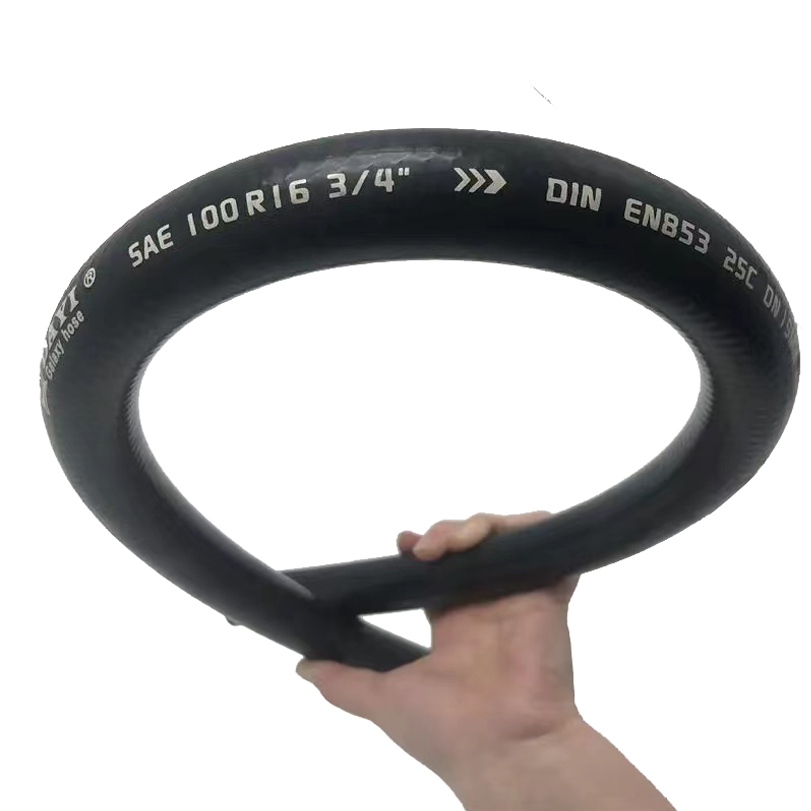
Hydraulic hoses are typically constructed from multiple layers, each serving a specific function. The inner tube, in contact with the hydraulic fluid, is commonly composed of synthetic rubbers like nitrile (NBR), ethylene propylene diene monomer (EPDM), or fluorocarbon (FKM, Viton) chosen for their chemical compatibility with the fluid being used. NBR offers good resistance to petroleum-based fluids, EPDM excels in phosphate ester fluids, and FKM provides superior resistance to a broader range of aggressive chemicals and high temperatures. Reinforcement layers, providing strength and pressure resistance, are usually braided or spiraled from high-tensile steel wire. The number of layers and wire diameter dictate the hose's working pressure. An outer cover, typically made of synthetic rubber (e.g., chloroprene), provides abrasion, weather, and ozone resistance. Manufacturing processes vary based on hose type. Braided hoses involve helical winding of steel wire over a mandrel, followed by vulcanization. Spiral hoses utilize continuous winding of steel wire, creating a more robust structure for higher pressures. Key parameters during manufacturing include consistent rubber compound mixing (controlling viscosity and filler dispersion), precise wire tension during braiding/winding, proper curing time and temperature (affecting rubber crosslinking and mechanical properties), and rigorous dimensional inspection. Material certification, particularly for steel wire (traceability to steel mill and chemical composition), is crucial for quality assurance. Pre-treatment of steel wire, such as galvanization or passivation, prevents corrosion and ensures long-term durability.
Performance & Engineering
Hydraulic hose performance is governed by a complex interplay of material properties and engineering design. Burst pressure, typically four times the working pressure, is a critical safety parameter. Fatigue resistance is paramount, as hoses are subjected to cyclic pressure and bending stresses. Finite Element Analysis (FEA) is commonly employed to model stress distribution within the hose structure under various loading conditions. The bend radius, a crucial design consideration, affects hose life; exceeding the minimum bend radius induces excessive stress and accelerates fatigue failure. Environmental resistance, including exposure to temperature extremes, UV radiation, and corrosive fluids, must be evaluated. Chemical compatibility testing is essential to prevent swelling, degradation, or leaching of hose materials. Compliance requirements vary by region and industry. For example, SAE J517 (USA) and EN 853/857 (Europe) specify performance requirements for hydraulic hoses. Proper hose assembly, including correct fitting selection and crimping procedures, is crucial for achieving rated performance. Incorrect crimping can lead to fitting slippage or hose rupture. Force analysis during installation and operation must consider axial tension, bending moment, and external impact forces.
Technical Specifications
| Parameter | Units | Typical Value (Example 1 - NBR, Steel Wire Braid) | Typical Value (Example 2 - FKM, Spiral Steel Wire) |
|---|---|---|---|
| Working Pressure | MPa | 20 | 40 |
| Burst Pressure | MPa | 80 | 160 |
| Temperature Range | °C | -40 to +100 | -20 to +200 |
| Inner Tube Material | - | Nitrile Rubber (NBR) | Fluorocarbon (FKM) |
| Reinforcement | - | 2 Wire Braid | 4 Spiral Wire |
| Outer Cover Material | - | Chloroprene Rubber | Chloroprene Rubber |
Failure Mode & Maintenance
Hydraulic hose failure can manifest in several ways. Fatigue cracking, caused by repeated pressure cycling and bending, is a common failure mode. Abrasion damage, resulting from contact with abrasive surfaces, can wear through the outer cover and expose the reinforcement layers. Pinholes and leaks can develop due to corrosion of steel wire or degradation of rubber materials. Kinking, occurring when the hose is bent beyond its minimum bend radius, can restrict fluid flow and cause localized stress concentration. Internal degradation, caused by chemical attack or fluid contamination, can lead to swelling, softening, or cracking of the inner tube. External damage, from impacts or improper handling, can compromise hose integrity. Preventive maintenance is crucial. Regular visual inspections should be conducted to identify signs of wear, damage, or leaks. Hose assemblies should be replaced at scheduled intervals based on operating conditions and manufacturer's recommendations. Proper fluid filtration is essential to remove contaminants that can accelerate wear. Hose routing should be designed to minimize bending stress and abrasion. When replacing hoses, always use fittings and crimping procedures specified by the hose manufacturer. Periodic pressure testing can help identify leaks or weaknesses before catastrophic failure occurs.
Industry FAQ
Q: What is the impact of fluid velocity on hydraulic hose life?
A: Higher fluid velocity increases the risk of erosion and cavitation within the hose, accelerating wear and potentially leading to premature failure. Maintaining appropriate fluid velocity levels, as recommended by the hydraulic system designer, is critical.
Q: How does temperature affect hydraulic hose performance?
A: Extreme temperatures can degrade rubber materials, reducing their flexibility and increasing the risk of cracking. High temperatures also reduce the viscosity of the hydraulic fluid, potentially leading to increased leakage. Selecting hoses with appropriate temperature ratings is crucial.
Q: What are the key considerations when selecting fittings for hydraulic hoses?
A: Fittings must be compatible with the hose material and fluid being used. They must also be properly sized and crimped to ensure a leak-free connection. Using incorrect fittings can lead to fitting slippage or hose rupture.
Q: How important is proper hose routing and support?
A: Proper hose routing minimizes bending stress, abrasion, and exposure to extreme temperatures. Using hose clamps and supports helps prevent excessive movement and vibration, extending hose life.
Q: What are the benefits of using spiral-wound hydraulic hoses compared to braided hoses?
A: Spiral-wound hoses offer higher pressure ratings and greater flexibility than braided hoses. They are often preferred for applications requiring high flow rates and demanding operating conditions. However, they are typically more expensive.
Conclusion
Hydraulic hose technology represents a complex intersection of material science, engineering design, and manufacturing precision. Selecting the correct hose for a specific application requires careful consideration of factors such as working pressure, temperature, fluid compatibility, and environmental conditions. OEM professional hydraulic hose suppliers play a critical role in ensuring the reliability and safety of hydraulic systems by providing high-quality products and expert technical support. A thorough understanding of potential failure modes and the implementation of proactive maintenance practices are essential for maximizing hose service life and minimizing downtime.
Looking ahead, advancements in materials technology, such as the development of new synthetic rubber compounds and high-strength steel alloys, will continue to drive improvements in hydraulic hose performance. Furthermore, the increasing adoption of smart hose technology, incorporating sensors to monitor pressure, temperature, and flow, will enable predictive maintenance and enhance system reliability. Collaboration between OEMs, hose suppliers, and end-users will be vital to address the evolving challenges and opportunities in the hydraulic power industry.