
Apr . 01, 2024 17:55 Back to list
oem profession manufacturer hydraulic hose factory Performance Engineering
Introduction
Hydraulic hoses, manufactured by OEM profession manufacturers, represent a critical component in fluid power systems across diverse industries including construction, agriculture, manufacturing, and automotive. These hoses are engineered to safely and efficiently transmit hydraulic fluid under high pressure, facilitating the operation of hydraulic machinery. Their technical position within the industrial chain lies between the hydraulic pump/reservoir and the actuators (cylinders, motors), requiring stringent adherence to performance and safety standards. Core performance characteristics are defined by burst pressure, working pressure, temperature range, fluid compatibility, and abrasion resistance. The demand for customized solutions, driven by complex machinery designs and specialized fluid types, necessitates robust OEM manufacturing capabilities focused on precision, material selection, and quality control. A key industry pain point lies in ensuring long-term reliability and preventing catastrophic failures stemming from hose degradation due to external factors or internal fluid incompatibility.
Material Science & Manufacturing
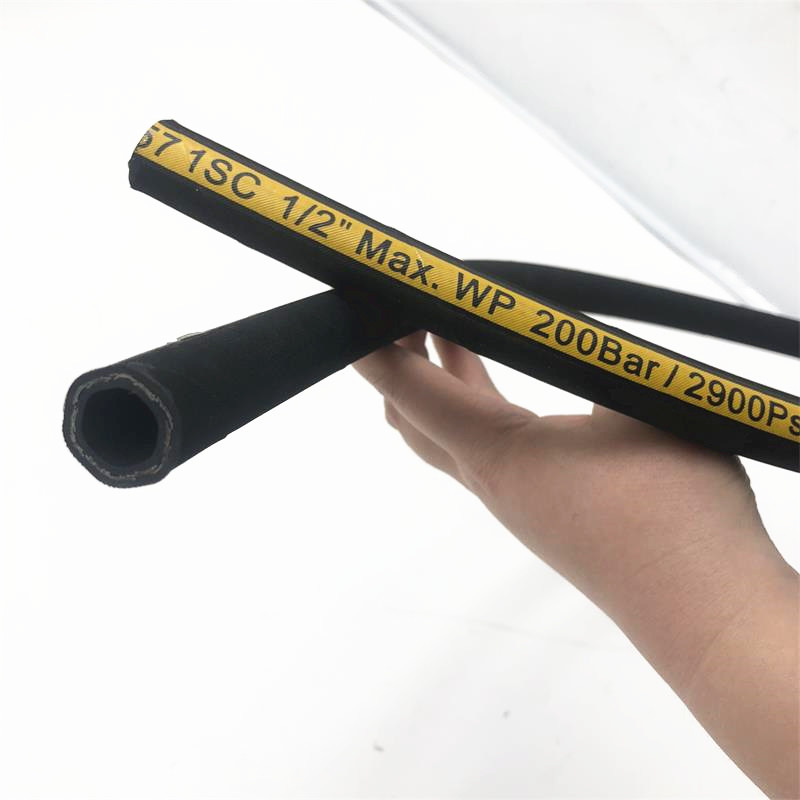
Hydraulic hoses are typically constructed from several layers, each contributing to specific performance attributes. The inner tube, directly contacting the fluid, is commonly composed of synthetic rubbers such as Nitrile (NBR) for petroleum-based fluids, Ethylene Propylene Diene Monomer (EPDM) for phosphate ester fluids, or Fluorocarbon (FKM) for aggressive chemicals and high temperatures. These materials are selected based on their resistance to degradation, swelling, and permeation. The reinforcement layer provides the structural integrity to withstand high pressures; materials include one or multiple layers of high-tensile steel wire (braided or spiral wound), synthetic fiber (aramid, polyester), or a combination thereof. The outer cover, providing abrasion and weather resistance, is often made from Chloroprene (CR) rubber. Manufacturing processes vary depending on hose type. Braided hoses utilize a helical winding of steel wire over a mandrel, followed by vulcanization. Spiral wound hoses employ a continuous winding of high-tensile wire spirally around a central mandrel, also followed by vulcanization. Key parameter control during manufacturing includes precise wire tension, rubber compound mixing ratios, curing temperature and time, and dimensional accuracy. Inconsistent curing can lead to reduced elasticity and increased susceptibility to cracking. Maintaining strict control over reinforcement layer geometry is critical for preventing localized stress concentrations and premature failure. Proper adhesion between layers is also essential, achieved through surface treatment and optimized vulcanization processes.
Performance & Engineering
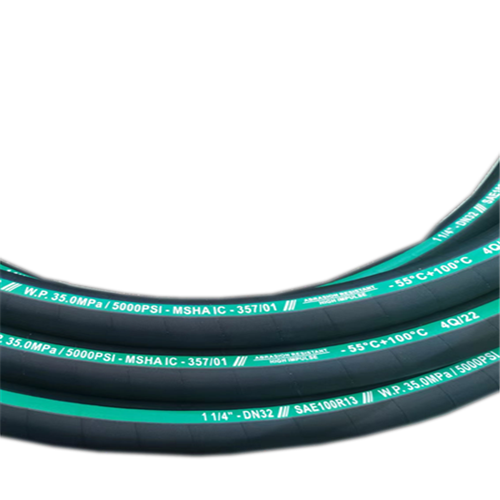
The performance of a hydraulic hose is governed by principles of fluid mechanics and material strength. Burst pressure, a critical safety parameter, is determined by the tensile strength of the reinforcement layer and the geometry of the hose. Working pressure, typically a fraction of the burst pressure (often 4:1 or 5:1 safety factor), dictates the operational limits. Force analysis involves considering hoop stress in the hose wall due to internal pressure. Environmental resistance is paramount; factors such as temperature fluctuations, UV exposure, ozone, and exposure to corrosive substances can degrade the rubber compounds, leading to loss of flexibility and eventual failure. Compliance requirements are stringent, particularly in safety-critical applications. Standards such as SAE J517 and EN 853 specify testing procedures for pressure rating, impulse testing, and temperature range. Functional implementation details include the proper selection of hose end fittings (crimped, swaged, or threaded) to ensure a leak-free and secure connection. The fitting material must be compatible with both the hose and the fluid. Another crucial aspect is hose bend radius – exceeding the minimum bend radius induces stress concentrations and can accelerate fatigue failure. Proper routing and support are therefore essential.
Technical Specifications
| Parameter | Unit | SAE 100R2 AT | SAE 100R6 AT |
|---|---|---|---|
| Working Pressure | MPa | 20.7 | 34.5 |
| Burst Pressure | MPa | 82.7 | 138.0 |
| Temperature Range | °C | -40 to +100 | -40 to +121 |
| Inner Tube | - | NBR | Synthetic Rubber |
| Reinforcement | - | Two Steel Wire Braids | Four Steel Wire Braids |
| Cover | - | CR | CR |
Failure Mode & Maintenance
Hydraulic hose failure can manifest in several forms. Fatigue cracking, induced by repeated pressure cycles and bending, is a common failure mode, often initiating at the reinforcement layer. Delamination, the separation of layers, can occur due to poor adhesion or exposure to aggressive fluids. Degradation of the rubber compounds, caused by heat, ozone, UV exposure, or chemical attack, leads to loss of flexibility and cracking. Oxidation of the fluid can also contribute to hose degradation. Pinholes, small leaks in the inner tube, can result from abrasion or corrosion. External damage, such as cuts or abrasions, compromises the outer cover and exposes the reinforcement layer to corrosion. Maintenance best practices include regular visual inspections for signs of wear, cracking, or leaks. Hose routing should be checked to ensure proper bend radius and avoid abrasion points. Fluid analysis should be performed periodically to identify contaminants or degradation products. Replacing hoses proactively, based on a predetermined service interval or when signs of deterioration are observed, is crucial for preventing catastrophic failures. Crimping procedures for fittings must be strictly adhered to, utilizing calibrated crimping machines and the correct die sets.
Industry FAQ
Q: What is the impact of fluid velocity on hydraulic hose life?
A: Higher fluid velocities can increase erosion of the inner tube, especially if the fluid contains abrasive particles. This erosion can lead to pinholes and leaks. Additionally, increased velocity generates more heat, which accelerates rubber degradation. Selecting a hose with a larger inner diameter can reduce fluid velocity and extend hose life.
Q: How does temperature affect hydraulic hose performance?
A: Extreme temperatures, both high and low, can significantly impact hose performance. High temperatures accelerate rubber degradation and reduce burst pressure. Low temperatures can decrease flexibility and increase the risk of cracking. It is critical to select a hose with a temperature range appropriate for the application.
Q: What are the key considerations when selecting hose end fittings?
A: Fitting material compatibility with the hose and fluid is paramount. The fitting must be properly sized and crimped to ensure a leak-free connection. The fitting’s pressure rating must exceed the hose’s working pressure. Selecting the correct fitting type (e.g., straight, 90-degree, swivel) based on the application is also crucial.
Q: What is the difference between braided and spiral wound hoses?
A: Braided hoses offer good flexibility and are suitable for moderate pressure applications. Spiral wound hoses provide higher pressure ratings and are more resistant to kinking. However, they are generally less flexible than braided hoses.
Q: How important is proper hose routing and support?
A: Proper routing and support are critical to prevent hose damage and premature failure. Avoiding sharp bends, abrasion points, and excessive tension is essential. Using hose clamps and supports helps maintain the correct bend radius and protects the hose from external damage.
Conclusion
The selection and maintenance of hydraulic hoses represent a vital aspect of ensuring the reliability and safety of hydraulic systems. Understanding the underlying material science, manufacturing processes, and performance characteristics is crucial for making informed decisions. OEM manufacturers play a critical role in providing customized solutions tailored to specific application requirements. Adherence to industry standards and best practices in installation and maintenance are paramount for maximizing hose lifespan and preventing catastrophic failures.
Future trends in hydraulic hose technology include the development of advanced rubber compounds with enhanced resistance to degradation, the adoption of smart hose monitoring systems for predictive maintenance, and the integration of lightweight materials to improve efficiency. A continued focus on quality control, stringent testing procedures, and a deep understanding of fluid power principles will remain essential for meeting the evolving demands of the industry.