
Apr . 01, 2024 17:55 Back to list
oem production ptfe hose suppliers Performance Analysis
Introduction
Polytetrafluoroethylene (PTFE) hose represents a critical component in numerous industrial fluid transfer applications, demanding exacting standards from OEM production suppliers. Characterized by its near-universal chemical inertness, exceptional temperature resistance (-200°C to +260°C), and low coefficient of friction, PTFE hose finds application in aerospace, chemical processing, pharmaceutical manufacturing, automotive, and food processing. The OEM landscape for PTFE hose is driven by requirements for customization – tailoring hose dimensions, material compositions (including reinforcement layers), and end-fitting integration to specific client needs. This guide provides a comprehensive technical overview of PTFE hose production, material science, performance characteristics, failure modes, and relevant industry standards, specifically geared towards procurement managers and engineers evaluating OEM suppliers.
Material Science & Manufacturing
PTFE, (C2F4)n, is a synthetic fluoropolymer of tetrafluoroethylene. Its inherent chemical stability arises from the strong carbon-fluorine bonds. Raw material quality, particularly the PTFE resin grade (granular, fine powder, dispersion), significantly impacts final hose properties. Granular PTFE is commonly used for extrusion, offering higher throughput but potentially lower surface finish. Fine powder PTFE is favored for achieving smoother bore surfaces and tighter dimensional tolerances. Manufacturing processes vary depending on hose construction. Simple extrusion creates a basic PTFE tube. Reinforced hose utilizes braiding (typically stainless steel, or occasionally silver-plated copper) or spiraling (wrapped PTFE tape) to enhance pressure resistance. Key parameters during extrusion include barrel temperature control (typically 315-370°C), die temperature, screw speed, and reduction ratio. Sintering, a post-extrusion process, is crucial. PTFE is initially amorphous; sintering induces crystalline structure development, impacting mechanical strength and permeability. Precise temperature and time control during sintering are vital – insufficient sintering leads to porosity and compromised performance, while over-sintering can induce degradation. For convoluted or ribbed hose, specialized tooling and sophisticated control systems are necessary to maintain dimensional accuracy. Post-processing may include surface treatments (etching to enhance adhesion for bonding) and end-fitting attachment using techniques like crimping, flaring, or thread sealing.
Performance & Engineering
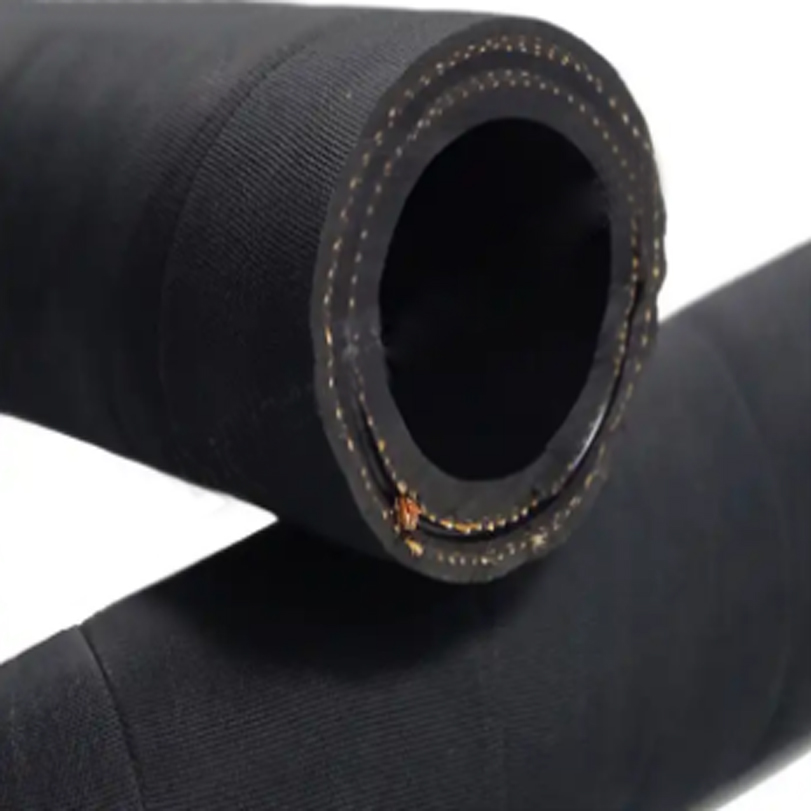
PTFE hose performance is dictated by its ability to withstand pressure, temperature, and chemical exposure without failure. Burst pressure is a critical metric, determined by material thickness, reinforcement type, and end-fitting integrity. Finite Element Analysis (FEA) is frequently used to model stress distribution under pressure, optimizing hose geometry and reinforcement configuration. Temperature cycling induces thermal expansion and contraction; PTFE has a high coefficient of thermal expansion (approximately 13 x 10-5 /°C). This must be accounted for in system design to prevent stress concentrations at connections. Chemical compatibility is paramount. While PTFE resists most chemicals, it can be affected by highly alkaline metals, fluorine gas, and certain fluorinated solvents at elevated temperatures. Permeation rates, especially for volatile organic compounds (VOCs), are crucial in applications like pharmaceutical or semiconductor manufacturing. Leak testing, using helium or other tracer gases, verifies hose integrity. Compliance requirements vary by industry. For food and beverage applications, PTFE hose must comply with FDA 21 CFR 177.1550. Aerospace applications necessitate adherence to AMS standards (e.g., AMS 7286 for PTFE hose assemblies). Hose flexibility, defined as bend radius, is a function of wall thickness and material composition. Excessive bending can lead to kinking and flow restriction. Electrostatic discharge (ESD) properties are important in environments where flammable materials are present; conductive PTFE formulations are available for dissipating static charges.
Technical Specifications
| Parameter | Unit | Typical Value (Standard Grade PTFE) | Reinforced PTFE (SS Braided) |
|---|---|---|---|
| Operating Temperature | °C | -200 to +260 | -200 to +260 |
| Burst Pressure | PSI | 200 | 1500 |
| Tensile Strength | MPa | 20 | 45 |
| Elongation at Break | % | 300 | 150 |
| Water Absorption | % (24hr) | 0.01 | 0.01 |
| Permeability (Helium) | cc-mil/hr-ft2-psi | 1 x 10⁻⁸ | 5 x 10⁻⁹ |
Failure Mode & Maintenance
PTFE hose failures typically stem from mechanical stress, thermal degradation, or chemical attack. Fatigue cracking can occur under repeated pressure cycling, particularly at end-fitting interfaces. Creep, the slow deformation under sustained load, is a concern at elevated temperatures. Delamination, separation of PTFE from reinforcement layers, indicates inadequate bonding or material incompatibility. Chemical attack can cause swelling, embrittlement, or permeation, compromising hose integrity. Oxidation, though less common, can occur at extremely high temperatures. Proper installation is critical. Avoid over-tightening end fittings, which can induce stress cracking. Protect hose from abrasion and sharp bends. Regular visual inspection for cracks, bulges, or discoloration is recommended. Leak testing should be performed periodically, especially in critical applications. Cleaning can be achieved with mild detergents; avoid abrasive cleaners or solvents. If a hose shows signs of degradation, it must be replaced immediately. Record keeping of hose installation date, operating conditions, and inspection results aids in proactive maintenance and failure analysis. Analyzing failed hoses (fractography) can provide insights into the root cause of failure and inform future design or material selection.
Industry FAQ
Q: What is the primary difference between virgin PTFE and filled PTFE, and how does that affect hose performance?
A: Virgin PTFE offers the highest chemical inertness and purity. Filled PTFE incorporates additives like glass fibers, carbon, or bronze to enhance mechanical properties (tensile strength, creep resistance) and reduce cost. However, fillers can compromise chemical resistance and increase permeability. For critical applications requiring absolute purity, virgin PTFE is essential. For applications prioritizing mechanical strength, filled PTFE may be suitable.
Q: How does the braiding angle affect the pressure rating of a reinforced PTFE hose?
A: A smaller braiding angle (closer to 0°) provides higher axial strength and pressure resistance, as the load is distributed more effectively along the reinforcement fibers. However, a smaller angle also makes the hose less flexible. OEM suppliers optimize braiding angle based on the required pressure rating and flexibility trade-off.
Q: What testing methods are used to verify the chemical compatibility of PTFE hose with specific fluids?
A: Immersion testing is standard, involving exposing PTFE samples to the fluid at varying temperatures for specified durations, followed by visual inspection for swelling, discoloration, or degradation. Weight change measurements quantify absorption. Permeation testing measures the rate at which the fluid passes through the hose wall. Detailed chemical resistance charts, based on these tests, are available from PTFE resin manufacturers.
Q: What quality control measures should an OEM supplier employ to ensure consistent hose dimensions and performance?
A: OEM suppliers should implement Statistical Process Control (SPC) for critical parameters (extrusion temperature, sintering time, dimensions). Regular dimensional checks using calibrated instruments (calipers, micrometers) are essential. Burst pressure testing, leakage testing, and visual inspection should be performed on every batch. Documentation of all QC data is critical for traceability.
Q: What are the implications of using improper end fittings with PTFE hose?
A: Improperly sized or incompatible end fittings can lead to leakage, stress cracking at the fitting interface, or hose failure. Crimping improperly can cause damage to the hose or insufficient sealing. End fittings must be specifically designed for PTFE hose and installed according to manufacturer's recommendations. Using correct fitting materials compatible with both the PTFE and the conveyed fluid is also critical.
Conclusion
PTFE hose, due to its unique combination of chemical inertness, temperature resistance, and low friction, remains a cornerstone in diverse industrial fluid handling applications. Selecting an OEM supplier necessitates a comprehensive understanding of material science principles, manufacturing processes, and performance characteristics. Rigorous quality control, adherence to relevant industry standards, and a commitment to customization are vital attributes.
The future of PTFE hose development will likely focus on enhancing mechanical properties through novel filler materials, improving permeation resistance for specialized applications, and developing more sustainable manufacturing processes. Proactive collaboration between OEMs and end-users is essential to address evolving application requirements and optimize hose performance and longevity.